BIBLIOGRAPHY and BIOGRAPHYof James Stalker
In no particular order:
1.) The Beauty of
the Bible, a study of its Poets and Poetry (1918)
2.) The Four Men (preached at
4.) The Life of Jesus Christ, a handbook for Bible classes (1879)
5.) Imago Christi, the Example of Jesus Christ (1891)
6.) The Christology of Jesus, being the teaching concerning Himself according
to the synoptic Gospels (1899)
7.) The Trial and death of Jesus Christ, a devotional history of our Lord's
passion (1908)
8.) The Atonement (1908)
9.) The Life of
10.) John Knox-His ideas and ideals (1904)
11.) The Seven Deadly Sins (1901)
12.) The Seven Cardinal Virtues (1902)
13.) Christian Psychology (1904)
14.) The Ethic of Jesus (1909)
15.) How to read Shakespeare (1913)
16.) The new song and other sermons for the Children's hour (1912)
17.) Men and Morals (1892)
18.) The Preacher and His Models I believe there is perhaps one or two more,
but I'm not sure.
BIOGRAPHICAL information on James
Stalker
Born
1848 in
Died Feb. 5, 1929 in
Education: from
Pulpit: Pastor of St. Brycedale, Kirkaldy, 1874 - 1887
Pastor of St. Matthews, or Free St. Matthews, Glasgow, 1887 - 1902
Academic: Professor of Church History, Free Church College, 1902-1924, adding
the chair of Christian Ethics in 1905.
Personal: Married twice, to Joanna Elder in 1878 and to Charlotte Brown
Attempts are underway to seek out any more information, and this will be
updated when possible. Anyone with any knowledge of his life, or living
relatives should contact me, the curator.
This site is intended to be a loving tribute to the work of the man without
elevating the man beyond what is proper.
Special thanks to Pam Gilchrist, Neil Simpson, and Ken Froude for their help
from "across the pond".
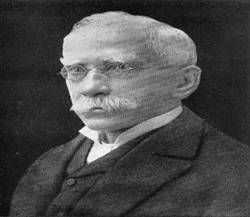
James Stalker
- The Life of Jesus Christ
- The Life of
- The Four Men
The Life of Jesus Christ by James Stalker
Chapter 1--The
Birth, Infancy, and Youth of Jesus
Chapter 2--The
Nationand The Time
Chapter 3--The
Final Stages of Preparation
Chapter 4--The
Year of Obscurity
Chapter 5--The
Year of Public Favour
Chapter 6--The
Year of Opposition
Chapter 7--The End
Hints and
Questions
'Then purged with
euphrasy and rue The visual nerve, for hehad much to see.' --
The life of Christ
in history cannot cease. His influence waxes more and more; the dead nations
are waiting till it reach them, and it is the hope of the earnest spirits that
are bringing in the new earth. All discoveries of the modern world, every
development of juster ideas, of higher powers, of more exquisite feelings in
mankind, are only new helps to interpret Him; and the lifting-up of life to the
level of His ideas and character is the programme of the human race.
The Birth, Infancy, and Youth of Jesus
AUGUSTUS was
sitting on the throne of the
Among those whom
the edict of Augustus thus from afar drove forth to the highways were a humble
pair in the Galilean
Such was the
manner of the birth of Jesus. I never felt the full pathos of the scene, till,
standing one day in a room of an old inn in the market-town of Eisleben, in
Central Germany, I was told that on that very spot, four centuries ago, amidst
the noise of a market-day and the bustle of a public-house, the wife of the
poor miner, Hans Luther, who happened to be there on business, being surprised
like Mary with sudden distress, brought forth in sorrow and poverty the child
who was to become Martin Luther, the hero of the Reformation and the maker of
modern Europe.
Next morning the
noise and bustle broke out again in the inn and inn-yard; the citizens of
It had been
foretold in ancient prophecy that He should be born on this very spot; ¡¥But
thou, Bethlehem Ephratah, though thou be little among the thousands of Judah,
yet out of thee shall he come forth unto me that is to be ruler in Israel.¡¦ The
proud emperor¡¦s decree drove southward the anxious couple. Yes; but another
hand was leading them on - the hand of Him who overrules the purposes of
emperors and kings, of statesmen and parliaments, for the accomplishment of His
design, though they know them not; who hardened the heart of Pharaoh, called
Cyrus like a slave to His foot, made the mighty Nebuchadnezzar His servant, and
in the same way could overrule for His own far-reaching purposes the pride and
ambition of Augustus.
The Group Round
the Infant
Although Jesus
made His entry on the stage of life so humbly and silently; although the
citizens of Bethlehem dreamed not what had happened in their midst; although
the emperor at Rome knew not that his decree had influenced the nativity of a
King who was yet to bear rule, not only over the Roman world, but over many a
land where Rome¡¦s eagles never flew; although the history of mankind went
thundering forward next morning in the channels of its ordinary interests,
quite unconscious of the event which had happened, yet it did not altogether
escape notice.
As the babe leaped
in the womb of the aged Elizabeth when the mother of her Lord approached her,
so, when He who brought the new world with Him appeared, there sprang up
anticipations and forebodings of the truth in various representatives of the
old world that was passing away. There went through sensitive and waiting
souls, here and there, a dim and half-conscious thrill, which drew them round
the Infant¡¦s cradle. Look at the group which gathered to gaze on Him! It
represented in miniature the whole of His future history.
The Shepherds
7. First came the
Shepherds from the neighboring fields. That which was unnoticed by the kings
and great ones of this world was so absorbing a theme to the princes of heaven
that they burst the bounds of the invisibility in which they shroud themselves,
in order to express their joy and explain the significance of the great event.
And, seeking the most worthy hearts to which they might communicate it, they
found them in these simple shepherds, living the life of contemplation and
prayer in the suggestive fields where Jacob had kept his flocks, where Boaz and
Ruth had been wedded, and where David, the great Old Testament type, had spent
his youth, and there, by the study of the secrets and needs of their own
hearts, learning far more of the nature of the Saviour who was to come than the
Pharisee amidst the religious pomp of the temple or the scribe burrowing without
the seeing eye among the prophecies of the Old Testament. The angel directed
them where the Saviour was, and they hastened to the town to find Him. They
were the representatives of the peasant people, with the ¡¥honest and good
heart,¡¦ who afterwards formed the bulk of His disciples.
Simeon and Anna
8. Next to them
came Simeon and Anna, the representatives of the devout and intelligent
students of the Scriptures, who at that time were expecting the appearance of
the Messiah and afterwards contributed some of His most faithful followers. On
the eighth day after His birth, the Child was circumcised, thus being ¡¥made
under the law,¡¦ entering into the covenant, and inscribing His name in His own
blood in the roll of the nation. Soon thereafter, when the days of Mary¡¦s
purification were ended, they carried Him from
The Wise Men
9. The shepherds
and these aged saints were near the spot where the new force entered the world.
But it thrilled susceptible souls at a much greater distance. It was probably
after the presentation in the temple and after the parents had carried back
their child to
Herod
10. All these
gathered round His cradle to worship the Holy Child¡Xthe shepherds with their
simple wonder, Simeon and Anna with a reverence enriched by the treasured
wisdom and piety of centuries, and the Magi with the lavish gifts of the Orient
and the open brow of Gentile knowledge. But while these worthy worshippers were
gazing down on Him, there came and looked over their shoulders a sinister and
murderous face. It was the face of Herod. This prince then occupied the throne
of the country¡Xthe throne of David and the Maccabees. But he was an alien and
low-born usurper. His subjects hated him, and it was only by Roman favor that
he was maintained in his seat. He was able, ambitious and magnificent. Yet he
had such a cruel, crafty, gloomy and filthy mind, as you must go among Oriental
tyrants to meet with. He had been guilty of every crime. He had made his palace
swim in blood, having murdered his own favorite wife, three of his sons, and
many others of his relatives. He was now old and tortured with disease,
remorse, the sense of unpopularity, and a cruel terror of every possible aspirant
to the throne which he had usurped. The Magi had naturally turned their steps
to the capital, to inquire where He was to be born whose sign they had seen in
the East. The suggestion touched Herod in his sorest place; but with diabolical
hypocrisy he concealed his suspicions. Having learned from the priests that the
Messiah was to be born in
The Silent Years
at
The records which
we possess up to this point are, as we have seen, comparatively full. But with
the settlement at
Apocryphal Gospels
It was natural
that, where God was silent and curiosity was strong, the fancy of man should
attempt to fill up the blank. Accordingly, in the early Church there appeared
Apocryphal Gospels, pretending to give full details where the inspired Gospels
were silent. They were particularly full of the sayings and doings of the
childhood of Jesus. But they only show how unequal the human imagination was to
such a theme, and bring out by the contrast of glitter and caricature the
solidity and truthfulness of the Scripture narrative. They make Him a worker of
frivolous and useless marvels, who molded birds of clay and made them fly,
changed His playmates into kids, and so forth. In short, they are compilations
of worthless and often blasphemous fables.
These grotesque
failures warn us not to intrude with the suggestions of fancy into the hallowed
enclosure. It is enough to know that He grew in wisdom and stature, and in
favor with God and
But, though we are
forbidden to let the fancy loose here, we are not prohibited, but, on the
contrary, it is our duty, to make use of such authentic materials as are
supplied by the manners and customs of the time, or by incidents of His later
life which refer back to His earlier years, in order to connect the infancy with
the period when the narrative of the Gospels again takes up the thread of
biography. It is possible in this way to gain, at least in some degree, a true
conception of what He was as a boy and a young man, and what were the
influences amidst which His development proceeded through so many silent years.
His Home Life
We know amidst
what kind of home influences He was brought up. His home was one of those which
were the glory of His country, as they are of our own - the abodes of the godly
and intelligent working class. Joseph, its head, was a man saintly and wise;
but the fact that he is not mentioned in Christ¡¦s afterlife has generally been
believed to indicate that he died during the youth of Jesus, perhaps leaving
the care of the household on His shoulders. His mother probably exercised the
most decisive of all external influences on His development. What she was may
be inferred from the fact that she was chosen from all the women of the world
to be crowned with the supreme honor of womanhood. The song which she poured
forth on the subject of her own great destiny shows her to have been a woman
religious, fervently poetical and patriotic; a student of Scripture, and
especially of its great women, for it is saturated with Old Testament ideas,
and molded on Hannah¡¦s song; a spirit exquisitely humble, yet capable of
thoroughly appreciating the honor conferred upon her. She was no miraculous
queen of heaven, as superstition has caricatured her, but a woman exquisitely
pure, saintly, loving and high-souled. This is aureole enough. Jesus grew up in
her love and passionately returned it.
There were other
inmates of the household. He had brothers and sisters. From two of them, James
and Jude, we have epistles in Holy Scripture, in which we may read what their
character was. Perhaps it is not irreverent to infer from the severe tone of
their epistles, that, in their unbelieving state, they may have been somewhat
harsh and unsympathetic men. At all events, they never believed on Him during
His lifetime, and it is not likely that they were close companions to Him in
Educational
Influences
He received His
education at home, or from a scribe attached to the village synagogue. It was
only, however, a poor man¡¦s education. As the scribes contemptuously said, He
had never learned, or, as we should say, He was not college-bred. No; but the
love of knowledge was early awake within Him. He daily knew the joy of deep and
happy thought; He had the best of all keys to knowledge - the open mind and the
loving heart; and the three great books lay ever open before Him - the Bible,
Man and Nature.
It is easy to
understand with what fervent enthusiasm He would devote Himself to the Old
Testament; and His sayings, which are full of quotations from it, afford
abundant proof of how constantly it formed the food of His mind and the comfort
of His soul. His youthful study of it was the secret of the marvelous facility
with which He made use of it afterwards in order to enrich His preaching and
enforce His doctrine, to repel the assaults of opponents and overcome the
temptations of the Evil One. His quotations also show that He read it in the
original Hebrew, and not in the Greek translation, which was then in general
use. The Hebrew was a dead language even in
His
There are few
places where human nature can be better studied than in a country village; for
there one sees the whole of each individual life and knows all one¡¦s neighbors
thoroughly. In a city far more people are seen, but far fewer known; it is only
the outside of life that is visible. In a village the view outwards is
circumscribed; but the view downwards is deep, and the view upwards unimpeded.
The spot where He
grew up
20. Travelers tell
us that the spot where He grew up is one of the most beautiful on the face of
the earth.
Visits to
There is still one
important educational influence to be mentioned. Every year, after He was
twelve years old, He went with His parents to the Passover at
What Did The Child
Know?
It has often been
asked whether Jesus knew all along that He was the Messiah, and, if not, when
and how the knowledge dawned upon Him - whether it was suggested by hearing
from His mother the story of His birth or announced to Him from within. Did it
dawn upon Him all at once, or gradually? When did the plan of His career, which
he carried out so unhesitatingly from the beginning of His ministry, shape
itself in His mind? Was it the slow result of years of reflection, or did it
come to Him at once? These questions have occupied the greatest Christian minds
and received very various answers. I will not venture to answer them, and
especially with His reply to His mother before me, I cannot trust myself even
to think of a time when He did not know what His work in this world was to be.
His subsequent
visits to
Such were the
external conditions amidst which the manhood of Jesus waxed towards maturity.
It would be easy to exaggerate the influence which they may be supposed to have
exerted on His development. The greater and more original a character is, the
less dependent is it on the peculiarities of its environment. It is fed from
deep well-springs within itself, and in its germ there is a type enclosed which
expands in obedience to its own laws and bids defiance to circumstances. In any
other circumstances Jesus would doubtless have grown to be in every important
respect the very same person as He became in
The Interval
Between Malachi and Matthew
We now approach
the time when, after thirty years of silence and obscurity in
When, having
finished the last chapter of the Old Testament, we turn over the leaf and see
the first chapter of the New, we are very apt to think that in Matthew we are
still among the same people and the same state of things as we have left in
Malachi. But no idea could be more erroneous. Four centuries have elapsed
between Malachi and Matthew, and wrought as total a change in
Politically the
nation had passed through extraordinary vicissitudes. After the Exile it had
been organized as a kind of sacred State under its high priests; but conqueror
after conqueror had since marched over it, changing everything; the old
hereditary monarchy had been restored for a time by the brave Maccabees; the
battle of freedom had many times been won and lost; a usurper had sat on the
throne of David; and now at last the country was completely under the mighty
Roman power, which had extended its sway over the whole civilised world. It was
divided into several smaller portion, which the foreigner held under different
tenures, as the English at present hold
In religion the
changes had been equally great, and the fall equally low. In external
appearance, indeed, it might have seemed as if progress had been made instead
of retrogression. The nation was far more orthodox than it had been at many
earlier periods of history. Once its chief danger had been idolatry; but the
chastisement of the Exile had corrected that tendency for ever, and
thenceforward the Jews, wherever they might be living, were uncompromising
monotheists. The priestly orders and offices had been thoroughly reorganized
after the return from
Chapter II - The
Nation and the Time
Sadducees and
Pharisees
The Sadducees
belonged chiefly to the upper and wealthy classes. The Pharisees and scribes
formed what we should call the middle class, although also deriving many
members from the higher ranks of life. The lower classes and the country people
were separated by a great gulf from their wealthy neighbours, but attached
themselves by admiration to the Pharisees, as the uneducated always do to the
party of warmth. Down below all these was a large class of those who had lost
all connection with religion and well-ordered social life - the publicans,
harlots and sinners, for whose souls no man cared.
A Glimpse of
Society
34. Such were the
pitiable features of the society on which Jesus was about to discharge His
influence - a nation enslaved; the upper classes devoting themselves to
selfishness, courtiership and skepticism; the teachers and chief professors of
religion lost in mere shows of ceremonialism, and boasting themselves the
favourites of God, while their souls were honeycombed with self-deception and
vice; the body of the people misled by false ideals; and, seething at the bottom
of society, a neglected mass of unblushing and unrestrained sin.
35. And this was
the people of God! Yes; in spite of their awful degradation, these were the
children of Abraham, Isaac and Jacob, and the heirs of the covenant and the
promises. Away back beyond the centuries of degradation towered the figures of
the patriarchs, the kings after God's own heart, the psalmists, the prophets,
the generations of faith and hope. Aye, and in front there was greatness too!
The word of God, once sent forth from heaven and uttered by the mouths of His
prophets, could not return to Him void. He had said that to this nation was to
be given the perfect revelation of Himself, that in it was to appear the
perfect ideal of manhood, and that from it was to issue forth the regeneration
of all mankind. Therefore a wonderful future still belonged to it. The river of
Jewish history was for the time choked and lost in the sands of the desert, but
it was destined to reappear again and flow forward on its God-appointed course.
The time of fulfillment was at hand, much as the signs of the times might seem
to forbid the hope. Had not all the prophets from Moses onward spoken of a
great One to come, who, appearing just when the darkness was blackest and the
degradation deepest, was to bring back the lost glory of the past?
Where Piety
Lingered
36. So not a few
faithful souls asked themselves in the weary and degraded time. There are good
men in the worst of periods. There were good men even in the selfish and
corrupt Jewish parties. But especially does piety linger in such epochs in the
lowly homes of the people; and, just as we are permitted to hope that in the
Romish Church at the present time there may be those who, through all the
ceremonies put between the soul and Christ, reach forth to Him and by the
selection of a spiritual instinct seize the truth and pass the falsehood by, so
among the common people of Palestine there were those who, hearing the
Scriptures read in the synagogues and reading them in their homes, instinctively
neglected the cumbrous and endless comments of their teachers, and saw the
glory of the past, of holiness and of God, which the scribes failed to see.
37. It was
especially to the promises of a Deliverer that such spirits attached their
interest. Feeling bitterly the shame of national slavery, the hollowness of the
times, and the awful wickedness which rotted under the surface of society, they
longed and prayed for the advent of the coming One and the restoration of the
national character and glory.
Carnal Colours on
the Scriptures
38. The scribes
also busied themselves with this element in the Scriptures; and the cherishing
of Messianic hopes was one of the chief distinctions of the Pharisees. But they
had caricatured the prophetic utterances on the subject by their arbitrary
interpretations and painted the future in colours borrowed from their own
carnal imaginations. They spoke of the advent as the coming of the
Proclaiming a
Reformation
39. Such was the
aspect of Jewish history at the time when the hour of realising the national
destiny was about to strike. It imparted to the work which lay before the
Messiah a peculiar complexity. It might have been expected that He would find a
nation saturated with the ideas and inspired with the visions of His
predecessors, the prophets at whose head He might place Himself, and from which
He might receive an enthusiastic and effective co-operation. But it was not so.
He appeared at a time when the nation had lapsed from its ideals and
caricatured their sublimest features. Instead of meeting a nation mature in
holiness and consecrated to the heaven-ordained task of blessing all other
peoples, which He might easily lead up to its own final development, and then
lead forth to the spiritual conquest of the world, He found that the first work
which lay before Him was to proclaim a reformation in His own country, and
encounter the opposition of prejudices that had accumulated there through
centuries of degradation.
Chapter III - The
Final Stages of His Preparation
An Irresistible
Passion Grows
40. Meanwhile He,
whom so many in their own ways were hoping for, was in the midst of them,
though they suspected it not. Little could they think that He about whom they
were speculating and praying was growing up in a carpenter's home away in
despised
41. Jesus had only
three years to accomplish His life-work. If we remember how quickly three years
in an ordinary life pass away, and how little at their close there usually is
to show for them, we shall see what must have been the size and quality of
life, which in so marvelously short a time made such a deep and ineffaceable
impression on the world and left to mankind such a heritage of truth and
influence.
42. It is
generally allowed that Jesus appeared as a public man with a mind whose ideas
were completely developed and arranged, with a character sharpened over its
whole surface into perfect definiteness, and with designs that marched forward
to their ends without hesitation. No deflection took place during the three
years from the lines on which at the beginning of them He was moving. The
reason of this must have been that, during the thirty years before His public
work began, His ideas, His character and designs went through all the stages of
a thorough development. Unpretentious as the external aspects of His life at
Still, Not Ready
43. At last,
however, He threw down the carpenter's tools, laid aside the workman's dress,
and bade His home and the beloved
44. His Baptism. -
Jesus did not descend on the nation from the obscurity of
Prophecy Awakens
45. Once more,
before hearing the voice of its Messiah, the nation was to hear the long-silent
voice of prophecy. The news went through all the country, that in the desert of
Judaea a preacher had appeared - not like the mumblers of dead men's ideas who
spoke in the synagogues, or the courtier-like, smooth-tongued teachers of
Jerusalem, but a rude, strong man, speaking from the heart to the heart, with
the authority of one who was sure of his inspiration He had been a Nazarite
from the womb; he had lived for years in the desert, wandering, in communion
with his own heart, beside the lonely shores of the Dead Sea; he was clad in
the hairy cloak and leathern girdle of the old prophets; and his ascetic rigour
sought no finer fare than locusts and the wild honey which he found in the
wilderness. Yet he knew life well : he was acquainted with all the evils of the
time, the hypocrisy of the religious parties, and the corruption of the masses;
he had a wonderful power of searching the heart and shaking the conscience, and
without fear laid bare the darling sins of every class. But that which most of
all attracted attention to him and thrilled every Jewish heart from one end of
the land to the other was the message which he bore; which was nothing less
than that the Messiah was just at hand, and about to set up the kingdom of God.
All
The
46. One day there
appeared among the Baptist's hearers One who particularly attracted his
attention, and made his voice, which had never faltered when accusing in the
most vigorous language of reproof even the highest teachers and priests of the
nation, tremble with self-distrust. And, when He presented Himself, after the
discourse was done, among the candidates for baptism, John drew back, feeling
that This was no subject for the bath of repentance, which without hesitation
he had administered to all others, and that he himself had no right to baptize
Him. There were in His face a majesty, a purity and a peace which smote the man
of rock with the sense of unworthiness and sin. It was Jesus, who had come
straight hither from the workshop of
47. The impression
made on John by the very look of Jesus reveals far better than many words could
do his aspect when he was about to begin His work, and the qualities of the
character which in Nazareth had been slowly ripening to full maturity.
The Door of a New
Epoch
48. The baptism
itself had an important significance for Jesus. To the other candidates who
underwent the rite it had a double meaning : it signified the abandonment of
their old sins and their entrance into the new Messianic era. To Jesus it could
not have the former meaning, except in so far as He may have identified Himself
with His nation and taken this way of expressing His sense of its need of cleansing.
But it meant that He too was now entering through this door into the new epoch,
of which He was Himself to be the Author. It expressed His sense that the time
had come to leave behind the employments of
The Holy Ghost
49. But still more
important was the descent upon Him of the Holy Ghost. This was neither a
meaningless display nor merely a signal to the Baptist. It was the symbol of a
special gift then given to qualify Him for His work, and to crown the long
development of His peculiar powers. It is a forgotten truth, that the manhood
of Jesus was from first to last dependent on the Holy Ghost. We are apt to
imagine that its connection with His divine nature rendered this unnecessary.
On the contrary, it made it far more necessary, for in order to be the organ of
His divine nature, His human nature had both to be endowed with the highest
gifts and constantly sustained in their exercise. We are in the habit of
attributing the wisdom and grace of His words, His supernatural knowledge of
even the thoughts of men, and the miracles He performed, to His divine nature.
But in the Gospels they are constantly attributed to the Holy Ghost. This does
not mean that they were independent of His divine nature, but that in them His
human nature was enabled to be the organ of His divine nature by a peculiar
gift of the Holy Ghost. This gift was given Him at His baptism. It was
analogous to the possession of prophets like Isaiah and Jeremiah, with the
Spirit of inspiration on those occasions, of which they have left accounts,
when they were called to begin their public life, and to the special outpouring
of the same influence still sometimes given at their ordination to those who
are about to begin the work of the ministry. But to Him it was given without
measure, while to others it has always been given only in measure; and it
comprised especially the gifts of miraculous powers.
The Temptation
50. The Temptation
- An immediate effect of this new endowment appears to have been one often
experienced, in less degree, by others who, in their small measure, have
received this same gift of the Spirit for work. His whole being was excited
about His work, His desires to be engaged in it were raised to the highest
pitch, and His thoughts were intensely occupied about the means of its
accomplishment. Although His preparation for it had been going on for many
years, although His whole heart had long been fixed on it, and His plans had
been clearly settled, it was natural that, when the divine signal had been
given that it was forthwith to commence, and He felt himself suddenly put in
possession of the supernatural powers necessary for carrying it out, His mind
should be in a tumult of crowding thoughts and feelings, and that He should
seek a place of solitude to revolve once more the whole situation. Accordingly,
he hastily retreated from the bank of the Jordan, driven, we are told, by the
Spirit, which had just been given Him, into the wilderness, where, for forty
days, He wandered among the sandy dunes and wild mountains, His mind being so
highly strung with the emotions and ideas which crowded on Him, that He forgot
even to eat.
A Frightful
Struggle
51. But it is with
surprise and awe we learn that His soul was, during those days, the scene of a
frightful struggle. He was tempted of Satan, we are told. What could He be
tempted with at a time so sacred? To understand this we must recall what has
been said of the state of the Jewish nation, and especially the nature of the
Messianic hopes which they were indulging. They expected a Messiah who should
work dazzling wonders and establish a world-wide empire with
52. It is with awe
we think of these suggestions presenting themselves to the holy soul of Jesus.
Could He be tempted to distrust God and even to worship the Evil One? No doubt
the temptations were flung from Him, as the impotent billows return broken from
the breast of the rock on which they have dashed themselves. But these
temptations pressed in on Him, not only at this time, but often before in the
53. Although the
tempter only departed from Jesus for a season, this was a decisive struggle; he
was thoroughly beaten back, and his power broken at its heart.
Chapter IV - The
Year of Obscurity
56. The records of
this year which we possess are extremely meager, comprising only two or three
incidents, which may be here enumerated, especially as they form a kind of
programme of His future work.
A Few Disciples
57. When He
emerged from the wilderness after the forty days of temptation, with His grasp
of His future plan tightened by that awful struggle and with the inspiration of
His baptism still swelling His heart, He appeared once more on the bank of the
Jordan, and John pointed Him out as the great Successor to himself of whom he
had spoken. He especially introduced Him to some of the choicest of his own
disciples, who immediately became His followers. Probably the very first of
these to whom He spoke was the man who was afterwards to be His favourite
disciple and to give to the world the divinest portrait of His character and
life. John the Evangelist - for he it was - has left an account of this first
meeting and the interview that followed it, which retains in all its freshness
the impression which Christ's majesty and purity made on his receptive mind.
The other young men who attached themselves to Him at the same time were
Andrew, Peter, Philip and Nathanael. They had been prepared for their new
Master by their intercourse with the Baptist, and, although they did not at
once give up their employments and follow Him in the same way as they did at a
later period, they received impressions at their first meeting which decided
their whole after-career. The Baptist's disciples do not seem to have at once
gone over in a body to Christ. But the best of them did so. Some mischief-makers
endeavored to excite envy in his mind by pointing out how his influence was
passing away to Another. But they little understood that great man whose chief
greatness was his humility. He answered them that it was his joy to decrease,
while Christ increased, for it was Christ who as the Bridegroom was to lead
home the bride, while he was only the bridegroom's friend, whose happiness
consisted in seeing the crown of festal joy placed on the head of another.
Key-Note Miracle
at
58. With His newly
attached followers Jesus departed from the scene of John's ministry, and went
north to Cana in
Cleansing The
59. Soon after
this miracle He returned again to
What is His
Kingdom?
60. He wrought
other miracles during the feast, which must have excited much talk among the
pilgrims from every land who crowded the city. One result of them was to bring
to His lodging one night the venerable and anxious inquirer to whom He
delivered the marvelous discourse on the nature of the new kingdom which He had
come to found, and the grounds of admission to it, which has been preserved to
us in the third chapter of John. It seemed a hopeful sign that one of the heads
of the nation should approach Him in a spirit so humble; but Nicodemus was the
only one of them on whose mind the first display of the Messiah's power in the
capital produced a deep and favorable impression.
Eight Months
Preparing the People
61. Thus far we
follow clearly the first steps of Jesus. But at this point our information in
regard to the first year of His ministry, after commencing with such fullness,
comes to a sudden stop, and for the next eight months we learn nothing more
about Him but that He was baptizing in Judaea - 'though Jesus Himself baptized
not, but His disciples' - and that He 'made and baptized more disciples than
John.'
62. What can be
the meaning of such a blank? It is to be noted, too, that it is only in the
Fourth Gospel that we receive even the details given above. The Synoptists omit
the first year of the ministry altogether, beginning their narrative with the
ministry in Galilee, and merely indicating in the most cursory way that there
was a ministry in
63. It is very
difficult to explain all this. The most natural explanation would perhaps be,
that the incidents of this year were imperfectly known at the time when the
Gospels were composed. It would be quite natural that the details of the period
when Jesus had not yet attracted much public attention should be less
accurately remembered than those of the period when He was by far the best
known personage in the country. But, indeed, the Synoptists all through take
little notice of what happened in
64. But John, at
least, could scarcely have been ignorant of the incidents of eight months. We
shall perhaps be conducted to the explanation by attending to the
little-noticed fact, which John communicates, that for a time Jesus took up the
work of the Baptist. He baptized by the hands of His disciples, and drew even
larger crowds than John. Must not this mean that He was convinced, by the small
impression which His manifestation of Himself at the Passover had made, that
the nation was utterly unprepared for receiving Him yet as the Messiah, and
that what was needed was the extension of the preparatory work of repentance
and baptism, and accordingly, keeping in the background His higher character,
became for the time the colleague of John? This view is confirmed by the fact,
that it was upon John's imprisonment at this year's end that He opened fully
His messianic career in
65. A still deeper
explanation of the silence of the Synoptists over this period, and their scant
notice of Christ's subsequent visits to
Chapter V - The
Year of Public Favour
In
66. After the year
spent in the south, Jesus shifted the sphere of His activity to the north of
the country. In Galilee He would be able to address Himself to minds that were
unsophisticated with the prejudices and supercilious pride of Judaea, where the
sacerdotal and learned classes had their headquarters; and He might hope that,
if His doctrine and influence took a deep hold of one part of the country, even
though it was remote from the centre of authority, He might return to the south
backed with an irresistible national acknowledgment, and carry by storm even
the citadel of prejudice itself.
67.
68. Galilee was
the most northerly of the four provinces into which
69. The report of
the miracles which Jesus had wrought at Jerusalem, eight months before, had
been brought home to Galilee by the pilgrims who had been south at the feast,
and doubtless also the news of His preaching and baptism in Judaea had created
talk and excitement before He arrived. Accordingly, the Galileans were in some
measure prepared to receive Him when He returned to their midst.
In The Synagogue
of
70. One of the
first places He visited was
71. From that day
Working From
72. In
Great Success with
Crowds
73. In a few weeks
the whole province was ringing with His name; He was the subject of
conversation in every boat on the lake and every house in the whole region;
men's minds were stirred with the profoundest excitement, and everyone desired
to see Him. Crowds began to gather about Him. They grew larger and larger. They
multiplied to thousands and tens of thousands. They followed Him wherever He
went. The news spread far and wide beyond Galilee and brought hosts from
74. How was it
that He produced so great and widespread a movement? It was not by declaring
Himself the Messiah. That would, indeed, have caused to pass through every
Jewish breast the deepest thrill which it could experience. But, although Jesus
now and then, as at
75. The two great
means which Jesus used in His work, and which created such attention and
enthusiasm, were His Miracles and His Preaching.
Miracle Worker
76. The Miracle
Worker - Perhaps His miracles excited the widest attention. We are told how the
news of the first one which He wrought in Capernaum spread like wildfire
through the town and brought crowds about the house where He was; and, whenever
He performed a new one of extraordinary character, the excitement grew intense
and the rumour of it spread on every hand. When, for instance, He first cured
leprosy, the most malignant form of bodily disease in
77. The miracles
of Jesus, taken altogether, were of two classes - those wrought on man, and
those wrought in the sphere of external nature, such as the turning of water
into wine, stilling the tempest, and multiplying the loaves. The former were by
far the more numerous. They consisted chiefly of cures of diseases less or more
malignant, such as lameness, deafness, palsy, and leprosy. He appears to have
varied very much His mode of acting, for reasons which we can scarcely explain.
Sometimes He used means, such as a touch, or the laying of moistened clay on
the part, or ordering the patient to wash in water. At other times He healed
without any means, and occasionally even at a distance. Besides these bodily
cures, He dealt with the diseases of the mind. These seem to have been
peculiarly prevalent in
78. Why did Jesus
employ this means of working? Several answers may be given to this question.
79. First, He
wrought miracles because His Father gave Him these signs as proofs that He had
sent Him. Many of the Old Testament prophets had received the same
authentication of their mission, and, although John, who revived the prophetic
function, worked no miracles, as the Gospels inform us with the most simple
veracity, it was to be expected that He who was a far greater prophet than the
greatest who went before Him should show even greater signs than any of them of
His divine mission. It was a stupendous claim which He made on the faith of men
when He announced Himself as the messiah, and it would have been unreasonable
to expect it to be conceded by a nation accustomed to miracles as the signs of
a divine mission, if He had wrought none.
80. Secondly, the
miracles of Christ were the natural outflow of the divine fullness which dwelt
in Him. God was in Him, and His human nature was endowed with the Holy Ghost
without measure. It was natural, when such a Being was in the world, that
mighty works should manifest themselves in Him. It was merely sparks or
emanations. He was the great interruption of the order of nature, or rather a
new element which had entered into the order of nature to enrich and ennoble
it, and His miracles entered with Him, not to disturb, but to repair its
harmony. Therefore all His miracles bore the stamp of His character. They were
not mere exhibitions of power, but also of holiness, wisdom and love. The Jews
often sought from Him mere gigantesque prodigies, to gratify their mania for
marvels. But He always refused them, working only such miracles as were helps
to faith. He demanded faith in all those whom He cured, and never responded
either to curiosity or unbelieving challenges to exhibit marvels. This
distinguishes His miracles from those fabled of ancient wonder-workers and
medieval saints. They were marked by unvarying sobriety and benevolence, because
they were the expressions of His character as a whole.
Triumphs Over the
Misery of the World
81. Thirdly, His
miracles were symbols of His spiritual and saving work. You have only to
consider them for a moment to see that they were, as a whole, triumphs over the
misery of the world. Mankind is the prey of a thousand evils, and even the
frame of external nature bears the mark of some past catastrophe : 'The whole
creation groaneth and travaileth in pain.' This huge mass of physical evil in
the lot of mankind is the effect of sin. Not that every disease and misfortune
can be traced to special sin, although some of them can. The consequences of
past sin are distributed in detail over the whole race. But yet the misery of
the world is the shadow of its sin. Material and moral evil, being thus
intimately related, mutually illustrate each other. When He healed bodily
blindness, it was a type of the healing of the inner eye; when He raised the
dead, He meant to suggest that He was the Resurrection and the Life in the
spiritual world as well; when He cleansed the leper, His triumph spoke of
another over the leprosy of sin; when He multiplied the loaves, He followed the
miracle with a discourse on the bread of life; when He stilled the storm, it
was an assurance that He could speak peace to the troubled conscience.
82. Thus His
miracles were a natural and essential part of His Messianic work. They were an
excellent means of making Him known to the nation. They bound those whom He
cured to Him with strong ties of gratitude; and without doubt, in many cases,
the faith in Him as a miracle-worker led on to a higher faith. So it was in the
case of His devoted follower Mary Magdalene, out of whom He cast seven devils.
83. To Himself
this work must have brought both great pain and great joy. To His tender and
exquisitely sympathetic heart, that never grew callous in the least degree, it
must often have been harrowing to mingle with so much disease, and see the
awful effects of sin. But He was in the right place; it suited His great love
to be where help was needed. And what a joy it must have been to Him to
distribute blessings on every hand and erase the traces of sin; to see health
returning beneath His touch; to meet the joyous and grateful glances of the
opening eyes; to hear the blessings of mothers and sisters, as He restored
their loved ones to their arms; and to see the light of love and welcome in the
faces of the poor, as He entered their towns and villages. He drank deeply of
the well at which He would have His followers to be ever drinking - the bliss
of doing good.
The Teacher
84. The Teacher -
The other great instrument with which Jesus did His work was His teaching. It
was by far the more important of the two. His miracles were only the bell
tolled to bring the people to hear His words. They impressed those who might
not yet be susceptible to the subtler influence, and brought them within its
range.
85. The miracles
probably made the most noise, but His preaching also spread His fame far and
wide. There is no power whose attraction is more unfailing than that of the
eloquent word. Barbarians, listening to their bards and story-tellers, Greeks,
listening to the restrained passion of their orators, and matter-of-fact
nations like the Roman, have alike acknowledged its power to be irresistible.
The Jews prized it above almost every other attraction, and among the figures
of their mighty dead revered none more highly than the prophets - those
eloquent utterers of the truth whom Heaven had sent them from age to age.
Though the Baptist did no miracles, multitudes flocked to him, because in his
accents they recognised the thunder of this power, which for so many
generations no Jewish ear had listened to. Jesus also was recognised as a
prophet, and accordingly His preaching created wide-spread excitement. 'He
spake in their synagogues, being glorified of all.' His words were heard with
wonder and amazement. Sometimes the multitudes on the beach of the lake so
pressed upon Him to hear, that He had to enter into a ship and address them
from the deck, as they spread themselves out in a semicircle on the ascending
shore. His enemies themselves bore witness that 'never man spake like this
man;' and, meagre as are the remains of His preaching which we possess, they
are amply sufficient to make us echo the sentiment and understand the
impression which He produced. All His words together which have been preserved
to us would not occupy more space in print than half a dozen ordinary sermons;
yet it is not too much to say, that they are the most precious literary
heritage of the human race. His words, like His miracles, were expressions of
Himself, and every one of them has in it something of the grandeur of His
character.
Oriental Style
86. The form of
the preaching of Jesus was essentially Jewish. The Oriental mind does not work
in the same way as the mind of the West. Our thinking and speaking, when at
their best, are fluent, expansive, closely reasoned. The kind of discourse
which we admire is one which takes up an important subject, divides it out into
different branches, treats it fully under each of the heads, closely
articulates part to part, and closes with a moving appeal to the feelings, so
as to sway the will to some practical result. The Oriental mind, on the contrary,
loves to brood long on a single point, to turn it round and round, to gather up
all the truth about it into a focus, and pour it forth in a few pointed and
memorable words. It is concise, epigrammatic, oracular. A Western speaker's
discourse is a systematic structure, or like a chain in which link is firmly
knit to link; an Oriental's is like the sky at night, full of innumerable
burning lights shining forth from a dark background.
87. Such was the
form of the teaching of Jesus. It consisted of numerous sayings, every one of
which contained the greatest possible amount of truth in the smallest possible
compass, and was expressed in language so concise and pointed as to stick in
the memory like an arrow. Read them, and you will find that every one of them,
as you ponder it, sucks the mind in and in like a whirlpool, till it is lost in
the depths. You will find, too, that there are very few of them which you do
not know by heart. They have found their way into the memory of Christendom as
no other words have done. Even before the meaning has been apprehended, the
perfect, proverb-like expression lodges itself fast in the mind.
Pictures From
Natural
88. But there was
another characteristic of the form of Jesus' teaching. It was full of figures
of speech. He thought in images. He had ever been a loving and accurate
observer of nature around Him - of the colours of the flowers, the ways of the
birds, the growth of the trees, the vicissitudes of the seasons - and an
equally keen observer of the ways of men in all parts of life - in religion, in
business, in the home. The result was that He could neither think nor speak
without His thought running into the mould of some natural image. His preaching
was alive with such references, and therefore full of colour, movement and
changing forms. There were no abstract statements in it; they were all changed
into pictures. Thus, in His sayings, we can still see the aspects of the
country and the life of the time as in a panorama, - the lilies, whose gorgeous
beauty His eyes feasted on, waving in the fields; the sheep following the
shepherd; the broad and narrow city gates; the virgins with their lamps
awaiting in the darkness the bridal procession; the Pharisee with his broad
phylacteries and the publican with bent head at prayer together in the temple;
the rich man seated in his palace at a feast; and the beggar lying at his gate
with the dogs licking his sores; and an hundred other pictures that lay bare
the inner and minute life of the time, over which history in general sweeps
heedlessly with majestic stride.
Short Stories with
Meanings
89. But the most
characteristic form of speech He made use of was the parable. It was a
combination of the two qualities already mentioned - concise, memorable
expression and a figurative style. It used an incident, taken from common life
and rounded into a gem-like picture, to set forth some corresponding truth in
the higher and spiritual region. It was a favourite Jewish mode of putting
truth, but Jesus imparted to it by far the richest and most perfect
development. About one-third of all His sayings which have been preserved to us
consists of parables. This shows how they stuck in the memory. In the same way
the hearers of the sermons of any preacher will probably, after a few years, remember
the illustrations they have contained far better than anything else in them.
How these parables have remained in the memory of all generations since! The
Prodigal Son, the Sower, the Ten Virgins, the Good Samaritan, - these and many
others are pictures hung up in millions of minds. What passages in the greatest
masters of expression - in Homer, in Virgil, in Dante, in Shakespeare - have
secured for themselves so universal a hold on men; or been felt to be so
fadelessly fresh and true? He never went far for His illustrations. As a master
of painting will make you, with a morsel of chalk or a burnt stick, a face at
which you must laugh or weep or wonder, so Jesus took the commonest objects and
incidents around Him - the sewing of a piece of cloth on an old garment, the
bursting of an old bottle, the children playing in the market-place at weddings
and funerals, or the tumbling of a hut in a storm - to change them into perfect
pictures and make them the vehicles for conveying to the world immortal truth.
No wonder the crowds followed Him! Even the simplest could delight in such
pictures and carry away as a life-long possession the expression at least of
His ideas, though it might require the thought of centuries to pierce their
crystalline depths. There never was speaking so simple yet so profound, so
pictorial yet so absolutely true.
Qualities of the
Preacher
90. Such were the
qualities of His style. The qualities of the Preacher Himself have been
preserved to us in the criticism of His hearers, and are manifest in the
remains of His addresses which the Gospels contain.
Authority
91. The most
prominent of them seems to have been Authority : 'The people were astonished at
His doctrine, for He taught them as one having authority, and not as the
scribes.' The first thing which struck His hearers was the contrast between His
words and the preaching which they were wont to hear from the scribes in the
synagogues. These were the exponents of the deadest and driest system of
theology that has ever passed in any age for religion. Instead of expounding
the Scriptures, which were in their hands, and would have lent living power to
their words, they retailed the opinions of commentators, and were afraid to
advance any statement, unless it were backed by the authority of some master.
Instead of dwelling on the great themes of justice and mercy, love and God,
they tortured the sacred text into a ceremonial manual, and preached on the
proper breadth of phylacteries, the proper postures for prayer, the proper
length of fasts, the distance which might be walked on the Sabbath, and so
forth; for in these things the religion of the time consisted. In order to see
anything in modern times at all like the preaching which then prevailed, we
must go back to the Reformation period, when, as the historian of Knox tells
us, the harangues delivered by the monks were empty, ridiculous and wretched in
the extreme. 'Legendary tales concerning the founder of some religious order,
the miracles he performed, his combats with the devil, his watchings, fastings,
flagellations; the virtues of holy water, chrism, crossing, and exorcism; the
horrors of purgatory, and numbers released from it by the intercessions of some
powerful saint, - these, with low jests, table-talk, and fireside scandal,
formed the favourite topics of the preachers, and were served up to the people
instead of the pure, salutary, and sublime doctrines of the Bible.' Perhaps the
contrast which the Scottish people three and a half centuries ago felt between
such harangues and the noble words of Wishart and Knox, may convey to our mind
as good an idea as can be got of the effect of the preaching of Jesus on His
contemporaries. He knew nothing of the authority of masters and schools of
interpretation but spoke as one whose own eyes had gazed on the objects of the
eternal world. He needed none to tell Him of God or of man, for He knew both
perfectly. He was possessed with the sense of a mission, which drove Him on and
imparted earnestness to every word and gesture. He knew Himself sent from God,
and the words He spoke to be not His own, but God's. He did not hesitate to
tell those who neglected His words that in the judgment they should be
condemned by the Ninevites and the Queen of Sheba, who had listened to Jonab
and Solomon, for they were hearing One greater than any prophet or king of the
olden time. He warned them that on their acceptance or rejection of the message
He bore would depend their future weal or woe. This was the tone of
earnestness, of majesty and authority that smote His hearers with awe.
Boldness
92. Another
quality which the remarked in Him was Boldness: 'Lo, He speaketh boldly.' This
appeared the more wonderful because He was an unlettered man, who had not
passed through the schools of
Power
93. A third quality
which His hearers remarked was Power : 'His word was with power.' This was the
result of that unction of the Holy One, without which even the most solemn
truths fall on the ear without effect. He was filled with the Spirit without
measure. Therefore the truth possessed Him. It burned and swelled in His own
bosom, and He spoke it forth from heart to heart. He had the Spirit not only in
such degree as to fill Himself, but so as to be able to impart it to others. It
overflowed with His words and seized the souls of His hearers, filling with
enthusiasm the mind and the heart.
Graciousness
94. A fourth
quality which was observed in His preaching, and was surely a very prominent
one, was Graciousness : 'They wondered at the gracious words which proceeded
out of His mouth.' In spite of His tone of authority and His fearless and
scathing attacks on the times, there was diffused over all He said a glow of
grace and love. Here especially His character spoke. How could He who was the
incarnation of love help letting the glow and warmth of the heavenly fire that
dwelt in Him spread over His words? The scribes of the time were hard, proud
and loveless. They flattered the rich and honoured, the learned, but of the
great mass of their hearers they said 'This people, which knoweth not the law,
is cursed. But to Jesus every soul was infinitely precious. It mattered not
under what humble dress or social deformity the pearl was hidden; it mattered
not even beneath what rubbish and filth of sin it was buried; He never missed it
for a moment. Therefore He spoke to His hearers of every grade with the same
respect. Surely it was the divine love itself, uttering itself from the
innermost recess of the divine being, that spoke in the parables of the
fifteenth chapter of Luke.
95. Such were some
of the qualities of the Preacher. And one more may be mentioned, which may be
said to embrace all the rest, and is perhaps the highest quality of public
speech. He addressed men as men, not as members of any class or possessors of
any peculiar culture. The differences which divide men, such as wealth, rank
and education, are on the surface. The elements in which they are all alike -
the broad sense of the understanding, the great passions of the heart, the
primary instincts of the conscience - are profound. Not that these are the same
in all men. In some they are deeper, in others shallower; but in all they are
far deeper than aught else. He who addresses them appeals to the deepest thing
in his hearers. He will be equally intelligible to all. Every hearer will
receive his own portion from him; the small and shallow mind will get as much
as it can take, and the largest and deepest will get its fill at the same
feast. This is why the words of Jesus are perennial in their freshness. They
are for all generations, and equally for all. They appeal to the deepest
elements in human nature to-day in
96. When we come
to inquire what the matter of Jesus' preaching consisted of, we perhaps
naturally expect to find Him expounding the system of doctrine which we are
ourselves acquainted with, in the forms, say, of the Catechism or the
Confession of Faith. But what we find is very different. He did not make use of
any system of doctrine. We can scarcely doubt, indeed, that all the numerous
and varied ideas of His preaching, as well as those which He never expressed,
co-existed in His mind as one world of rounded truth. But they did not so
co-exist in His teaching. He did not use theological phraseology, speaking of
the Trinity, of predestination, of effectual calling, although the ideas which
these terms cover underlay His words, and it is the undoubted task of science
to bring them forth. But He spoke in the language of life and concentrated His
preaching on a few burning points, that touched the heart, the conscience and
the time.
The Central Idea
97. The central
idea and the commonest phrase of His preaching was 'the
98. What did it
signify? It meant the new era, which the prophets had predicted and the saints
had looked for. Jesus announced that it had come, and that He had brought it.
The time of waiting was fulfilled. Many prophets and righteous men, He told His
contemporaries, had desired to see the things which they saw, but had not seen
them. He declared that so great were the privileges and glories of the new
time, that the least partaker of them was greater than the Baptist, though he
had been the greatest representative of the old time.
A
99. All this was
no more than His contemporaries would have expected to hear, if they had
recognised that the
100. The main
drift of His preaching was to set forth this conception of the
He Was the New Era
101. But the
centre and soul of his preaching was Himself. He contained within Himself the
new era. He not only announced it, but created it. The new character which made
men subjects of the kingdom and sharers of its privileges was to be got from
Him alone. Therefore the practical issue of every address of Christ was the
command to come to Him, to learn of Him, to follow Him. 'Come unto Me, all ye
that labour and are heavy laden,' was the key-note of, the deepest and final
word of all His discourses.
The Gospel
102. It is
impossible to read the discourses of Jesus without remarking that, wonderful as
they are, yet some of the most characteristic doctrines of Christianity, as it
is set forth in the epistles of Paul and now cherished in the minds of the most
devoted and enlightened Christians, hold a very inconsiderable place in them.
Especially is this the case in regard to the great doctrines of the gospel as
to how a sinner is reconciled to God, and how, in a pardoned soul, the
character is gradually produced which makes it like Christ and pleasing to the
Father. The lack of reference to such doctrines may indeed be much exaggerated,
the fact being that there is not one prominent doctrine absent in the teaching
of Christ Himself. Yet the contrast is marked enough to have given some colour
for denying that the distinctive doctrines of Paul are genuine elements of
Christianity. But the true explanation of the phenomenon is very different.
Jesus was not a mere teacher. His character was greater than His words, and so
was His work. The chief part of that work was to atone for the sins of the
world by His death on the cross. But His nearest followers never would believe
that He was to die, and, until His death happened, it was impossible to explain
its far-reaching significance. Paul's most distinctive doctrines are merely
expositions of the meaning of two great faces -- the death of Christ and the
mission of the Spirit by the glorified Redeemer. It is obvious that these facts
could not be fully explained in the words of Jesus Himself, when they had not
yet taken place; but to suppress the inspired explanation of them would be to
extinguish the light of the gospel and rob Christ of His crowning glory.
His Audiences
103. The audience
of Jesus varied exceedingly both in size and character on different occasions.
Very frequently it was the great multitude. He addressed them everywhere -- on
the mountain, on the sea-shore, on the highway, in the synagogues, in the
temple courts. But He was quite as willing to speak with a single individual,
however humble. He seized every opportunity of doing so. Although He was worn
out with fatigue, He talked to the woman at the well; He received Nicodemus
alone; He taught Mary in her home. There are said to be nineteen such private
interviews mentioned in the Gospels. They leave to His followers a memorable
example. This is perhaps the most effective of all forms of instruction as it
is certainly the best test of earnestness. A man who preaches to thousands with
enthusiasm may be a mere orator, but the man who seeks opportunities of
speaking closely on the welfare of their souls to individuals must have a real
fire from heaven burning in his heart.
104. Often His
audience consisted of the circle of His disciples. His preaching divided His hearers.
He has himself, in such parable as the Sower, the Tares and the Wheat and
Wedding Feast, described with unequaled vividness its effects on different
classes. Some it utterly repelled; others heard it with wonder, without being
touched in the heart; others affected for time, but soon returned to their old
interests. It is terrible to think how few there were, even when the Son of God
was preaching, who heard unto salvation. Those who did so, gradually formed
round Him a body of disciples. They followed Him about, hearing all His
discourses, and often He spoke to them alone. Such were the five hundred to
whom He appeared in
Making Apostles
105. The
Apostolate - Perhaps the formation of the Apostolate ought to be placed side by
side with miracles and preaching as a third means by which He did His work. The
men who became the twelve apostles were at first only ordinary disciples like
many others. This, at least, was the position of such of them as were already
His followers during the first year of His ministry. At the opening of His
Galilean activity, their attachment to Him entered on a second stage; He called
them to give up their ordinary employments and be with Him constantly. And
probably not many weeks afterwards, He promoted them to the third and final
stage of nearness to Himself, by ordaining them to be apostles.
106. It was when
His work grew so extensive and pressing that it was quite impossible for Him to
overtake it all, that He multiplied Himself, so to speak, by appointing them
His assistants. He commissioned them to teach the simpler elements of His
doctrine and conferred on them miraculous powers similar to His own. In this
way many towns were evangelized which He had not time to visit, and many
persons cured who could not have been brought into contact with Himself. But,
as future events proved, His aims in their appointment were much more
far-reaching. His work was for all time and for the whole world. It could not
be accomplished in a single lifetime. He foresaw this, and made provision for
it by the early choice of agents who might take up His plans after He was gone,
and in whom He might still extend His influence over mankind. He Himself wrote
nothing. It may be thought that writing would have been the best way of
perpetuating His influence and giving the world a perfect image of Himself; and
we cannot help imagining with a glow of strong desire what a volume penned by
His hand would have been. But for wise reasons He abstained from this kind of
work and resolved to live after death in the lives of chosen men.
107. It is
surprising to see what sort of persons He selected for so grand a destiny. They
did not belong to the influential and learned classes. No doubt the heads and
leaders of the nation ought to have been the organs of their Messiah, but they
proved themselves totally unworthy of the great vocation. He was able to do
without them; He needed not the influence of carnal power and wisdom. Ever wont
to work with the elements of character that are not bound to any station of
life or grade of culture, He did not scruple to commit His cause to twelve
simple men, destitute of learning and belonging to the common people. He made
the selection after a night spent in prayer, and doubtless after many days of
deliberation. The event showed with what insight into character He had acted.
They turned out to be instruments thoroughly fitted for the great design; two
ate least, John and Peter, were men of supreme gifts; and, though one turned
out a traitor, and the choice of him will probably, after all explanations,
ever remain a very partially explained mystery, yet the selection of agents who
were at first so unlikely, but in the end proved so successful, will always be
one of the chief monuments of the incomparable originality of Jesus.
108. It would,
however, be a very inadequate account of His relation to the Twelve merely to
point out the insight with which He discerned in them the germs of fitness for
their grand future. They became very great men, and in the founding of the
Christian Church achieved a work of immeasurable importance. They may be said,
in a sense they little dreamed of, to sit on thrones ruling the modern world.
They stand like a row of noble pillars towering afar across the flats of time.
But the sunlight that shines on them, and makes them visible, comes entirely
from Him. He gave them all their greatness; and theirs is one of the most
striking evidences of His. What must He have been whose influence imparted to
them such magnitude of character and made them fit for so gigantic a task! At
first they were rude and carnal in the extreme. What hope was there that they
would ever be able to appreciate the designs of a mind like His, to inherit His
work, to possess in any degree a spirit so exquisite, and transmit to future
generations a faithful image of His character? But He educated them with the
most affectionate patience, bearing with their vulgar hopes and their clumsy
misunderstandings of His meaning. Never forgetting for a moment the part they
were to play in the future, He made their training His most constant work. They
were much more constantly in His company than even the general body of His
disciples, seeing all He did in public and hearing all He said. They were often
His only audience, and then He unveiled to them the glories and mysteries of
His doctrine, sowing in their minds the seeds of truth, which time and experience
were by and by to fructify. But the most important part of their training was
one which was perhaps at the time little noticed, though it was producing
splendid results - the silent and constant influence of His character on
theirs. He drew them to Himself and stamped His own image on them. It was this
which made them the men they became. For this, more than all else, the
generations of those who love Him look back to them with envy. We admire and
adore at a distance the qualities of His character; but what must it have been
to see them in the unity of life, and for years to feel their moulding
pressure! Can we recall with any fullness the features of this character whose
glory they beheld and under whose power they lived?
The Human
Character of Jesus
Possessed With A
Purpose
109. The Human
Character of Jesus - Perhaps the most obvious feature which they would remark
in Him was Purposefulness. This certainly is the ground-tone which sounds in
all His sayings which have been preserved to us, and the pulse which we feel
beating in all His recorded actions. He was possessed with a purpose which
guided and drove Him on. Most lives aim at nothing in particular but drift
along, under the influence of varying moods and instincts or on the currents of
society, and achieve nothing. But Jesus evidently had a definite object before
Him, which absorbed His thoughts and drew out His energies. He would often give
as a reason for not doing something, 'Mine hour is not yet come,' as if His
design absorbed every moment, and every hour had its own allotted part of the
task. This imparted an earnestness and rapidity of execution to His life which
most lives altogether lack. It saved Him, too, from that dispersion of energy
on details, and carefulness about little things on which those who obey no
definite call throw themselves away, and made His life, various as were its
activities, an unbroken unity.
Faith
110. Very closely
connected with this quality was another prominent one, which may be called
Faith, and by which is meant His astonishing confidence in the accomplishment
of His purpose, and apparent disregard both of means and opposition. If it be
considered in the most general way how vast His aim was - to reform His nation
and begin an everlasting and worldwide religious movement; if the opposition
which He encountered, and foresaw His cause would have to meet at every stage
of its progress, be considered; and if it be remembered what, as a man, He was
- an unlettered Galilean peasant - His quiet and unwavering confidence in His
success will appear only less remarkable than His success itself. After reading
the Gospels through, one asks in wonder what He did to produce so mighty an
impression on the world. He constructed no elaborate machinery to ensure the
effect. He did not lay hold of the centres of influence - learning, wealth
governments, etc. It is true He instituted the Church. But He left no detailed
explanations of its nature or rules for its constitution. This was the
simplicity of faith, which does not contrive and prepare, but simply goes
forward and does the work. It was the quality which He said could remove
mountains, and which He chiefly desiderated in His followers. This was the
foolishness of the gospel, of which Paul boasted, as it was going forth, in the
recklessness of power, but with laughable meagerness of equipment, to overcome
the Greek and Roman world.
Originality
111. A third
prominent feature of His character was Originality. Most lives are easily
explained. They are more products of circumstances, and copies of thousands
like them which surround or have preceded them. The habits of customs of the
country to which we belong, the fashions and tastes of our generation, the
traditions of our education, the prejudices of our class, the opinions of our
school or sect - these form us. We do work determined for us by a fortuitous
concourse of circumstances; our convictions are fixed on us by authority from
without, instead of waxing naturally from within; our opinions are blown to us
in fragments on every wind. But what circumstances made the Man Christ Jesus?
There never was an age more dry and barren than that in which He was born. He
was like a tall, fresh palm springing out of a desert. What was there in the
petty life of
Love To Men
112. A fourth and
very glorious feature of His character was Love to Men. It has been already
said that He was possessed with an overmastering purpose. But beneath a great
life-purpose there must be a great passion, which shapes and sustains it. Love
to men was the passion which directed and inspired Him. How it sprang up and
grew in the seclusion of
Love To God
113. But the
crowning attribute of His human character was Love to God. It is the supreme
honour and attainment of man to be one with God in feeling, thought and
purpose. Jesus had this in perfection. To us it is very difficult to realise
God. The mass of men scarcely think about Him at all; and even the godliest
confess that it costs them severe effort to discipline their minds into the
habit of constantly realising Him. When we do think of Him, it is with a
painful sense of a disharmony between what is in us and what is in Him. We
cannot remain, even for a few minutes, in His presence without the sense, in
greater or less degree, that His thoughts are not our thoughts, nor His ways
our ways. With Jesus it was not so. He realised God always. He never spent an
hour, He never did an action, without direct reference to Him. God was about
Him like the atmosphere He breathed or the sunlight in which He walked. His
thoughts were God's thoughts; His desire were never in the least different from
God's; His purpose, He was perfectly sure, was God's purpose for Him. How did
He attain this absolute harmony with God? To a large extent it must be
attributed to the perfect harmony of His nature within itself, yet in some
measure He got it by the same means by which we laboriously seek it - by the
study of God's thoughts and purposes in His Word, which, from His childhood,
was His constant delight; by cultivating all His life long the habit of prayer,
for which He found time even when He had not time to eat; and by patiently
resisting temptations to entertain thoughts and purposes of His own different
from God's. This it was which gave Him such faith and fearlessness in His work;
He knew that the call to do it had come from God, and that He was immortal till
it was done. This was what made Him, with all His self-consciousness and
originality, the pattern of meekness and submission; for He was for ever
bringing every thought and wish into obedience to His Father's will. This was
the secret of the peace and majestic calmness which imparted such a grandeur to
His demeanour in the most trying hours of life. He knew that the worst that
could happen to Him was His Father's will for Him; and this was enough. He had
ever at hand a retreat of perfect rest, silence and sunshine, into which He
could retire from the clamour and confusion around Him. This was the great
secret He bequeathed to His followers, when He said to them at parting, 'Peace
I leave with you; My peace I give unto you.'
Sinlessness
114. The
sinlessness of Jesus has been often dwelt on as the crowning attribute of His
character. The Scriptures, which so frankly record the errors of their very
greatest heroes, such as Abraham and Moses, have no sins of His to record.
There is no more prominent characteristic of the saints of antiquity than their
penitence : the more supremely saintly they were, the more abundant and bitter
were their tears and lamentations over their sinfulness. But, although it is
acknowledged by all that Jesus was the supreme religious figure of history, He
never exhibited this characteristic of saintliness; He confessed no sin. Must
it not have been because He had no sin to confess? Yet the idea of sinlessness
is too negative to express the perfection of His character. He was sinless; but
He was so because He was absolutely full of love. Sin against God is merely the
expression of lack of love to God, and sin against man of lack of love to man.
A being quite full of love to both God and man cannot possibly sin against either.
This fullness of love to His Father and His fellow-men, ruling every expression
of His being, constituted the perfection of His character.
115. To the
impression produced on them by their long-continued contact with their Master
the Twelve owed all they became. We cannot trace with any fullness at what time
they began to realise the central truth of the Christianity they were
afterwards to publish to the world, that behind the tenderness and majesty of
this human character there was in Him something still more august, or by what
stages their impressions ripened to the full conviction that in Him perfect
manhood was in union with perfect Deity. This was the goal of all the
revelations of Himself which He made to them. But the breakdown of their faith
at His death shows how immature up till that time must have been their
convictions in regard to His personality, however worthily they were able, in
certain happy hours, to express their faith in Him. It was the experience of
the Resurrection and Ascension which gave to the fluid impressions, which had
long been accumulating in their minds, the touch by which they were made to
crystalise into the immovable conviction, that in Him with whom it had been
vouchsafed to them to associate so intimately, God as manifest in the flesh.
CHAPTER VI - THE
YEAR OF OPPOSITION
116. FOR a whole
year Jesus pursued His work in
117. But the
twelve months had scarcely passed when it became sadly evident that this was
not to be. The Galilean mind turned out to be stony ground, where the seed of
the kingdom rushed quickly up, but just as quickly withered away. The change
was sudden and complete, and at once altered all the features of the life of
Jesus. He lingered in
118. We must trace
the causes and the progress of this change in the sentiment of the Galileans,
and this sad turn in the career of Jesus.
119. From the very
first the learned and influential classes had taken up an attitude of
opposition to Him. The more worldly sections of them, indeed¡Xthe Sadducees and
Herodians¡Xfor a long time paid little attention to Him. They had their own
affairs to mind¡Xtheir wealth, their court influence, their amusements. They
cared little for a religious movement going on among the lower orders. The
public rumour that one professing to be the Messiah had appeared did not excite
their interest, for they did not share the popular expectations on the subject.
They said to each other that this was only one more of the pretenders whom the
peculiar ideas of the populace were sure to raise up from time to time. It was
only when the movement seemed to them to be threatening to lead to a political
revolt, which would bring down the iron hand of their Roman masters on the
country, afford the procurator an excuse for new extortions, and imperil their
property and comforts, that they roused themselves to pay any attention to Him.
120. Very
different was it, however, with the more religious sections of the upper
class¡Xthe Pharisees and scribes. They took the deepest interest in all
ecclesiastical and religious phenomena. A movement of a religious kind among
the populace excited their eager attention, for they themselves aimed at
popular influence. A new voice with the ring of prophecy in it, or the
promulgation of any new doctrine or tenet, caught their ear at once. But, above
all, anyone putting himself forward as the Messiah produced the utmost ferment
among them; for they ardently cherished Messianic hopes and were at the time
smarting keenly under the foreign domination. In relation to the rest of the
community, they corresponded to our clergy and leading religious laymen, and
probably formed about the same proportion of the population, and exercised at
least as great an influence as these do among us. It has been estimated that
they may have numbered about six thousand. They passed for the best persons in
the country, the conservators of respectability and orthodoxy; and the masses
looked up to them as those who had the right to judge and determine in all
religious matters.
121. They cannot
be accused of having neglected Jesus. They turned their earnest attention to
Him from the first. They followed Him step by step. They discussed His
doctrines and His claims, and made up their minds. Their decision was adverse,
and they followed it up with acts, never becoming remiss in their activity for
an hour.
122. This is
perhaps the most solemn and appalling circumstance in the whole tragedy of the
life of Christ, that the men who rejected, hunted down and murdered Him were
those reputed the best in the nation, its teachers and examples, the zealous
conservators of the Bible and the traditions of the past¡Xmen who were eagerly
waiting for the Messiah, who judged Jesus, as they believed, according to the
Scriptures, and thought they were obeying the dictates of conscience and doing
God service when they treated Him as they did. There cannot fail sometimes to
sweep across the mind of a reader of the Gospels, a strong feeling of pity for
them, and a kind of sympathy with them. Jesus was so unlike the Messiah whom
they were looking for and their fathers had taught them to expect! He so
completely traversed their prejudices and maxims, and dishonoured so many
things which they had been taught to regard as sacred! They may surely be
pitied; there never was a crime like their crime, and there was never
punishment like their punishment. There is the same sadness about the fate of
those who are thrown upon any great crisis of the world¡¦s history and, not
understanding the signs of the times, make fatal mistakes; as those did, for
example, who at the Reformation were unable to go forth and join the march of
Providence.
123. Yet, at
bottom, what was their case? It was just this, that they were so blinded with
sin that they could not discern the light. Their views of the Messiah had been
distorted by centuries of worldliness and unspirituality, of which they were
the like-minded heirs. They thought Jesus a sinner, because He did not conform
to ordinances which they and their fathers had profanely added to those of
God¡¦s Word, and because their conception of a good man, to which He did not
answer, was utterly false. Jesus supplied them with evidence enough, but He
could not give them eyes to see it. There is a something at the bottom of
hearts that are honest and true which, however long and deeply it may have been
buried under prejudice and sin, leaps up with joy and desire to embrace what is
true, what is reverend, what is pure and great, when it draws near. But nothing
of the kind was found in them; their hearts were seared, hardened and dead.
They brought their stock rules and arbitrary standards to judge Him by, and
were never shaken by His greatness from the fatal attitude of criticism. He
brought truth near them, but they had not the truth-loving ear to recognize the
enchanting sound. He brought the whitest purity, such as archangels would have
veiled their faces at, near them, but they were not overawed. He brought near
them the very face of mercy and heavenly love, but their dim eyes made no
response. We may indeed pity the conduct of such men as an appalling
misfortune, but it is better to fear and tremble at it as appalling guilt. The
more utterly wicked men become, the more inevitable it is that they should sin;
the vaster the mass of a nation¡¦s sin becomes, as it rolls down through the
centuries, the more inevitable is it that it will end in some awful national
crime. But when the inevitable takes place, it is an object not for pity only,
but also for holy and jealous wrath.
124. One thing
about Jesus which from the first excited their opposition to Him was the
humbleness of His origin. Their eyes were dazzled with the ordinary prejudices
of the rich and the learned, and could not discern the grandeur of the soul
apart from the accidents of position and culture. He was a son of the people;
He had been a carpenter; they believed He had been born in rude and wicked
Galilee; He had not passed through the schools of
Sinners: Victims
of Circumstances
125. For the same
reason they were offended with the followers He chose and the company He kept.
His chosen organs were not selected from among themselves, the wise and
high-born, but were uneducated laymen, poor fishermen. Nay, one of them was a
publican. Nothing that Jesus did, perhaps, gave greater offence than the choice
of Matthew, the tax-gatherer, to be an apostle. The tax-gatherers, as servants
of the alien power, were hated by all who were patriotic and respectable, at
once for their trade, their extortions and their character. How could Jesus
hope that respectable and learned men should enter a circle such as that which
He had formed about Himself? Besides, He mingled freely with the lowest class
of the population¡Xwith publicans, harlots and sinners. In Christian times we
have learned to love Him for this more than anything else. We easily see that,
if He really was the Saviour from sin, He could not have been found in more
suitable company than among those who needed salvation most. We know now how He
could believe that many of the lost were more the victims of circumstances than
sinners by choice, and that, if He drew the magnet across the top of the
rubbish, it would attract to itself many a piece of precious metal. The
purest-minded and highest-born have since learned to follow His footsteps down
into the purlieus of squalor and vice to seek and save the lost. But no such
sentiment had up till His time been born into the world. The mass of sinners
outside the pale of respectability were despised and hated as the enemies of
society, and no efforts were made to save them. On the contrary, all who aimed
at religious distinction avoided their very touch as a defilement. Simon the
Pharisee, when he was entertaining Jesus, never doubted that, if He had been a
prophet and known who the woman was who was touching Him, He would have driven
her off. Such was the sentiment of the time. Yet, when Jesus brought into the
world the new sentiment, and showed them the divine face of mercy, they ought
to have recognized it. If their hearts had not been utterly hard and cruel,
they would have leapt up to welcome this revelation of a diviner humanity. The
sight of sinners forsaking their evil ways, of wicked women sobbing for their
lost lives, and extortioners like Zacuheus becoming earnest and generous, ought
to have delighted them. But it did not, and they only hated Jesus for His
compassion, calling Him a friend of publicans and sinners.
Not a Ritualist
126. A third and
very serious ground of their opposition was, that He did not Himself practice,
nor encourage His disciples to practice, many ritual observances, such as
fasts, punctilious washing of the hands before meals, and so forth, which were
then considered the marks of a saintly man. It has been already explained how
these practices arose. They had been invented in an earnest but mechanical age
in order to emphasize the peculiarities of Jewish character and keep up the
separation of the Jews from other nations. The original intention was good, but
the result was deplorable. It was soon forgotten that they were merely human
inventions; they were supposed to be binding by divine sanction; and they were
multiplied, till they regulated every hour of the day and every action of life.
They were made the substitutes for real piety and morality by the majority; and
to tender consciences they were an intolerable burden, for it was scarcely
possible to move a step or lift a finger without the danger of sinning against
one or other of them. But no one doubted their authority, and the careful
observance of them was reputed the badge of a godly life. Jesus regarded them as
the great evil of the time. He therefore neglected them and encouraged others
to do so; not, however, without at the same time leading them back to the great
principles of judgment, mercy and faith, and making them feel the majesty of
the conscience and the depth and spirituality of the law. But the result was,
that He was looked upon as both an ungodly man Himself and a deceiver of the
people.
Mercy on the
Sabbath
127. It was
especially in regard to the Sabbath that this difference between Him and the religious
teachers came out. On this field their inventions of restrictions and arbitrary
rules had run into the most portentous extravagance, till they had changed the
day of rest, joy and blessing into an intolerable burden. He was in the habit
of performing His cures on the Sabbath. They thought such work a breach of the
command. He exposed the wrongness of their objections again and again, by
explaining the nature of the institution itself as ¡¥made for man,¡¦ by reference
to the practice of ancient saints, and even by the analogy of some of their own
practices on the holy day. But they were not convinced; and, as He continued
His practice in spite of their objections, this remained a standing and bitter
ground of their hatred.
128. It will be
easily understood that, having arrived at these conclusions on such low
grounds, they were utterly disinclined to listen to Him when He put forward His
higher claims¡Xwhen He announced Himself as the Messiah, professed to forgive
sins, and threw out intimations of His high relation to God. Having concluded
that He was an impostor and deceiver, they regarded such assertions as hideous
blasphemies, and could not help wishing to stop the mouth which uttered them.
129. It may cause
surprise, that they were not convinced by His miracles. If He really performed
the numerous and stupendous miracles which are recorded of Him, how could they
resist such evidence of His divine mission? The debate held with the
authorities by the tough reasoner whom Jesus cured of blindness, and whose case
is recorded in the ninth chapter of John, shows how sorely they may sometimes
have been pressed with such reasoning. But they had satisfied themselves with
an audacious reply to it. It is to be remembered that among the Jews miracles
had never been looked upon as conclusive proofs of a divine mission. They might
be wrought by false as well as true prophets. They might be traceable to
diabolical instead of divine agency. Whether they were so or not, was to be
determined on other grounds. On these other grounds they had come to the
conclusion that He had not been sent from God; and so they attributed His
miracles to an alliance with the powers of darkness. Jesus met this blasphemous
construction with the utmost force of holy indignation and conclusive argument;
but it is easy to see that it was a position in which minds like those of His
opponents might entrench themselves with the sense of much security.
130. Very early
they had formed their adverse judgment of Him, and they never changed it. Even
during His first year in
131. They even
succeeded thus early in arousing the cold minds of the Sadducees and Herodians
against Him, no doubt by persuading them that He was fomenting a popular
revolt, which would endanger the throne of their master Herod, who reigned over
Galilee. That mean and characterless prince himself also became His persecutor.
He had other reasons to dread Him besides those suggested by his courtiers.
About this very time he had murdered John the Baptist. It was one of the
meanest and foulest crimes recorded in history, an awful instance of the way in
which sin leads to sin, and of the malicious perseverance with which a wicked
woman will compass her revenge. Soon after it was committed, his courtiers came
to tell him of the supposed political designs of Jesus. But, when he heard of
the new prophet, an awful thought flashed through his guilty conscience. ¡¥It is
John the Baptist,¡¦ he cried, ¡¥whom I beheaded; he is risen from the dead.¡¦ Yet
he desired to see Him, his curiosity getting the better of his terror. It was
the desire of the lion to see the lamb. Jesus never responded to his
invitation. But just on that account Herod may have been the more willing to
listen to the suggestions of his courtiers, that he should arrest Him as a
dangerous person. It was not long before he was seeking to kill Him. Jesus had
to keep out of his way, and no doubt this helped, along with more important
things, to change the character of His life in
132. It had seemed
for a time as if His hold on the mind and the heart of the common people might
become so strong as to carry irresistibly a national recognition. Many a
movement, frowned upon at first by authorities and dignitaries, has, by
committing itself to the lower classes and securing their enthusiastic
acknowledgment, risen to take possession of the upper classes and carry the
centres of influence. There is a certain point of national consent at which any
movement which reaches it becomes like a flood, which no amount of prejudice or
official dislike can successfully oppose. Jesus gave Himself to the common
people in
Five Thousand Fed
133. At last,
however, the decisive hour seemed to have arrived. It was just at that great
turning point to which allusion has frequently been made¡Xthe end of the twelve
months in
Not A Bread King
134. It seemed the
crowning hour of success. But to Jesus Himself it was an hour of sad and bitter
shame. This was all that His year¡¦s work had come to. This was the conception
they yet had of Him. And they were to determine the course of His future
action, instead of humbly asking what He would have them to do. He accepted it
as the decisive indication of the effect of His work in
He Is The Bread Of
Life
135. This
discourse was like a stream of cold water directed upon the fiery enthusiasm of
the crowd. From that hour His cause in
136. The Changed
Aspect of His Ministry.¡XYet, although the people of
Six Months More
Around
137. During the
last six months He spent in
Toward Death
138. But this
attainment only prepared them for a new trial of faith. From that time, we are
told, He began to inform them of His approaching sufferings and death. These
now stood out clearly before His own mind as the only issue of His career to be
looked for. He had hinted as much to them before, but, with that delicate and
loving consideration which always graduated His teaching to their capacity, He
did not refer to it often. But now they were in some degree able to bear it;
and, as it was inevitable and near at hand, He kept insisting on it
continually. But they themselves tell us they did not in the least understand
Him. In common with all their countrymen, they expected a Messiah who should
sit on the throne of David, and of whose reign there should be no end. They
believed Jesus was this Messiah; and it was to them utterly incomprehensible
that, instead of reigning, He should be killed on His arrival in
A Year of Sore
Trial
139. What were the
thoughts and feelings of Jesus Himself during this year? To Him also it was a
year of sore trial. Now for the first time the deep lines of care and pain were
traced upon His face. During the twelvemonth of successful work in
Prayer
140. He was very
much in prayer. This had all along been His delight and resource. In His
busiest period, when He was often so tired with the labours of the day that at
the approach of evening He was ready to fling Himself down in utter fatigue, He
would nevertheless escape away from the crowds and His disciples to the
mountain-top and spend the whole night in lonely communion with His Father. He
never took any important step without such a night. But now He was far oftener
alone than ever before, setting forth His case to His God with strong crying
and tears.
Transfiguration
141. His prayers
received a splendid answer in the Transfiguration. That glorious scene took
place in the middle of the year of opposition, just before he quitted
Six Month Travel
To
142. Immediately
after this event He left
Lazarus is Raised
143. The
catastrophe drew nigh apace. He paid two brief visits to
CHAPTER VII - THE
END
Annual Feast of
Passover
144. AT length the
third year of His ministry verged towards its close, and the revolving seasons
brought round the great annual feast of the Passover. It is said that as many
as two or three millions of strangers were gathered in
The Final Breach
with the Nation
145. Six days
before the Passover began, He arrived in Bethany, the village of His friends
Martha, Mary, and Lazarus, which lay half an hour from the city on the other
side of the summit of the
Palm Sunday
146. Accordingly,
when, after resting over the Sabbath in Bethany, He came forth on the Sunday
morning to proceed to the city, He found the streets of the village and the
neighbouring roads thronged with a vast crowd, consisting partly of those who
had accompanied Him on the Friday, partly of other companies who had come up
behind Him from Jericho and heard of the miracles as they came along, and
partly of those who, having heard that He was at hand, had flocked out from
Jerusalem to see Him. They welcomed Him with enthusiasm, and began to shout,
¡¥Hosanna to the Son of David! Blessed is He that cometh in the name of the
Lord! Hosanna in the highest!¡¦ It was a Messianic demonstration such as He had
formerly avoided. But now He yielded to it. Probably He was satisfied with the
sincerity of the homage paid to Him; and the hour had come when no
considerations could permit Him any longer to conceal from the nation the
character in which He presented Himself and the claim He made on its faith.
But, in yielding to the desires of the multitude that He should assume the
style of a king, He made it unmistakable in what sense He accepted the honour.
He sent for an ass-colt and, His disciples having spread their garments on it,
rode at the head of the crowd. Not armed to the teeth or bestriding a war-horse
did He come, but as the King of simplicity and peace. The procession swept over
the brow of Olivet and down the mountainside; it crossed the Kedron and,
mounting the slope which led to the gate of the city, passed on through the
streets to the temple. It swelled as it went, great numbers hurrying from every
quarter to join it; the shouts rang louder and more loud; the processionists
broke off twigs from the palms and olives, as they passed, and waved them in
triumph. The citizens of
Beyond Our Depth
147. There is no
point in the life of Jesus at which we are more urged to ask, What would have
happened if His claim had been conceded¡Xif the citizens of
148. Jesus had
formally made offer of Himself to the capital and the authorities of the
nation, but met with no response. The provincial recognition of His claims was
insufficient to carry a national assent. He accepted the decision as final. The
multitude expected a signal from Him, and in their excited mood would have
obeyed it, whatever it might have been. But He gave them none, and, after
looking round about Him for a little in the temple, left them and returned to
149. Doubtless the
disappointment of the multitude was extreme, and an opportunity was offered to
the authorities which they did not fail to make use of. The Pharisees needed no
stimulus; but even the Sadducees, those cold and haughty friends of order,
espied danger to the public peace in the state of the popular mind, and leagued
themselves with their bitter enemies in the resolution to suppress Him.
Monday and Tuesday
- Healing and Teaching
15o. On Monday and
Tuesday He appeared again in the city and engaged in His old work of healing
and teaching. But on the second of these days the authorities interposed.
Pharisees, Sadducees and Herodians, high priests, priests and scribes were for
once combined in a common cause. They came to Him, as He taught in the temple,
and demanded by what authority He did such things. In all the pomp of official
costume, of social pride and popular renown, they set themselves against the
simple Galilean, while the multitudes looked on. They entered into a keen and
prolonged controversy with Him on points selected beforehand, putting forward
their champions of debate to entangle Him in His talk, their distinct object
being, either to discredit Him with the audience or to elicit something from
His lips in the heat of argument which might form a ground of accusation
against Him before the civil authority. Thus, for example, they asked Him if it
was lawful to give tribute to Caesar. If He answered Yes, they knew that His
popularity would perish on the instant, for it would be a complete
contradiction of the popular Messianic ideas. If, on the contrary, He answered
No, they would accuse Him of treason before the Roman governor. But Jesus was
far more than a match for them. Hour by hour He stedfastly met the attack. His
straightforwardness put their duplicity to shame, and His skill in argument
turned every spear which they directed at Him round to their own breasts. At
last He carried the war into their own territory, and convicted them of such
ignorance or lack of candour as completely put them to shame before the
onlookers. Then, when He had silenced them, He let loose the storm of His
indignation and delivered against them the philippic [invective], which is
recorded in the twenty-third chapter of Matthew. Giving unrestrained expression
to the pent-up criticism of a lifetime, He exposed their hypocritical practices
in sentences that fell like strokes of lightning and made them a scorn and
laughing-stock, not only to the hearers then, but to all the world since.
151. It was the
final breach between Him and them. They had been utterly humiliated before the
whole people, over whom they were set in authority and honour. They felt it to
be intolerable, and resolved not to lose an hour in seeking their revenge. That
very evening the Sanhedrin met in passionate mood to devise a plan for making
away with Him. Nicodemus and Joseph of Arimathea may have raised a solitary
protest against their precipitate proceedings; but they indignantly silenced
them, and were unanimously of opinion that He should forthwith be put to death.
But circumstances checked their cruel haste. At least the forms of justice
would have to be gone through; and besides, Jesus evidently enjoyed an immense
popularity among the strangers who filled the city. What might not the idle
crowd do if He were arrested before their eyes? It was necessary to wait till
the mass of the pilgrims had left the city. They had just with great reluctance
arrived at this conclusion, when they received a most unexpected and gratifying
surprise. One of His own disciples appeared and offered to betray Him for a
price.
152. Judas
Iscariot is the byword of the human race. In his Vision of Hell Dante has
placed him in the lowest of the circles of the damned, as the sole sharer with
Satan himself of the very uttermost punishment; and the poet¡¦s verdict is that
of mankind. Yet he was not such a monster of iniquity as to be utterly beyond
comprehension or even sympathy. The history of his base and appalling lapse is
perfectly intelligible. He had joined the discipleship of Jesus, as the other
apostles also did, in the hope of taking part in a political revolution and
occupying a distinguished place in an earthly kingdom. It is inconceivable that
Jesus would have made him an apostle if there had not at one time been in him
some noble enthusiasm and some attachment to Himself. That he was a man of
superior energy and administrative ability may be inferred from the fact, that
he was made the purse-bearer of the apostolic company. But there was a canker
at the root of his character, which gradually absorbed all that was excellent
in him and became a tyrannical passion. It was the love of money. He fed it by
the petty speculations which he practised on the small sums which Jesus
received from His friends for the necessities of His company and for
distribution among the poor with whom He was daily mingling. He hoped to give
it unrestrained gratification when he became chancellor of the exchequer in the
new kingdom. The views of the other apostles were perhaps as worldly to begin
with as his. But the history of their intercourse with their Master was totally
different. They became ever more spiritual, he ever more worldly. They never,
indeed, as long as Jesus lived, rose to the idea of a spiritual kingdom apart
from an earthly one; but the spiritual elements which their Master had taught
them to add to their material conception grew more and more prominent, till the
earthly heart was eaten out of it, and merely the empty shell was left, to be
in due time crushed and blown away. But Judas¡¦ earthly views became more and
more engrossing, and were more and more divested of every spiritual adjunct. He
grew impatient for their realization. Preaching and healing seemed to him waste
of time; the purity and unworldliness of Jesus irritated him; why did He not
bring on the kingdom at once, and then preach as much as He chose afterwards!
At last he began to suspect that there was to be no kingdom such as he had
hoped for at all. He felt that he had been deceived, and began not only to
despise but even hate his Master. The failure of Jesus to take advantage of the
disposition of the people on Palm Sunday finally convinced him that it was
useless to hold on to the cause any longer. He saw that the ship was sinking
and resolved to get out of it. He carried out his resolution in such a way as
both to gratify his master-passion and secure the favour of the authorities.
His offer came to them just at the right moment. They closed with it greedily,
and, having arranged the price with the miserable man, sent him away to find a
convenient opportunity for the betrayal. He found it sooner than they
expected¡Xon the next night but one after the dastardly bargain had been
concluded.
Jesus In the Prospect
of Death
158. Christianity
has no more precious possession than the memory of Jesus during the week when
He stood face to face with death. Unspeakably great as He always was, it may be
reverently said that He was never so great as during those days of direst
calamity. All that was grandest and all that was most tender, the most human
and the most divine aspects of His character, were brought out as they had
never been before.
154. He came to
The
Disappointments of Death
155. Some have
hesitated to attribute to Him aught of that shrinking from death which is
natural to man; but surely without good reason. It is an instinct perfectly
innocent; and perhaps the very fact that His bodily organism was pure and
perfect may have made it stronger in Him than it is in us. Remember how young
He was¡Xonly three-and-thirty; the currents of life were powerful in Him; He was
full of the instincts of action. To have these strong currents rolled back and
the light and warmth of life quenched in the cold waters of death must have
been utterly repugnant to Him. An incident which happened on the Monday caused
Him a great shock of this instinctive pain. Some Greeks who had come to the
feast expressed through two of the apostles their desire for an interview with
Him. There were many heathens in different parts of the Greek-speaking world
who at this period had found refuge from the atheism and disgusting immorality
of the times in the religion of the Jews settled in their midst, and had
accordingly become proselytes of the worship of Jehovah. To this class these
inquirers belonged. But their application shook Him with thoughts which they
little dreamt of. Only two or three times in the course of His ministry does He
seem to have been brought into contact with representatives of the world lying
outside the limits of His own people, His mission being exclusively to the lost
sheep of the house of Israel. But on every such occasion He met with a faith, a
courtesy and nobility, which He Himself contrasted with the unbelief, rudeness
and pettiness of the Jews. How could He help longing to pass beyond the narrow
bounds of
156. Death
approached Him with every terrible accompaniment. He was to fall a victim to
the treachery of a follower of His own, whom He had chosen and loved. His life
was to be taken by the hands of His own nation, in the city of His heart. He
had come to exalt His nation to heaven, and had loved her with a devotion
nourished by the most intelligent and sympathetic acquaintance with her past
history and with the great men who had loved her before Him, as well as by the
sense of all which He Himself was able to do for her. But His death would bring
down the blight of a thousand curses on
Alone In The Night
157. In the
evenings of this week He went out to
158. He was
terribly alone. The whole world was against Him¡X
No, Never Alone
159. Yet He was
not alone. Among the deep shadows of the gardens and upon the summits of
Olivet, He sought the unfailing resource of other and less troubled days, and
found it still in His dire need. His Father was with Him; and, pouring out
supplications with strong crying and tears, He was heard in that He feared. He
hushed His spirit with the sense that His Father¡¦s perfect love and wisdom were
appointing all that was. Happening to Him, and that He was glorifying His
Father and fulfilling the work given Him to do. This could banish every¡¦ fear
and fill Him with a joy unspeakable and full of glory.
Thursday Evening
160. At last the
end drew very near. The Thursday evening arrived, when in every house in
Midnight Prayers
161. But the
reaction came very soon. Rising from the table at midnight they passed through
the streets and out of the town by the eastern gate of the city and, crossing
the Kedron, reached a well-known haunt of His at the foot of Olivet, the
Fortified For
Victory
162. But the
struggle ended in a complete victory. While the poor disciples were sleeping
away the hours of preparation for the crisis which was at hand, He had
thoroughly equipped Himself for it; He had fought down the last remnants of
temptation; the bitterness of death was past; and He was able to go through
the scenes which followed with a calmness which nothing could ruffle and a
majesty which converted His trial and crucifixion into the pride and glory of
humanity.
The Trial
163. The Trial.¡XHe
had just overcome in this struggle when through the branches of the olives He
saw, moving in the moonlight down the opposite slope, the mass of His enemies
coming to arrest Him. The traitor was at their head. He was well acquainted
with his Master¡¦s haunt and probably hoped to find Him there asleep. For this
reason he had chosen the midnight hour for his dark deed. It suited his
employers well too, for they were afraid to lay hands on Jesus in the daytime,
dreading the temper of the Galilean strangers who filled the city. But they
knew how it would overawe His friends, if, getting His trial over during the
night, they could show Him in the morning, when the populace awoke, already a
condemned criminal in the hands of the executors of the law. They had brought
lanterns and torches with them, thinking they might find their victim crouching
in some cave, or that they might have to pursue Him through the wood. But He
came forth to meet them at the entrance to the garden, and they quailed like
cravens before His majestic looks and withering words. He freely surrendered
Himself into their hands, and they led him back to the city. It was probably
about midnight; and the remaining hours of the night and the early hours of the
morning were occupied with the legal proceedings which had to be gone through,
before they could gratify their thirst for His life.
164. There were
two trials, an ecclesiastical one and a civil one, in each of which there were
three stages. The former took place, first before Annas, then before Caiaphas
and an informal committee of the Sanhedrin, and, lastly, before a regular
meeting of this court; the latter took place, first before Pilate, then before
Herod, and, lastly, before Pilate again.
165. The reason of
this double legal process was the political situation of the country. Judaea,
as has been already explained, was directly subject to the Roman empire,
forming a part of the
166. Jesus was
conducted first to the
167. Caiaphas, as
ruling high-priest, was president of the Sanhedrin, before which Jesus was
tried. A legal meeting of this court could not be held before sunrise, perhaps
about six o¡¦clock. But there were many of its members already on the spot, who
had been drawn together by their interest in the case. They were eager to get
to work, both to gratify their own dislike to Him and to prevent the
interference of the populace with their proceedings. Accordingly they resolved
to hold an informal meeting at once, at which the accusation, evidence and so
forth might be put into shape, so that, when the legal hour for opening their
doors arrived, there might be nothing to do but to repeat the necessary
formalities and carry Him off to the governor. This was done; and, while
Jerusalem slept, these eager judges hurried forward their dark designs.
168. They did not
begin, as might have been expected, with a clear statement of the crime with
which He was charged. Indeed, it would have been difficult for them to do so,
for they were divided among themselves. Many things in His life which the
Pharisees regarded as criminal were treated by the Sadducees with indifference;
and other acts of His, like the cleansing of the temple, which had enraged the
Sadducees, afforded gratification to the Pharisees.
169. The high
priest began with questioning Him as to His disciples and doctrine, evidently
with the view of discovering whether He had taught any revolutionary tenets,
which might form a ground of accusation before the governor. But Jesus repelled
the insinuation, indignantly asserting that He had ever spoken openly before
the world, and demanded a statement and proof of any evil He had done. This
unusual reply induced one of the minions of the court to smite Him on the mouth
with his fist¡Xan act which the court apparently did not rebuke, and which
showed what amount of justice He had to expect at the hands of His judges. An
attempt was then made to bring proof against Him, a number of witnesses
repeating various statements they had heard Him make, out of which it was hoped
an accusation might be constructed. But it turned out a total failure. The
witnesses could not agree among themselves; and, when at last two were got to
unite in a distorted report of a saying of His early ministry, which appeared
to have some colour of criminality, it turned out to be a thing so paltry that
it would have been absurd to appear with it before the governor as the ground
of a serious charge.
170. They were
resolved on His death, but the prey seemed slipping out of their hands. Jesus
looked on in absolute silence, while the contradictory testimonies of the
witnesses demolished one another. He quietly took His natural position far
above His judges. They felt it; and at last the president, in a transport of
rage and irritation, started up and commanded Him to speak. Why was he so loud
and shrill? The humiliating spectacle going on in the witness-box and the
silent dignity of Jesus were beginning to trouble even these consciences,
assembled in the dead of night.
171. The case had
completely broken down, when Caiaphas rose from his seat and, with theatrical
solemnity, asked the question: ¡¥I adjure Thee by the living God, that Thou tell
us whether Thou be the Christ the Son of God.¡¦ It was a question asked merely
in order to induce Jesus to criminate Himself. Yet He who had kept silence when
He might have spoken now spoke when He might have been silent. With great
solemnity He answered in the affirmative, that He was the Messiah and the Son
of God. Nothing more was needed by His judges. They unanimously pronounced Him
guilty of blasphemy and worthy of death.
172. The whole
trial had been conducted with precipitancy and total disregard of the
formalities proper to a court of law. Everything was dictated by the desire to
arrive at guilt, not justice. The same persons were both prosecutors and
judges. No witnesses for the defence were thought of. Though the judges were
doubtless perfectly conscientious in their sentence, it was the decision of
minds long ago shut against the truth and possessed with the most bitter and
revengeful passions.
173. The trial was
now looked upon as past, the legal proceedings after sunrise being a mere
formality, which would be got over in a few minutes. Accordingly, Jesus was
given up as a condemned man to the cruelty of the jailors and the mob. Then
ensued a scene over which one would gladly draw a veil. There broke forth on
Him an Oriental brutality of abuse which makes the blood run cold. Apparently
the Sanhedrists themselves took part in it. This man, who had baffled them,
impaired their authority and exposed their hypocrisy, was very hateful to them.
Sadducean coldness could boil up into heat enough when it was really roused.
Pharisaic fanaticism was inventive in its cruelty. They smote Him with their
fists, they spat on Him, they blindfolded Him, and, in derision of His
prophetic claims, bade Him prophesy who struck Him, as they took their turn of
smiting Him.¡XBut we will not dwell on a scene so disgraceful to human nature.
174. It was
probably between six and seven in the morning when they conducted Jesus, bound
with chains, to the residence of the governor. What a spectacle was that! The
priests, teachers and judges of the Jewish nation leading their Messiah to ask
the Gentile to put Him to death! It was the hour of the nation¡¦s suicide. This
was all that had come of God¡¦s choosing them, bearing them on eagles¡¦ wings and
carrying them all the days of old, sending them His prophets and deliverers,
redeeming them from Egypt and Babylon, and causing His glory for so many
centuries to pass before their eyes! Surely it was the very mocker of
Providence. Yet God was not mocked. His designs march down through history with
resistless tread, waiting not on the will of man; and even this tragic hour,
when the Jewish nation was turning His dealings into derision, was destined to
demonstrate the depths of His wisdom and love.
175. The man
before whose judgment-seat Jesus was about to appear was Pontius Pilate, who
had been governor of Judaea for six years. He was a typical Roman, not of the
antique, simple stamp, but of the imperial period; a man not without some
temains of the ancient Roman justice in his soul, yet pleasure-loving,
imperious and corrupt. He hated the Jews whom he ruled, and, in times of
irritation, freely shed their blood. They returned his hatred with cordiality,
and accused him of every crime¡Xmaladministration, cruelty and robbery. He
visited Jerusalem as seldom as possible; for, indeed, to one accustomed to the
pleasures of Rome, with its theatres, baths, games and gay society, Jerusalem,
with its religiousness and ever-smouldering revolt, was a dreary residence.
When he did visit it, he stayed in the magnificent palace of Herod the Great;
it being common for the officers sent by Rome into conquered countries to
occupy the palaces of the displaced sovereigns.
176. Up the broad
avenue, which led through a fine park, laid out with walks, ponds and trees of
various kinds, to the front of the building, the Sanhedrists and the crowd
which had joined the procession, as it moved on through the streets, conducted
Jesus. The court was held in the open air, on a mosaic pavement in front of
that portion of the palace which united its two colossal wings.
177. The Jewish
authorities had hoped that Pilate would accept their decision as his own and,
without going into the merits of the case, pass the sentence they desired. This
was frequently done by provincial governors, especially in matters of religion,
which as foreigners they could not be expected to understand. Accordingly, when
be asked what the crime of Jesus was, they replied, ¡¥If He were not a
malefactor, we would not have delivered Him up unto thee.¡¦ But he was not in
the mood of concession, and told them that, if he was not to try the culprit,
they must be content with such a punishment as the law permitted them to
inflict. He seems to have known something of Jesus. ¡¥He knew that for envy they
had delivered Him.¡¦ The triumphal procession of Sunday was sure to be reported
to him; and the neglect of Jesus to make use of that demonstration for any
political end may have convinced him that He was politically harmless. His
wife¡¦s dream may imply that Jesus had been the subject of conversation in the
palace; and perhaps the polite man of the world and his lady had felt the ennui
of their visit to Jerusalem relieved by the story of the young peasant
enthusiast who was bearding the fanatic priests.
178. Forced
against their hopes to bring forward formal charges, the Jewish authorities
poured out a volley of accusations, out of which these three clearly
emerged¡Xthat He had perverted the nation, that He forbade to pay the Roman
tribute, and that He set Himself up as a king. In the Sanhedrin they had
condemned Him for blasphemy; but such a charge would have been treated by
Pilate, as they well knew, in the same way as it was afterwards treated by the
Roman governor Gallio, when preferred against Paul by the Jews of Corinth. They
had therefore to invent new charges, which might represent Jesus as formidable
to the government. It is humiliating to think that, in doing so, they resorted
not only to gross hypocrisy, but even to deliberate falsehood; for how else can
we characterise the second charge, when we remember the answer He gave to their
question on the same subject on the previous Tuesday?
179. Pilate
understood their pretended zeal for the Roman authority. He knew the value of
this vehement anxiety that Rome¡¦s tribute should be paid. Rising from his seat
to escape the fanatical cries of the mob, he took Jesus inside the palace to
examine Him. It was a solemn moment for himself, though he knew it not. What a
terrible fate it was which brought him to this spot at this time! There were
hundreds of Roman officials scattered over the empire, conducting their lives
on the same principles as his was guided by; why did it fall to him to bring
them to bear on this case? He had no idea of the issues he was deciding. The
culprit may have seemed to him a little more interesting and perplexing than
others; but He was only one of hundreds constantly passing through his hands.
It could not occur to him that, though he appeared to be the judge, yet both he
and the system he represented were on their trial before One whose perfection
judged and exposed every man and every system which approached Him. He questioned
Him in regard to the accusations brought against Him, asking especially if He
pretended to be a king. Jesus replied that He made no such claim in the
political sense, but only in a spiritual sense, as King of the Truth. This
reply would have arrested any of the nobler spirits of heathendom, who spent
their lives in the search for truth, and was perhaps framed in order to find
out whether there was any response in Pilate¡¦s mind to such a suggestion. But
he had no such cravings and dismissed it with a laugh. However, he was
convinced that, as he had supposed, there lurked nothing of the demagogue or
Messianic revolutionist behind this pure, peaceful and melancholy face; and,
returning to the tribunal, he announced to His accusers that he had acquitted
Him.
180. The
announcement was received with shrieks of disappointed rage and the loud
reiteration of the charges against Him. It was a thoroughly Jewish spectacle.
Many a time had this fanatical mob overcome the wishes and decisions of their
foreign masters by the sheer force of clamour and pertinacity. Pilate ought at
once to have released and protected Him. But he was a true son of the system in
which he had been brought up¡Xthe statecraft of compromise and manoeuvre. Amidst
the cries with which they assailed his ears he was glad to hear one which
offered him an excuse for getting rid of the whole business. They were shouting
that Jesus had excited the populace ¡¥throughout all Jewry, beginning from
Galilee unto this place. It occurred to him that Herod, the ruler of Galilee,
was in town, and that he might get rid of the troublesome affair by handing it
over to him; for it was a common procedure in Roman law to transfer a culprit
from the tribunal of the territory in which he was arrested to that of the
territory in which he was domiciled. Accordingly, He sent Him away, in the
hands of his bodyguard and accompanied by His indefatigable accusers, to the
palace of Herod.
181. They found
this princeling, who had come to Jerusalem to attend the feast, in the midst of
his petty court of flatterers and boon companions, and surrounded by the
bodyguard which he maintained in imitation of his foreign masters. He was
delighted to see Jesus, whose fame had so long been ringing through the
territory over which he ruled. He was a typical Oriental prince, who had only
one thought in life¡Xhis own pleasure and amusement. He came up to the Passover
merely for the sake of the excitement. The appearance of Jesus seemed to
promise a new sensation, of which he and his court were often sorely in want;
for he hoped to see Him work a miracle. He was a man utterly incapable of
taking a serious view of anything, and even overlooked the business about which
the Jews were so eager, for he began to pour out a flood of rambling questions
and remarks, without pausing for any reply. At last, however, he exhausted
himself, and waited for the response of Jesus. But he waited in vain, for Jesus
did not vouchsafe him one word of any kind. Herod had forgotten the murder of
the Baptist, every impression being written as if on water in his characterless
mind; but Jesus had not forgotten it. He felt that Herod should have been
ashamed to look the Baptist¡¦s Friend in the face; He would not stoop even to
speak to a man who could treat Him as a mere wonder-worker, who might purchase
his judge¡¦s favour by exhibiting his skill; He looked with sad shame on one who
had abused himself till there was no conscience or manliness left in him. But
Herod was utterly incapable of feeling the annihilating force of such silent
disdain. He and his men of war set Jesus at nought, and, throwing over His
shoulders a white robe, in imitation of that worn at Rome by candidates who
were canvassing for office, to indicate that He was a candidate for the Jewish
throne, but one so ridiculous that it would be useless to treat Him with
anything but contempt, sent Him back to Pilate. In this guise He retraced His
weary steps to the tribunal of the Roman.
182. Then ensued a
course of procedure on the part of Pilate by which he made himself an image of
the time-server, to be exhibited to the centuries in the light falling on him
from Christ. It was evidently his duty, when Jesus returned from Herod, to
pronounce at once the sentence of acquittal. But, instead of doing so, he
resorted to expediency, and, being hurried on from one false step to another,
was finally hurled down the slope of complete treachery to principle. He
proposed to the Jews that, as both he and Herod had found Him innocent, he
should scourge and then release Him; the scourging being a sop to their rage
and the release a tribute to justice.
183. The carrying
out of this monstrous proposal was, however, interrupted by an incident which
seemed to offer to Pilate once more a way of escape from his difficulty. It was
the custom of the Roman governor on Passover morning to release to the people
any single prisoner they might desire. It was a privilege highly prized by the
populace of Jerusalem, for there were always in jail plenty of prisoners who,
by rebellion against the detested foreign yoke, had made themselves the heroes
of the multitude. At this stage of the trial of Jesus, the mob of the city,
pouring from street and alley in the excited Oriental fashion, came streaming
up the avenue to the front of the palace, shouting for this annual gift. The
cry was for once welcome to Pilate, for be saw in it a loophole of escape from
his disagreeable position. It turned out, however, to be a noose through which
he was slipping his neck. He offered the life of Jesus to the mob. For a moment
they hesitated. But they had a favourite of their own, a noted leader of revolt
against the Roman domination; and besides, voices instantly began to whisper
busily in their ears, putting every art of persuasion into exercise in order to
induce them not to accept Jesus. The Sanhedrists, in spite of the zeal they had
manifested the hour before for law and order, did not scruple thus to take the
side of the champion of sedition; and they succeeded only too well in poisoning
the minds of the populace, who began to shoui for their own hero, Barabbas.
¡¥What, then, shall I do with Jesus?¡¦ asked Pilate, expecting them to answer,
¡¥Give us Him too.¡¦ But he was mistaken; the authorities had done their work
successfully; the cry came from ten thousand throats, ¡¥Let Him be crucified!¡¦
Like priests, like people; it was the ratification. by the nation of the
decision of its heads. Pilate, completely baffled, angrily asked, ¡¥Why, what
evil hath He done?¡¦ But he had put the decision into their power; they were now
thoroughly fanaticised, and yelled forth, ¡¥Away with Him; crucify Him, crucify
Him!¡¦
184. Pilate did
not yet mean to sacrifice justice utterly. He had still a move in reserve; but
in the meantime he sent away Jesus to be scourged¡Xthe usual preliminary to crucifixion.
The soldiers took Him to a room in their barracks and feasted their cruel
instincts on His sufferings. We will not describe the shame and pain of this
revolting punishment. What must it have been to Him, with His honour and love
for human nature, to be handled by those coarse men, and to look so closely at
human nature¡¦s uttermost brutality! The soldiers. enjoyed their work and heaped
insult upon cruelty. When the scourging was over, they set Him down on a seat,
and, fetching an old cast-off cloak, flung it, in derisive imitation of the
royal purple, on His shoulders; they thrust a reed into His hand for a sceptre;
they stripped some thorn-twigs from. a neighbouring bush and, twining them into
the rough semblance of a crown, crushed down their rending spikes upon. His
brow. Then, passing in front of Him, each of them in turn bent the knee, while,
at the same time, he spat in His face and, plucking the reed from His hand,
smote Him with it over the head and face.
185. At last,
having glutted their cruelty, they led Him back to the tribunal, wearing the
crown of thorns and the purple robe. The crowds raised shouts of mad laughter
at the soldiers¡¦ joke; and, with a sneer on his face, Pilate thrust Him
forward, so as to meet the gaze of all, and cried, ¡¥Behold the man!¡¦ He meant
that surely there was no use of doing any more to Him; He was not worth their
while; could one so broken and wretched do any harm? How little he understood
his own words? That ¡¥Ecce Homo¡¦ of his sounds over the world and draws the eyes
of all generations to that marred visage. And lo, as we look, the shame is
gone; it has lifted off Him and fallen on Pilate himself, on the soldiery, the
priests and the mob. His outflashing glory has scorched away every speck of
disgrace and tipped the crown of thorns with a hundred points of flaming
brightness. But just as little did Pilate understand the temper of the people
he ruled, when he supposed that the sight of the misery and helplessness of
Jesus would satisfy their thirst for vengeance. Their objection to Him all
along had been that one so poor and unambitious should claim to be their
Messiah; and the sight of Him now, scourged and scorned by the alien soldiery,
yet still claiming to be their King, raised their hate to madness, so that they
cried louder than ever, ¡¥Crucify Him, crucify Him!¡¦
186. Now at last,
too, they gave vent to the real charge against Him, which had all along been
burning at the bottom of their hearts, and which they could no longer suppress:
¡¥We have a law,¡¦ they cried, ¡¥and by that law He ought to die, because He made
Himself the Son of God.¡¦ But these words struck a chord in Pilate¡¦s mind which
they had not thought of. In the ancient traditions of his native land there
were many legends of sons of the gods, who in the days of old had walked the
earth in humble guise, so that they were indistinguishable from common men. It
was dangerous to meet them, for an injury done them might bring down on the
offender the wrath of the gods, their sires. Faith in these antique myths had
long died out, because no men were seen on earth so different from their
neighbours as to require such an explanation. But in Jesus Pilate had discerned
an inexplicable something which affected him with a vague terror. And now the
words of the mob, ¡¥He made Himself the Son of God,¡¦ came like a flash of
lightning. They brought back out of the recesses of his memory the old,
forgotten stories of his childhood, and revived the heathen terror, which forms
the theme of some of the greatest Greek dramas, of committing unawares a crime
which might evoke the dire vengeance of Heaven. Might not Jesus be the Son of
the Hebrew Jehovah¡Xso his heathen mind reasoned¡Xas Castor and Pollux were the
sons of Jupiter? He hastily took Him inside the palace again and, looking at
Him with new awe and curiosity, asked, ¡¥Whence art Thou?¡¦ But Jesus answered
him not one word. Pilate had not listened to Him when He wished to explain
everything to him; he had outraged his own sense of justice by scourging Him;
and if a man turns his back on Christ when He speaks, the hour will come when
he will ask and receive no answer. The proud governor was both surprised and
irritated, and demanded, ¡¥Speakest Thou not to me? Knowest Thou not that I have
power to crucify Thee, and have power to release Thee?¡¦ to which Jesus answered
with the indescribable dignity of which the brutal shame of His torture had in
no way robbed Him, ¡¥Thou couldest have no power at all against Me, except it
were given thee from above.¡¦
187. Pilate had
boasted of his power to do what he chose with his prisoner; but he was in
reality very weak. He came forth from his private interview determined at once
to release Him. The Jews saw it in his face; and it made them bring out their
last weapon, which they had all along been keeping in reserve: they threatened
to complain against him to the emperor. This was the meaning of the cry with
which they interrupted his first words, ¡¥If you let this man go, thou art not
Caesar¡¦s friend.¡¦ This had been in both their minds and his all through the
trial. It was this which made him so irresolute. There was nothing a Roman
governor dreaded so much as a complaint against him sent by his subjects to the
emperor. At this time it was specially perilous; for the imperial throne was
occupied by a morbid and suspicious tyrant, who delighted in disgracing his own
servants, and would kindle in a moment at the whisper of any of his
subordinates favouring a pretender to royal power. Pilate knew too well that
his administration could not bear inspection, for it had been cruel and corrupt
in the extreme. Nothing is able so peremptorily to forbid a man to do the good
he would do as the evil of his past life. This was the blast of temptation
which finally swept Pilate off his feet, just when he had made up his mind to
obey his conscience. He was no hero, who would obey his convictions at any
cost. He was a thorough man of the world, and saw at once that he must
surrender Jesus to their will.
188. However, he
was full not only of rage at being so completely foiled, but also of an
overpowering religious dread, calling for water, he washed his hands in the
presence of the multitude and cried, ¡¥I am innocent of the blood of this just
Person.¡¦ He washed his hands when he should have exerted them. Blood is not so
easily washed off. But the mob, now completely triumphant, derided his
scruples, rending the air with the cry, ¡¥His blood be upon us and on our
children!¡¦
189. Pilate felt
the insult keenly and, turning on them in his anger, determined that he too
should have his triumph. Thrusting Jesus forward more prominently into view, he
began to mock them by pretending to regard Him as really their king, and
asking, ¡¥Shall I crucify your King?¡¦ It was now their turn to feel the sting of
mockery; and they cried out, ¡¥We have no king but Caesar.¡¦ What a confession
from Jewish lips! It was the surrender of the freedom and the history of the
nation. Pilate took them at their word, and forthwith handed Jesus over to be
crucified.
190. The
Crucifixion.¡XThey had succeeded in wresting their victim from Pilate¡¦s
unwilling hands, ¡¥and they took Jesus and led Him away.¡¦ At length they were
able to gratify their hatred to the uttermost, and they hurried Him off to the
place of execution with every demonstration of inhuman triumph. The actual
executioners were the soldiers of the governor¡¦s guard; but in moral
significance the deed belonged entirely to the Jewish authorities. They could
not leave it in charge of the minions of the law to whom it belonged, but with
undignified eagerness headed the procession themselves, in order to feast their
vindictiveness on the sight of His sufferings.
191. It must by
this time have been about ten o¡¦clock in the morning. The crowd at the palace
had been gradually swelling. As the fatal procession, headed by the
Sanhedrists, passed on through the streets, it attracted great multitudes. It
happened to be a Passover holiday, so that there were thousands of idlers,
prepared for any excitement. All those especially who had been inoculated with
the fanaticism of the authorities poured forth to witness the execution. It was
therefore through the midst of myriads of cruel and unsympathising onlookers
that Jesus went to His death.
192. The spot
where He suffered cannot now be identified. It was outside the gates of the
city, and was doubtless the common place of execution. It is usually called
Mount Calvary, but there is nothing in the Gospels to justify such a name, nor
does there seem to be any hill in the neighbourhood on which it could have
taken place. The name Golgotha, ¡¥place of a skull,¡¦ may signify a skull-like
knoll, but more probably refers to the ghastly relics of the tragedies
happening there that might be lying about. It was probably a wide, open space,
in which a multitude of spectators might assemble; and it appears to have been
on the side of a much-frequented thoroughfare, for, besides the stationary
spectators, there were others passing to and fro who joined in mocking the
Sufferer.
193. Crucifixion
was an unspeakably horrible death. As Cicero, who was well acquainted with it,
says, it was the most cruel and shameful of all punishments. ¡¥Let it never,¡¦ he
adds, come near the body of a Roman citizen; nay, not even near his thoughts,
or eyes, or ears.¡¦ It was reserved for slaves and revolutionaries whose end was
meant to be marked with special infamy. Nothing could be more unnatural and
revolting than to suspend a living man in such a position. The idea of it seems
to have been suggested by the practice of nailing up vermin in a kind of revengeful
merriment on some exposed place. Had the end come with the first strokes in the
wounds, It would still have been an awful death. But the victim usually
lingered two or three days, with the burning pain of the nails in his hands and
feet, the torture of overcharged veins, and, worst of all, his intolerable
thirst, constantly increasing. It was impossible to help moving the body so as
to get relief from each new attitude of pain; yet every movement brought new
and excruciating agony.
194. But we gladly
turn away from the awful sight, to think how by His strength of soul, His
resignation and His love, Jesus triumphed over the shame, the cruelty and
horror of it; and how, as the sunset with its crimson glory makes even the
putrid pool burn like a shield of gold and drenches with brilliance the vilest
object held up against its beams, He converted the symbol of slavery and
wickedness into a symbol for whatever is most pure and glorious in the world.
The head hung free in crucifixion, so that He was able not only to see what was
going on beneath Him, but also to speak. He uttered seven sentences at
intervals, which have been preserved to us. They are seven windows by which we
can still look into His very mind and heart, and learn the impressions made on Him
by what was happening. They show that He retained unimpaired the serenity and
majesty which had characterised Him throughout His trial, and exhibited in
their fullest exercise all the qualities which had already made His character
illustrious. He triumphed over His sufferings not by the cold severity of a
Stoic, but by self-forgetting love. When He was fainting beneath the burden of
the cross in the Via Dolorosa, He forgot His fatigue in His anxiety for the
daughters of Jerusalem and their children. When they were nailing Him to the
tree, He was absorbed in a prayer for His murderers. He quenched the pain of
the first hours of crucifixion by His interest in the penitent thief and His
care to provide a new home for His mother. He never was more completely Himself¡Xthe
absolutely unselfish Worker for others.
195. It was,
indeed, only through His love that He could be deeply wounded. His physical
sufferings, though intense and prolonged, were not greater than have been borne
by many other sufferers, unless the exquisiteness of His bodily organism may
have heightened them to a degree which to other men is inconceivable. He did
not linger more than five hours¡Xa space of time so much briefer than usual,
that the soldiers, who were about to break His legs, were surprised to find Him
already dead. His worst sufferings were those of the mind. He whose very life
was love, who thirsted for love as the hart pants for the water-brooks, was
encircled with a sea of hatred and of dark, bitter, hellish passion that surged
round Him and flung up its waves about His cross. His soul was spotlessly pure;
holiness was its very life; but sin pressed itself against it, endeavouring to
force upon it its loathsome contact, from which it shrank through every fibre.
The members of the Sanhedrin took the lead in venting on Him every possible
expression of contempt and malicious hate, and the populace faithfully followed
their example. These were the men whom He had loved and still loved with an
unquenchable passion; and they insulted, crushed and trampled on His love.
Through their lips the Evil One reiterated again and again the temptation by
which Jesus had been all His life assaulted, to save Himself and win the faith
of the nation by some display of supernatural power made for His own advantage.
That seething mass of human beings, whose faces, distorted with passion, glared
upon Him, was an epitome of the wickedness of the human race. His eyes had to
look down on it, and its coarseness, its sadness, its dishonour of God, its
exhibition of the shame of human nature were like a sheaf of spears gathered in
His breast.
196. There was a
still more mysterious woe. Not only did the world¡¦s sin thus press itself on
His loving and holy soul in those near Him; it came from afar¡Xfrom the past,
the distant and the future¡Xand met on Him. He was bearing the sin of the world;
and the consuming fire of God¡¦s nature, which is the reverse side of the light
of His holiness and love, flamed forth against Him, to scorch it away. So it
pleased the Lord to put Him to grief, when He who knew no sin was made sin for
us.
197. These were
the sufferings which made the cross appalling. After some two hours, He
withdrew Himself completely from the outer world and turned His face towards
the eternal world. At the same time a strange darkness overspread the land, and
Jerusalem trembled beneath a cloud whose murky shadows looked like a gathering
doom. Golgotha was well nigh deserted. He hung long silent amidst the darkness
without and the darkness within, till at length, out of the depths of an
anguish which human thought will never fathom, there issued the cry, ¡¥My God,
my God, why hast Thou forsaken Me?¡¦ It was the moment when the soul of the
Sufferer touched the very bottom of His misery.
198. But the
darkness passed from the landscape and the sun shone forth again. The spirit of
Christ, too, emerged from its eclipse. With the strength of victory won in the
final struggle, He cried, ¡¥It is finished!¡¦ and then, with perfect serenity, He
breathed out His life on a verse of a favourite psalm: ¡¥Father, into Thy hands
I commend My spirit.¡¦
The Resurrection
and Ascension
199..¡XThere never
was an enterprise in the world which seemed more completely at an end than did
that of Jesus on the last Old Testament Sabbath. Christianity died with Christ,
and was laid with Him in the sepulchre. It is true that when, looking back at
this distance, we see the stone rolled to the mouth of the tomb, we experience
little emotion; for we are in the secret of Providence and know what is going to
happen. But when He was buried, there was not a single human being that
believed He would ever rise again before the day of the world¡¦s doom.
Death Ends
Controversies...
200. The Jewish
authorities were thoroughly satisfied of this. Death ends all controversies,
and it had settled the one between Him and them triumphantly in their favour.
He had put Himself forward as their Messiah, but had scarcely any of the marks
which they looked for in one with such claims. He had never received any
important national recognition. His followers were few and uninfluential. His
career had been short. He was in the grave. Nothing more was to be thought of
Him.
201. The breakdown
of the disciples had been complete. When He was arrested, ¡¥they all forsook Him
and fled.¡¦ Peter, indeed, followed Him to the high-priest¡¦s palace, but only to
fall more ignominiously than the rest. John followed even to Golgotha, and may
have hoped against hope that, at the very last moment, He might descend from
the cross to ascend the Messianic throne. But even the last moment went by with
nothing done. What remained for them but to return to their homes and their
fishing as disappointed men, who would be twitted during the rest of their
lives with the folly of following a pretender, and asked where the thrones were
which He had promised to seat them on?
202. Jesus had,
indeed, foretold His sufferings, death and resurrection. But they never
understood these sayings; they forgot them or gave them an allegorical turn;
and, when He was actually dead, these yielded them no comfort whatever. The
women came to the sepulchre on the first Christian Sabbath, not to see it
empty, but to embalm His body for its long sleep. Mary ran to tell the
disciples, not that He was risen, but that the body had been taken away and
laid she knew not where. When the women told the other disciples how He had met
them, ¡¥their words seemed to them as idle tales and they believed them not.¡¦
Peter and John, as John himself informs us, ¡¥knew not the Scripture, that He
should rise from the dead.¡¦ Could anything be more pathetic than the words of
the two travellers to Emmaus, ¡¥We trusted that it had been He which should have
redeemed Israel?¡¦ When the disciples were met together, ¡¥they mourned and
wept.¡¦ There never were men more utterly disappointed and dispirited.
We Are Glad They
Were Sad
203. But we can
now be glad that they were so sad. They doubted that we might believe. For how
is it to be accounted for, that in a few days afterwards these very men were
full of confidence and joy, their faith in Jesus had revived, and the
enterprise of Christianity was again in motion with a far vaster vitality than
it had ever before possessed? They say the reason of this was that Jesus had
risen, and they had seen Him. They tell us about their visits to the empty
tomb, and how He appeared to Mary Magdalene, to the other women, to Peter, to
the two on the way to Emmaus, to ten of them at once, to eleven of them at
once, to James, to the five hundred, and so forth. Are these stories credible?
They might not be, if they stood alone. But the alleged resurrection of Christ
was accompanied by the indisputable resurrection of Christianity. And how is
the latter to be accounted for except by the former? It might, indeed, be said
that Jesus had filled their minds with imperial dreams, which He failed to
realise; and that, having once caught sight of so magnificent a career, they
were unable to return to their fishing-nets, and so invented this story, in
order to carry on the scheme on their own account. Or it might be said that
they only fancied they saw what they tell about the Risen One. But the
remarkable thing is that, when they resumed their faith in Him, they were found
to be no longer pursuing worldly ends, but intensely spiritual ones; they were
no longer expecting thrones, but persecution and death; yet they addressed
themselves to their new work with a breadth of intelligence, an ardour of
devotion, and a faith in results which they had never shown before. As Christ
rose from the dead in a transfigured body, so did Christianity. It had put off
its carnality. What effected this change? They say it was the resurrection and
the sight of the risen Christ. But their testimony is not the proof that He
rose. The incontestable proof is the change itself¡Xthe fact that suddenly they
had become courageous, hopeful, believing, wise, possessed with noble and
reasonable views of the world¡¦s future, and equipped with resources sufficient
to found the Church, convert the world and establish Christianity in its purity
among men. Between the last Old Testament Sabbath and the time, a few weeks
afterwards, when this stupendous change had undeniably taken place, some event
must have intervened which can be regarded as a sufficient cause for so great
an effect. The resurrection alone answers the exigencies of the problem, and is
therefore proved by a demonstration far more cogent than perhaps any testimony
could be.
It is a happy
thing that this event is capable of such a proof; for, if Christ be not risen,
our faith is vain; but, if He be risen, then the whole of His miraculous life
becomes credible, for this was the greatest of all the miracles; His divine
mission is demonstrated, for it must have been God who raised Him up; and the
most assuring glance which history affords is given into the realities of the
eternal world.
204. The risen
Christ lingered on earth long enough fully to satisfy His adherents of the
truth of His resurrection. They were not easily convinced. The apostles treated
the reports of the holy women with scornful incredulity; Thomas doubted the
testimony of the other apostles; and some of the five hundred to whom He
appeared on a Galilean mountain doubted their own eyesight, and only believed
when they heard His voice. The loving patience with which He treated these
doubters showed that, though His bodily appearance was somewhat changed, He was
still the same in heart as ever. This was pathetically shown too by the places
which He visited in His glorified form. They were the old haunts where He had
prayed and preached, laboured and suffered¡Xthe Galilean mountain, the
well-beloved lake, the Mount of Olives, the village of Bethany and, above all,
Jerusalem, the fatal city which had murdered her own Son, but which He could
not cease to love.
Ascension
205. Yet there
were obvious indications that He belonged no more to this lower world. There
was a new reserve about His risen humanity. He forbade Mary to touch Him, when
she would have kissed His feet. He appeared in the midst of His own with mysterious
suddenness, and just as suddenly vanished out of sight. He was only now and
then in their company, no longer according them the constant and familiar
intercourse of former days. At length, at the end of forty days, when the
purpose for which He had lingered on earth was fully accomplished and the
apostles were ready in the power of their new joy to bear to all nations the
tidings of His life and work, His glorified humanity was received up into that
world to which it rightfully belonged.
CONCLUSION
206. No life ends
even for this world when the body by which it has for a little been made
visible disappears from the face of the earth. It enters into the stream of the
ever-swelling life of mankind, and continues to act there with its whole force
for evermore. Indeed, the true magnitude of a human being can often only be
measured by what this after-life shows him to have been. So it was with Christ.
The modest narrative of the Gospels scarcely prepares us for the outburst of
creative force which issued from His life when it appeared to have ended. His
influence on the modern world is the evidence of how great He was; for there
must have been in the cause as much as there is in the effect. It has
overspread the life of man and caused it to blossom with the vigour of a
spiritual spring. It has absorbed into itself all other influences, as a mighty
river, pouring along the centre of a continent, receives tributaries from a
hundred hills. And its quality has been even more exceptional than its
quantity.
207. But the most
important evidence of what He was, is to be found neither in the general
history of modern civilization nor in the public history of the visible Church,
but in the experiences of the succession of genuine believers, who with linked
hands stretch back to touch Him through the Christian generations. The
experience of myriads of souls, redeemed by Him from themselves and from the
world, proves that history was cut in twain by the appearance of a Regenerator,
who was not a mere link in the chain of common men, but One whom the race could
not from its own resources have produced¡Xthe perfect Type, the Man of men. The
experience of myriads of consciences, the most sensitive to both the holiness
of the Divine Being and their own sinfulness that the world has ever seen, yet
able to rejoice in a peace with God which has been found the most potent motive
of a holy life, proves that in the midst of the ages there was wrought out an
act of reconciliation by which sinful men may be made one with a holy God. The
experience of myriads of minds, rendered blessed by the vision of a God who to
the eye purified by the Word of Christ is so completely Light that in Him there
is no darkness at all, proves that the final revelation of the Eternal to the
world has been made by One who knew Him so well that He could not Himself have
been less than Divine.
208. The life of
Christ in history cannot cease. His influence waxes more and more; the dead
nations are waiting till it reach them, and it is the hope of the earnest spirits
that are bringing in the new earth. All discoveries of the modern world, every
development of juster ideas, of higher powers, of more exquisite feelings in
mankind, are only new helps to interpret Him; and the lifting-up of life to the
level of His ideas and character is the programme of the human race.
HINTS FOR TEACHERS
AND QUESTIONS FOR PUPILS
The Life of Jesus
Christ
IT Will be observed that what has been
attempted in the foregoing pages has been to throw into prominence the great
masses of our Lord's life, and point clearly out its hinge-events, details
being as much as possible curtailed. These details are more popularly known
than any other part of human knowledge; what most readers of the Gospels need
is a scheme let down on the details, in whose divisions they will naturally
arrange themselves, so that the life may present itself to the eye as a whole;
and an endeavour has here been made to supply this want. But in a Bible-class
course extending beyond twelve or fifteen lessons, more of the details might be
introduced with advantage. There is therefore subjoined the outline of a more
extended course, along with a few questions on the text intended to stimulate
pupils to further thought and inquiry.*
*(1. As a
teacher's apparatus I would recommend-(i) Andrews' Bible Student's Life of our
Lord, an unpretentious but excellent book, in which the apologetic difficulties
in the details of the life are treated with much candour and success; (2)
Neander's Life of Christ (Bohn series), the best life, in my opinion yet
published, though sadly marred by too great concessions to the spirit of
denial, which had reached its climax in Germany at the time when it was
written; and (3) Farrar's, Geikie's or Edersheim's Life, which will lend
vividness to the teacher's remarks. These books, along with a good Commentary
on the Gospels, a Harmony of the Gospels, and a Handbook of Bible Geography,
are sufficient, Eugene Stock's Lessons on the Life of our Lord are familiar to
Sabbath-school teachers, and the whole ground is carefully gone over in
Scrymgeour's Lessons on the Life of Christ in this series.)
PRELIMINARY
1. Characteristics
of the Four Gospels.-
Matthew- Hebrew
thought and diction; well acquainted with Old Testament in the original;
frequent quotations, ' That it might be fulfilled;' aim to prove that Jesus was
the Messiah; 'the kingdom' very prominent ; methodical groupings and
combinations; groups of parables, chaps, xiii, xxiv. xxv.; of miracles, chaps,
vii. ix.
Mark -Graphic and
epic; supposed to be pupil of Peter, whose fiery spirit pervades his book;
poetic objectivity and minuteness; details as to the looks and gestures of
Jesus, the amazement He created, etc.; aim to show how He proved Himself to be
the Messianic King by a succession of astonishing deeds; stormful haste,
'forthwith,' 'immediately,' and the like, very frequent.
Luke-More of the
trained historian than the other Evangelists; Hellenic grace of style; series
of cameos; gives reasons of events; philosophic; psychological comments; Pauline
spirit and universality; Christ not only for the Jews but for mankind;
genealogy of Jesus traced back beyond Abraham.
John- Supplies
what the other Evangelists omitted; dwells specially on the work of Jesus in
Judaea; His private interviews; His interior life; His most profound and
mysterious saying's; lyric fervour, profundity, and sublimity of farewell
discourses. (See Lange, Life of Christ, \. 243-285, and article by Professor
Bruce in Catholic Presbyterian for July 1879.)
2. When were our
Gospels written? -See Tischendorfs little pamphlet of this name (translation
published by London Tract Society); Lange, vol. i.; or Weiss; Westcott on The
Study of the Gospels' Salmon's, Weiss' or Dods' Introduction to the New
Testament. It would probably be out of place in a Bible-class course to go at
any length into this vexed and vast question.
The most important
point is the date of John's Gospel; see Luthardt, .St. John the Author of the
Fourth Gospel (Clark), or Watkins' Modern Criticism considered in relation to
the Fourth Gospel. 'The man who hides from himself what Christianity and the
Christian revelation are takes the parts of it to pieces, and persuades himself
that without divine interposition he can account for all the pieces. Here is
something from the Jews and something- from the Greeks. Here are miracles that
may be partly odd natural events, partly nervous impressions, and partly
gradually growing legends. Here are books, of which we may say that this
element was contributed by this party, and the other by that, and the general
colouring by people who held partly of both. In such ways as these Christianity
is taken down and spread over several centuries. But when your operation is
done, the living whole draws itself together again, looks you in the face,
refuses to be conceived in that manner, reclaims its scattered members from the
other centuries back to the first, and re-asserts itself to be a great burst of
coherent life and light, centring in Christ. Just so you might take to pieces a
living tissue, and say there is here only so much nitrogen, carbon, lime, and
so forth; but the energetic peculiarities of life going on before your eyes
would refute you by the palpable presence of a mystery unaccounted for.'
(Principal Rainy, New College Inaugural Address, 1874.)
3. Other Sources
of the Life of Jeans. -References in Josephus, Tacitus, etc., of little moment
except to show how small insight these observers had into the most important
event of their times, Jewish history and antiquities explain the period.
Ancient history exhibits ' the fulness of time.' Geography of Palestine.
4. The
Annunciation. -Prophecy of Baptist's birth. Visit of Mary to Elizabeth. Events
connected with John's birth.
QUESTIONS FOR
PUPILS (based on hints above):
1. For what
reasons may the Life of Christ be regarded as the most interesting subject of
human thought?
2. Why are the
first three Evangelists called the Synoptists?
3. What is the
meaning of the saying that the scenery of Palestine is the fifth Gospel?
Chapter I
Par. 1. On the
exact date of the birth of Jesus - probably B.C. 4- see the essays at the
beginning of Andrews' Life. Luke's statement that the taxing took place 'when
Cyrenius was governor of Syria' used to be pointed to as a mistake, Cyrenius
having been governor ten years later; but the discovery that Cyrenius was twice
governor (see Andrews, 3-6, 70-73) is a remarkable instance of how alleged
mistakes in the Gospels are often made to disappear by further inquiry.
2. On the
genealogies in Matthew and Luke, see Andrews, in loc.
3. On Bethlehem,
see Stanley, Sinai and Palestine.
4. It has often
been attempted to throw discredit on the story of our Lord's supernatural
origin by comparing it to the heathen stories of how sons of the gods were born
of mortal mothers; but, first, such an idea was utterly repugnant to the Jewish
conception of God, and could not spring up on Jewish soil; and, secondly, even
these stories, poured forth from the heathen mind, were indications of a deep
sense in humanity of the need of the Incarnation.
9. On the star,
see Andrews and Pressense, in loc.
10. The Herods of
the New Testament -
1. Herod the
Great, in whose reign Jesus was born, reigned over the whole of Palestine; died
very soon after Jesus' birth; his kingdom was divided at his death among his
sons.
2. Herod Antipas,
son of the former, was at his father's death made tetrarch of Galilee and
Peraea; the murderer of the Baptist; Jesus was sent to him by Pilate.
3. Herod Agrippa
1., grandson of Herod the Great, had as great dominions as he; put to death
James, and imprisoned Peter; died miserably, as is related in Acts xii.
4. Herod Agrippa
II, son of Agrippa 1.; Paul appeared before him. Acts xxv
_______________________________
10. Archelaus was
soon deposed from the throne of Judaea, which became a part of the Roman
province of Syria.
11. Farrar's
chapter on the Youth of Jesus is particularly good, and Geikie and Edersheim
have many interesting remarks.
12. See Apocryphal
Gospels in The Ante - Niceme Christan Library.
16. There are
three opinions as to the brothers and sisters of Jesus: first, that they were
His full brothers and sisters; secondly, that they were the children of Joseph
by a former marriage; thirdly, that they were His cousins. The Greek word for
'brethren' is used with such latitude as to cover all these meanings. See the
note in Plumptre's Introduction to the Epistle of James.
18. In the
Turpie's Old Testament in the New will be found much interesting information on
the modes in which Christ and the Apostles quote the Old Testament Scriptures,
showing where they adhere literally to the Hebrew text, where to the
Septuagint, and where they deviate from both.
20. When it is
said at any point in His subsequent life that He retired to 'the mountain,' it
is generally needless to enquire which mountain. It was any mountain which was
accessible; there were few places in whose vicinity there was not mountainous
land.
QUESTIONS FOR
PUPILS (based on hints above):
9. To what extent
must this star have been supernatural?
18. What portions
of Scripture were most quoted by Jesus? What is the Septuagint? What
indications are there that Jesus did not generally speak on the spur of the
moment, but thought His discourses carefully and beforehand?
22. What views has
Milton expressed on this subject in 'Paradise Regained', and what is their
value?
Chapter II
On the subjects
treated in the first half of this chapter, the first 100 pages of Reuss'
Christian Theology in the Apostolic Age will be found full of light.
27. It would be
useful here to give a sketch of the history of the interval between the Old and
New Testament histories, of which so little is popularly known. See Ewald's
History of Israel, vol. V., or Stanley's Jewish Church, vol. iii, or Skinner's
Historical Connexion between the Old and New Testaments. On the various modes
in which Rome ruled subject territories, see Ramsay's Roman Antiquities, pp.
131 ff.
28. Synagogue
arrangements, Farrar, i. 221 ff. The ritual of Presbyterian churches is a close
imitation of that of the synagogue whereas Catholic ritual imitates that of the
temple. See Dods' Presbyterianism older than Christianity.
30, 31. On the
Pharisees, see Mozleys remarkable discourse in his University Sermons. Farrar,
i. Chap. xxxi, will supply useful illustration of what is said in the text in
regard to the Scribes. A fund of information on these paragraphs in Hausrath's
or Schurer's New Testament Times.
35. A somewhat
lengthened lesson might here be introduced on the Old Testament prophecies and
types. See Fairbairn's Prophecy and Typology. 38. I have not thought it
necessary to describe the state of the world beyond Palestine; for, although
the gifts which Jesus brought were for all mankind, yet His own activity was
confined almost entirely to the house of Israel within its original home. In a
history of Early Christianity, or even a life of the Apostle Paul, it would be
necessary to extend our view over the whole disc of Civilisation which
surrounded the Mediterranean, and in which the worlds centre, which has since
shifted to other latitudes, was then to be found; and to show how marvellously,
by the dispersion of the Jews through all civilised countries, the elementary
conceptions of God which were necessary for the reception of Christianity has
been diffused beforehand far and wide; how the conquests of Alexander had, by
making the Greek language universally understood, prepared a vehicle by which
the gospel might be carried to all nations; how a pathway for it had been
provided by the Roman power whose military system had made all lands
accessible; and, above all, how the decay of the ancient religions and
philosophies, the wearing -out everywhere of the old ideals of life, and the
prevalence of heart-sickening sin, had made the world ready for Hi, who was the
Desire of all nations. See chap. V. of the author's Life of St. Paul.
QUESTIONS FOR
PUPILS (based on hints above):
26. What are the
Apocrypha?
31, 32. Give
parallels from the history of Christianity.
33. Compare the
aspects of society in our country at present with those of Palestine in the
time of Christ. Give the names of persons who are said to have been waiting for
the Messiah, and compile from the Song of Mary and elsewhere an outline of what
their expectations were.
38. Compile from
scattered reference in the Gospels an outline of the conception which the
scribes and the populace entertained of the Messiah and His ear.
Chapter III
45. John the
Baptist, excellent subject for class essay.
49. Owen has a
remarkable chapter on this subject in his work on the Holy Spirit (Book II,
chap. iv.), 50. Potuit non peccare, or Non potuit peccare? Ullmann, Sinlessness
of Jesus, and Christian Instructor for 1830, pp. 1-96, and 118-224.
51. The official
significance of the Temptation is explained in the text; but it would be well
to give also its personal significance of the character of Jesus and His
relation to His Father. Temptation to unbelief, presumption and pride. Trench,
Gospel Studies.
53. On the plan of
Jesus, see Neander, in loc.
QUESTIONS FOR
PUPILS (based on hints above):
41.Give instances
of men who have achieved a great life-work in a short time and died young.
42. It has been
maintained that Jesus changed His plan, because He first addressed Himself to
the Jewish nation as a whole, but afterwards organised the Christian Church
from the nucleus of a few disciples. What would you say in answer to such a
view?
45. What was the
difference between John's baptism and Christian baptism?
46. Some think
that Jesus and John had met before: is it likely? On what grounds may it be
supposed that the dove and the voice from heaven were perceived only by Jesus
and the Baptist?
49. Collect the
texts which speak of the influence of the Holy Ghost on the human nature of
Jesus.
53.Narrate
Milton's account of the Temptation in 'Paradise Regained.'
Divisions of the
Ministry
What Andrews says
on this subject, p. 109, is very good and clear, and so are his
characterisations of the different periods, pp. 120, 167-173, 259, 296-301.
Sketch of the
Geography of Palestine. See Stanley, Sinai and Palestine; Thomson, The Land and
the Book; Henderson's Palestine in this series; brief sketch in Farrar, p. 52
ff.
Chapter IV
59. There were two
cleansings of the temple, the one at the beginning and the other at the close
of the ministry. Such double accounts of similar events in the Gospels have
been seized upon as examples of the tendency in speech to multiply one event
into two. But it is forgotten that this is a tendency not only of speech but of
action, and that when a person has done anything once, there is a likelihood
that he will do it again.
The Great Feasts
1. The Passover,
held in April, just before the harvest began.
2. Pentecost, held
fifty days after the Passover, at the conclusion of the corn harvest and before
the vintage.
3. The Feast of
Tabernacles, held in autumn after all the fruits had been gathered in.
4. The Feast of
Dedication, which Jesus once attended, took place in December.
QUESTIONS FOR
PUPILS (based on hints above):
57. Collect the
sayings of John about Jesus, and of Jesus about John.
Chapter V
On Galilee, see
Farrar, i. Chap. xii. Neander's account of the means of Jesus is very valuable.
For the convenience of teachers who may wish to follow out in detail the
incidents of each period, the following list of the events of this year may be
given (see Andrews, pp. 198 ff. And 536): -
Second call of
Peter, Andres, James and John. Busy Sabbath: preaches in synagogue of Capernaum
and cures demoniac; heals Peter's mother-in-law, and cures many after sunset.
Next morning goes
to mountain to pry, then sets out on preaching tour in the neighbouring towns,
in one of which He cures a leper.
Returns to
Capernaum; heals man 'borne of four,' forgiving his sins; accused of blasphemy;
walks by seaside and teaches; calls Matthew;
accused as
Sabbath-breaker for allowing His disciples to pluck ears of corn and for
healing withered hand on Sabbath. Retires to a mountain; calls the Twelve;
delivers the Sermon on the Mount.
Again in Capernaum;
heals centurion's servant.
Another preaching
tour; raises widow's son at Nain; receives message from Baptist and delivers
panegyric on him; dines with Simon the Pharisee, and is anointed by the woman
who was a sinner; parable of Two Debtors.
In Capernaum
again; casts out dumb devil; visited by His mother and brethren; teaches from
ship.
Crossing the lake,
He stills a tempest; cures demoniacs in country of Gadarenes. Back in
Capernaum; Matthew's feast; raises Jairus' daughter and cures woman with issue
of blood.
On another tour of
the Galilean towns He revisits Nazareth' sends forth the Twelve; hears of
Baptist's murder.
76. Some of the
many questions in reference to the possibility and proof of miracles would
naturally, in an extended course be treated here; see Mozley on Miracles. There
cannot, I think, be reasonable doubt that our Lord gave His sanction to the
view that the demoniacs were actually possessed by evil spirits.
79. The
acknowledgment that the Baptist wrought no miracles is a strong point against
the mythical theory. If it was natural for that age, as this theory asserts, to
surround persons who had impressed its imagination with a halo of miracle, why
were not miracles attributed to the Baptist? Very few are narrated even of
Paul.
80. Connection of
the work of Christ with the fate of nature.
83. Monographs on
our Lord's miracles by Trench, Bruce, Laidlaw, Steinmeyer.
84. On the
teaching of Jesus many good remarks will be found in Harris' Great Teacher. On
its parabolic form, Trench's introductory chapters in his Parables are good. A
much fuller account of what Jesus taught than is given in the text would be
very desirable in an extended course, and might be gathered from the relative
portions of any of the handbooks of New Testament Theology (Weiss, Reuss, van
Oosterzee, Schmidt). Monographs on the subject are Meyer's Le Christianisme ud
Christ, Bruce's Kingdom of God and Wendt's Der Inhalt der Lehre Jesu. On the
Parables of our Lord there is a rich literature, i.e. Lisco, Trench, Arnot,
Bruce, Dods, Taylor, Geobel.
92, 94, 100,
109--113. It would be a useful exercise for the members of a class to
illustrate these paragraphs by abundant quotations from the Gospels.
98. See Candlish's
Cunningham Lectures on The
103. Christ's
method of dealing with inquirers.
105. On the
apostolate, see Bruce, Training of the Twelve. 107. Sketches of the leading
apostles. The difficulty about the choice of Judas is only a fragment of the
larger difficulty of reconciling the foreknowledge of God and man's free will.
109 For some of
the remarks on the character of Jesus I am indebted to Keim, Geschichte Jesu.
114. Ullmann's
Sinlessness of Jesus.
115. Here the two
names by which Jesus called Himself - Son of man and Son of God - should be
explained. See Beyschlag's Christologie,
QUESTIONS FOR
PUPILS (based on hints above):
76. Mention as
many great and good men as you can who have been called mad.
77. What reasons
may be suggested why Jesus sometimes used means and sometimes dispensed with
them?
79. What proof of
the credibility of the gospel account of the miracles of Christ is afforded by
the confession that John worked none?
80. Is it correct
to speak of the miracles of Jesus as interruptions of the order of nature?
81. What form of
missionary effort seeks to imitate both the preaching and healing activity of
Christ?
82. Can the
popular notions about the wicked life of Mary Magdalene be proved from the
Gospels to be incorrect?
83. With what
evidence would you support the statement that Jesus, though the Man of Sorrows
was yet the most joyful of men?
86. What portions
of the Old Testament specially justify this description of the Oriental mind?
89. Enumerate the
parables of Jesus, and make a list of His other most remarkable figures of
speech.
96. How would you
account for the great difference between the circle of Christ's ideas recorded
by the Synoptists, and the circle of His ideas which we find in John?
97. Which of the
Evangelists uses the phrase, 'the kingdom of heaven,' and what does it mean?
103 Enumerate the
private interviews of Jesus. 108. What proof of their Master's supernatural
greatness is afforded by the character and achievements of the Twelve? 114.
What conclusions can you draw from the fact that Jesus was sinless?
115. Prove the
divinity of Christ as fully as possible from the first three Evangelists, and
show that it is a complete mistake to allege that it is taught only by the
fourth of the Evangelists.
Chapter VI
The events of this
year were the following: -
Leaving
Again in
Long journey to
Leaves it again;
cures blind man at
Again at
Visit to Jerusalem
at Feat of Tabernacles; teaches in temple; attempt to arrest him; Nicodemus
seeks justice for Him; adulteress brought to Him; heals blind man, who argues
with rulers; parable of Good Shepherd.
Final departure
from Galilee.
Journey towards
Jerusalem; John and James wish to rain fire on a Samaritan village; the Seventy
sent out; journey through Peraea; parable of the Good Samaritan; the Lord's
Prayer; dumb demoniac healed; encounters with Pharisees; parable of Rich Fool;
'signs of the times;' heals inform woman; warned against Herod.
At feast of
Dedication in Jerusalem; visit to Bethany; nearly stoned in the city. Retires
to Bethabara; while at a feast in a Pharisee's house on the Sabbath, heals
dropsical man, and speaks parable of Great Supper; several parables directed
against Pharisees.
Raising of
Lazarus.
Retires to
Ephraim; heals ten lepers; more parables against the Pharisees; blesses
children; the right young man; Salome's request; Jericho-Bartimaeus, Zaccheus;
thence to Bethany.
Luke gives by far
the fullest account of the events of the period between the final departure
from Galilee and the final arrival at Bethany,
chaps. ix - xix.
124 - 128. It
would be a good exercise for pupils to collect texts from the Gospels
illustrating these paragraphs.
126 See
Mackintosh's Christ and the Jewish Law.
136. The effect of
the Baptist's death on the adherents of Jesus is put in a very striking,
perhaps exaggerated way in Philo-christus.
143. At Feast of
Tabernacles and Feast of Dedication.
QUESTIONS FOR
PUPILS (based on hints above):
122. How far does
conscientiousness justify conduct? Illustrate your answer by historical
parallels to the conduct of the Pharisees.
129. Can you show
from the Old Testament that miracles were not necessarily evidence of a divine
mission?
Chapter VII
Details not
referred to in the text-
Supper at Bethany
and anointing of Jesus by Mary; barren fig-tree cursed; second purging of
temple; widow's mites; several parables; details of parting meeting with the
apostles; the portents that accompanied His death; detail of His burial;
restoration of Peter.
145 The Passover
took place this year on April 6th.
146 The
anachronism of using the days of the Christian week will be condoned for the
sake of clearness.
152. I cannot
adopt the theory of Judas' career expounded in De Quincey's well- known and
brilliant essay,--that he thought Jesus too unworldly and hesitating, and
precipitated Him into a position in which He would be compelled to exhibit His
divine glory, but with no thought that He would suffer Himself to be executed.
Its strong point is the suicide of Judas, which is held to have shown a kind of
nobility in his nature. But it is inconsistent, I think, with his peculation
and his kiss, and especially with the tone in which Scripture speaks of him.
156. Here an
account might be given of the destruction of Jerusalem, to be got from
Josephus.
160. On the
difficult question whether it was the Paschal supper which Jesus ate with the
apostles, and whether John places the crucifixion on the same day as the other
Evangelists, see Andrews, 368 ff., and Farrar, Excursus x.; also an article by
Rev. G. Brown in the British and Foreign Evangelical Review for October 1879.
169. The silence
of Jesus. 172. On the legal aspects of the trial, see articles by A. Taylor
Innes, Advocate, in Contemporary Review, August and October 1877. 180 Herod was
ultimately banished to Gaul.
189. Pilate was
also ultimately deprived of his position, and is said by Eusebius to have at
length killed himself, 'wearied with misfortunes.' His wife, under the name of
Claudia Procula, is included among the Catholic saints.
193. The cross was
probably of the form in which it is familiarly represented, though sometimes it
was like the letter T or the letter X. It only raised the victim a foot or two
above the ground. The soldier was able to reach the lips of Jesus with a
hyssop-stalk. 195. The circumstance that blood and water flowed from His
pierced side has been held by eminent medical authorities to prove that Jesus
died literally of a broken heart - broken with sorrow. See the opinions of Sir
J.Y. Simpson and others in the Appendix to Hanna's Last Day of our Lord's
Passion.
199. With the
argument of this section compare Paley, Evidences of Christianity, Part i.
201. Details of
Peter's fall. It was when passing from the committee-room, where He had been
informally tried, to a barrack-room, where He was detained till the legal hours
for opening the court arrived, that 'Jesus turned and looked upon Peter.'
203. In some ways
the most important appearance of all may have been that to His own brother
James. On its results and their apologetic value, see Imago Christi, p. 50.
QUESTIONS FOR
PUPILS (based on hints above):
144. Quote a
passage from Acts to show from how many different countries the scattered Jews
gathered to the annual feast.
147. The meaning
of Hosanna and of Hallelujah?
155. Who were the
persons not of Abraham's seed with whom Jesus came in contact in the course of
His ministry?
163. Collect the
texts in which the majesty of our Lord's appearance is mentioned.
181. In what
points was the trial of Paul which resulted in his being sent to
194. What were the
seven last sentences of Jesus?
203. What is the
meaning of the remark, that the Christian Church is the best biography of
Christ?
The Life of St Paul byRev James M Stalker
- HIS PLACE IN HISTORY
- His Unconscious Preparation for his
work
- His Conversion
- His Gospel
- The Work Awaiting the Worker
- His Missionary Travels
- His Writings and His Character
- Picture of a Pauline Church
- His Great Controversy
- The End
HIS PLACE IN HISTORY
THERE ARE SOME MEN
whose lives it is impossible to study without receiving the impression that
they were expressly sent into the world to do a work required by the juncture
of history on which they fell. The story of the Reformation for example, cannot
be read by a devout mind without wonder at the providence by which such great
men as Luther, Zwingli, Calvin, and Knox were simultaneously raised up in
different parts of
2. This impression
is produced by no life more than by that of the apostle Paul. He was given to
Christianity when it was in its most rudimentary beginnings. It was not indeed
feeble, nor can any mortal man be spoken of as indispensable to it; for it
contained within itself the vigor of a divine and immortal existence, which
could not but have unfolded itself in the course of time. But if we recognize
that God makes use of means which commend themselves even to our eyes as suited
to the ends he has in view, then we must say that the Christian movement at the
moment when Paul appeared upon the stage was in the utmost need of a man of
extraordinary endowments, who, becoming possessed with its genius, should
incorporate it with the general history of the world; and in Paul it found the
man it needed.
3. Christianity
obtained in Paul an incomparable type of Christian character. It already indeed
possessed the perfect model of human character in the person of its Founder.
But he was not as other men, because from the beginning he had no sinful
imperfections to struggle with; and Christianity still required to show what it
could make of imperfect human nature. Paul supplied the opportunity of
exhibiting this. He was naturally of immense mental stature and force. He would
have been a remarkable man even if he had never become a Christian. The other
apostles would have lived and died in the obscurity of
4. His conversion
proved the power of Christianity to overcome the strongest prejudices and to
stamp its own type on a large nature by a revolution both instantaneous and
permanent. Paul¡¦s was a personality so strong and original that no other man
could have been less expected to sink himself in another; but from the moment
when he came into contact with Christ he was so overmastered with His influence
that ever afterwards his ruling desire was to be the mere echo and reflection
of Him to the world. But if Christianity showed its strength in making so
complete a conquest of Paul, it showed its worth no less in the kind of man it
made of him when he had given himself up to its influence. It satisfied the
needs of a peculiarly hungry nature, and never to the close of his life did he
betray the slightest sense that this satisfaction was abating. His constitution
was originally compounded of fine materials, but the spirit of Christ passing
into them raised them to a pitch of excellence altogether unique. Nor was it
ever doubtful either to himself or to others that it was the influence of
Christ which made him what he was. The truest motto for his life would be his
own saying, "I live; yet not I, but Christ liveth in me." Indeed, so
perfectly was Christ formed in him that we can study Christ¡¦s character in his,
and beginners may perhaps learn even more of Christ from studying Paul¡¦s life
than from studying Christ¡¦s own. In Christ himself there was a blending and
softening of all the excellences which make his greatness elude the glance of
the beginner, just as the very perfection of Raphael¡¦s painting makes it
disappointing to an untrained eye; whereas in Paul a few of the greatest
elements of Christian character were exhibited with a decisiveness which no one
can mistake, just as the most prominent characteristics of the painting of
Rubens can be appreciated by every spectator.
5. Christianity
obtained in Paul, secondly, a great thinker. This it specially needed at the
moment. Christ had departed from the world, and those whom he had left to
represent him were unlettered fishermen, and for the most part men of no
intellectual mark. In one sense this fact reflects a peculiar glory on
Christianity, for it shows that it did not owe its place as one of the great
influences of the world to the abilities of its human representatives: not by
might nor by power, but by the Spirit of God, was Christianity established in
the earth. Yet, as we look back now, we can clearly see how essential it was
that an apostle of a different stamp and training should arise.
6. Christ had
manifested forth the glory of the Father once for all and completed his atoning
work. But this was not enough. It was necessary that the meaning of his
appearance should be explained to the world. Who was he who had been here? What
precisely had he done? To these questions the original apostles could give
brief popular answers; but none of them had the intellectual reach or the
educational training necessary to put the answers into a form to satisfy the
intellect of the world. Happily it is not essential to salvation to be able to
answer such questions with scientific accuracy. There are many who know and
believe that Jesus was the Son of God and died to take away sin, and, trusting
to him as their Saviour, are purified by faith, but who could not explain these
statements at any length without falling into mistakes in almost every
sentence. Yet if Christianity was to make an intellectual as well as a moral
conquest of the world, it was necessary for the church to have accurately
explained to her the full glory of her Lord and the meaning of his saving work.
Of course Jesus had himself had in his mind a comprehension both of what he was
and of what he was doing which was luminous as the sun. But it was one of the
most pathetic aspects of his earthly ministry that he could not tell all his
mind to his followers. They were not able to bear it; they were too rude and
limited to take it in. He had to carry his deepest thoughts out of the world
with him unuttered, trusting with a sublime faith that the Holy Ghost would
lead his church to grasp them in the course of its subsequent development. Even
what he did utter was very imperfectly understood. There was one mind, it is
true, in the original apostolic circle of the finest quality and capable of
soaring into the rarest altitudes of speculation. The words of Christ sank into
the mind of John, and, after lying there for half a century, grew up into the
wonderful forms we inherit in his Gospel and Epistles. But even the mind of
John was not equal to the exigency of the church; it was too fine, mystical,
unusual. His thoughts to this day remain the property only of the few finest
minds. There was needed a thinker of broader and more massive make to sketch
the first outlines of Christian doctrine; and he was found in Paul.
7. Paul was a born
thinker. His mind was of majestic breadth and force. It was restlessly busy,
never able to leave any object with which it had to deal until it had pursued
it back to its remotest causes and forward into all its consequences. It was
not enough for him to know that Christ was the Son of God; he had to unfold
this statement into its elements and understand precisely what it meant. It was
not enough for him to believe that Christ died for sin; he had to go farther
and inquire why it was necessary that He should do so and how His death took
sin away. But not only had he from nature this speculative gift; his talent was
trained by education. The other apostles were unlettered men, but he enjoyed
the fullest scholastic advantages of the period. In the rabbinical school he
learned how to arrange and state and defend his ideas. We have the issue of all
this in his Epistles, which contain the best explanation of Christianity
possessed by the world. The right way to look at them is to regard them as the
continuation of Christ¡¦s own teaching. They contain the thoughts which Christ
carried away from the earth with him unuttered. Of course Jesus would have
uttered them differently and far better. Paul¡¦s thoughts have everywhere the
coloring of his own mental peculiarities. But the substance of them is what
Christ¡¦s must have been if he had himself given them expression.
8. There was one
great subject especially which Christ had to leave unexplained¡Xhis own death.
He could not explain it before it had taken place. This became the leading
topic of Paul¡¦s thinking¡Xto show why it was needed and what were its blessed
results. But indeed there was no aspect of the appearance of Christ into which
his restlessly inquiring mind did not penetrate. His thirteen Epistles, when arranged
in chronological order, show that his mind was constantly getting deeper and
deeper into the subject. The progress of his thinking was determined partly by
the natural progress of his own experience in the knowledge of Christ, for he
always wrote straight out of his own experience; and partly by the various
forms of error which he had at successive periods to encounter, and which
became a providential means of stimulating and developing his apprehension of
the truth, just as ever since in the Christian church the rise of error has
been the means of calling forth the clearest statements of doctrine. The ruling
impulse, however, of his thinking, as of his life, was ever Christ, and it was
his lifelong devotion to this exhaustless theme that made him the thinker of
Christianity.
9. Christianity
obtained in Paul, thirdly, the missionary of the Gentiles. It is rare to find
the highest speculative power united with great practical activity; but they
were united in him. He was not only the church¡¦s greatest thinker, but the very
foremost worker she has ever possessed. We have been considering the
speculative task, which was awaiting him when he joined the Christian
community; but there was a no less stupendous practical task awaiting him too.
This was the evangelization of the Gentile world.
10. One of the
great objects of the appearance of Christ was to break down the wall of
separation between Jew and Gentile and make the blessings of salvation the
property of all men, without distinction of race or language. But he was not
himself permitted to carry this change into practical realization. It was one
of the strange limitations of his earthly life that he was sent only to the
lost sheep of the house of
11. Before the
appearance of Paul on the scene the execution of this task had been begun.
Jewish prejudice had been partially broken down, the universal character of
Christianity had been in some measure realized, and Peter had admitted the
first Gentiles into the church by baptism. But none of the original apostles
was equal to the emergency. None of them was large-minded enough to grasp the
idea of the perfect equality of Jew and Gentile and apply it without flinching
in all its practical consequences; and none of them had the combination of
gifts necessary to attempt the conversion of the Gentile world on a large
scale. They were Galilean fishermen, fit enough to teach and preach within the
bounds of their native
12. Originally
attached more strictly than any of the other apostles to the peculiarities and
prejudices of Jewish exclusiveness, he cut his way out of the jungle of these
prepossessions, accepted the equality of all men in Christ, and applied this
principle relentlessly in all its issues. He gave his heart to the Gentile
mission, and the history of his life is the history of how true he was to his
vocation. There was never such singleness of eye and wholeness of heart. There
was never such superhuman and untiring energy. There was never such an
accumulation of difficulties victoriously met and of sufferings cheerfully
borne for any cause. In him Jesus Christ went forth to evangelize the world,
making use of his hands and feet, his tongue and brain and heart, for doing the
work which in His own bodily presence He had not been permitted by the limits
of His mission to accomplish.
CHAPTER II HIS UNCONSCIOUS PREPARATION FOR HIS WORK
13. Persons whose
conversion takes place after they are grown up are wont to look back upon the
period of their life which has preceded this event with sorrow and shame, and
to wish that an obliterating hand might blot the record of it out of existence.
14. The date of
Paul¡¦s birth is not exactly known, but it can be settled with a closeness of
approximation which is sufficient for practical purposes. When in the year 33
A. D. those who stoned Stephen laid down their clothes at Paul¡¦s feet, he was
"a young man." This term has, indeed, in Greek as much latitude as in
English, and may indicate any age from something under twenty to something over
thirty. In this case it probably touched the latter rather than the former
limit; for there is reason to believe that at this time, or very soon after, he
was a member of the Sanhedrin¡Xan office which no one could hold who was under
thirty years of age; and the commission he received from the Sanhedrin
immediately afterwards to persecute the Christians would scarcely have been
entrusted to a very young man. About thirty years after playing this sad part
in Stephen¡¦s murder, in the year 62 A. D., he was lying in a prison in Rome
awaiting sentence of death for the same cause for which Stephen had suffered,
and, writing one of the last of his Epistles, that to Philemon, he called
himself an old man. This term also is one of great latitude, and a man who had
gone through so many hardships might well be old before his time; yet he could
scarcely have taken the name of "Paul the aged" before sixty years of
age. These calculations lead us to the conclusion that he was born about the
same time as Jesus. When the boy Jesus was playing in the streets of
15. The place of
his birth was
16. Who does not
see how ft a place this was for the apostle of the Gentiles to be born in? As
he grew up he was being unawares prepared to encounter men of every class and
race, to sympathize with human nature in all its varieties, and to look with
tolerance upon the most diverse habits and customs. In after life he was always
a lover of cities. Whereas his Master avoided
17. Paul had a
certain pride in the place of his birth, as he showed by boasting on one
occasion that he was a citizen of no mean city. He had a heart formed by nature
to feel the warmest glow of patriotism. Yet it was not for Cilicia and
18. The feeling of
belonging to a spiritual aristocracy, elevated above the majority of those among
whom he lived, would be deepened in him by what he saw of the religion of the
surrounding population.
19. The time at
length arrived for deciding what occupation the boy was to follow¡Xa momentous
crisis in every life; and in this case much was involved in the decision.
Perhaps the most natural career for him would have been that of a merchant; for
his father was engaged in trade, the busy city offered splendid prizes to
mercantile ambition, and the boy¡¦s own energy would have guaranteed success.
Besides, his father had an advantage to give him specially useful to a
merchant: though a Jew, he was a Roman citizen, and this right would have given
his son protection, into whatever part of the Roman world he might have had
occasion to travel. How the father got this right we cannot tell; it might be
bought, or won by distinguished service to the state, or acquired in several
other ways; at all events his son was free-born. It was a valuable privilege,
and one which was to prove of great use to Paul, though not in the way in which
his father might have been expected to desire him to make use of it. But it was
decided that he was not to be a merchant. The decision may have been due to his
father¡¦s strong religious views, or his mother¡¦s pious ambition, or his own
predilections; but it was resolved that he should go to college and become a
rabbi¡Xthat is, a minister, a teacher, and a lawyer all in one. It was a wise
decision in view of the boy¡¦s spirit and capabilities, and it turned out to be
of infinite moment for the future of mankind.
20. But although
he thus escaped the chances which seemed likely to drift him into a secular
calling, yet before going away to prepare for the sacred profession he was to
get some insight into business life; for it was a rule among the Jews that
every boy, whatever might be the profession he was to follow, should learn a
trade as a resource in time of need. This was a rule with wisdom in it; for it
gave the young employment at an age when too much leisure is dangerous, and
acquainted the wealthy and the learned in some degree with the feelings of
those who have to earn their bread with the sweat of their brow. The trade
which he was put to was the commonest one in
21. It is a
question natural to ask, whether, before leaving home to go and get his
training as a rabbi, Paul attended the
22. There were
other impressions too which the learned
23. The college
for the education of Jewish rabbis was in
24. It chanced
that at this time the
25. The course of
instruction which a rabbi had to undergo was lengthened and peculiar. It
consisted entirely of the study of the Scriptures and the comments of the sages
and masters upon them. The words of Scripture and the sayings of the wise were
committed to memory; discussions were carried on about disputed points; and by
a rapid fire of questions, which the scholars were allowed to put as well as
the masters, the wits of the students were sharpened and their views enlarged.
The outstanding qualities of Paul¡¦s intellect which were conspicuous in his
subsequent life¡Xhis marvellous memory, the keenness of his logic, the
super-abundance of his ideas, and his original way of taking up every
subject¡Xfirst displayed themselves in this school, and excited, we may believe,
the warm interest of his teacher.
26. He himself
learned much here which was of great moment in his subsequent career. Although
he was to be specially the missionary of the Gentiles, he was also a great
missionary to his own people. In every city he visited where there were Jews he
made his first public appearance in the synagogue. There his training as a
rabbi secured him an opportunity of speaking, and his familiarity with Jewish
modes of thought and reasoning enabled him to address his audiences in the way
best fitted to secure their attention. His knowledge of the Scriptures enabled
him to adduce proofs from an authority, which his hearers acknowledged to be
supreme. Besides, he was destined to be the great theologian of Christianity
and the principal writer of the New Testament. Now the New grew out of the Old;
the one is in all its parts the prophecy and the other the fulfilment. But it
required a mind saturated not only with Christianity, but with the Old
Testament, to bring this out; and, at the age when the memory is most
retentive, Paul acquired such a knowledge of the Old Testament that everything
it contains was at his command: its phraseology became the language of his
thinking; he literally writes in quotations, and he quotes from all parts with
equal facility¡Xfrom the Law, the Prophets, and the Psalms. Thus was the warrior
equipped with the armor and the weapons of the Spirit before he knew in what
cause he was to use them.
27. Meantime what
was his moral and religious state? He was learning to be a religious teacher;
was he himself religious? Not all who are sent to college by their parents to
prepare for the sacred office are so, and in every city of the world the path
of youth is beset with temptations which may ruin life at its very
commencement. Some of the greatest teachers of the church, such as
28. He had brought
with him from home the conviction, which forms the basis of a religious life,
that the one prize that makes life worth living is the love and favor of God.
This conviction grew into a passionate longing as he advanced in years, and he
asked his teachers how the prize was to be won. Their answer was ready¡XBy the
keeping of the law. It was a terrible answer; for the law meant not only what
we understand by the term, but also the ceremonial law of Moses and the
thousand and one rules added to it by the Jewish teachers, whose observance made
life a kind of purgatory to a tender conscience. But Paul was not the man to
shrink from difficulties. He had set his heart upon winning God¡¦s favor,
without which this life appeared to him a blank and eternity the blackness of
darkness; and if this was the way to the goal, he was willing to tread it. Not
only, however, were his personal hopes involved in this, the hopes of his
nation depended on it too; for it was the universal belief of his people that
the Messiah would only come to a nation keeping the law, and it was even said
that if one man kept it perfectly for a single day, his merit would bring to
the earth the King for whom they were waiting. Paul¡¦s rabbinical training,
then, culminated in the desire to win this prize of righteousness, and he left
the halls of sacred learning with this as the purpose of his life. The lonely
student¡¦s resolution was momentous for the world; for he was first to prove
amid secret agonies that this way of salvation was false, and then to teach his
discovery to mankind.
29. We cannot tell
in what year Paul¡¦s education at the
30. But before
long he returned to
31. Christianity
was as yet only two or three years old, and was growing very quietly in
32. But the truce
could not last, and these scenes of peace were soon to be invaded with terror
and bloodshed. Christianity could not keep such a truce, for there is in it a
world-conquering force which impels it at all risks to propagate itself, and
the fermentation of the new wine of gospel liberty was sure sooner or later to
burst the forms of the Jewish law. At length a man arose in the church in whom
these aggressive tendencies embodied themselves. This was Stephen, one of the
seven deacons who had been appointed to watch over the temporal affairs of the
Christian society. He was a man full of the Holy Ghost and possessed of
capabilities, which the brevity of his career only permitted to suggest, but
not to develop themselves. He went from synagogue to synagogue, preaching the
Messiahship of Jesus and announcing the advent of freedom from the yoke of the
law. Champions of Jewish orthodoxy encountered him, but were not able to
withstand his eloquence and holy zeal. Foiled in argument, they grasped at
other weapons, stirring up the authorities and the populace to murderous
fanaticism.
33. One of the
synagogues in which these disputations took place was that of the Cilicians,
the countrymen of Paul. May he have been a rabbi in this synagogue and one of
Stephen¡¦s opponents in argument? At all events, when the argument of logic was
exchanged for that of violence, he was in the front. When the witnesses who
cast the first stones at Stephen were stripping for their work, they laid down
their garments at his feet. There, on the margin of that wild scene, in the
field of judicial murder, we see his figure standing a little apart and sharply
outlined against the mass of persecutors unknown to fame¡X the pile of
many-colored robes at his feet and his eyes bent upon the holy martyr, who is
kneeling in the article of death and praying, "Lord, lay not this sin to
their charge."
34. His zeal on
this occasion brought Paul prominently under the notice of the authorities. It
probably procured him a seat in the Sanhedrin, where we find him soon
afterwards giving his vote against the Christians. At all events, it led to his
being entrusted with the work of utterly uprooting Christianity, which the
authorities now resolved upon. He accepted their proposal; for he believed it
to be God¡¦s work. He saw more clearly than any one else what was the drift of
Christianity; and it seemed to him destined, if unchecked, to overturn all that
he considered most sacred. The repeal of the law was in his eyes the
obliteration of the one way of salvation, and faith in a crucified Messiah
blasphemy against the divinest hope of
35. Terrible were
the scenes which ensued. He flew from synagogue to synagogue and from house to
house, dragging forth men and women, who were cast into prison and punished.
Some appear to have been put to death, and, darkest trait of all, others were
compelled to blaspheme the name of the Saviour. The church at
36. It may seem
too venturesome to call this the last stage of Paul¡¦s unconscious preparation
for his apostolic career. But so indeed it was. In entering on the career of a
persecutor he was going on straight in the line of the creed in which he had
been brought up; and this was its reduction to absurdity. Besides, through the
gracious working of Him whose highest glory it is out of evil still to bring
forth good, there sprang out of these sad doings in the mind of Paul an
intensity of humility, a willingness to serve even the least of the brethren of
those whom he had abused, and a zeal to redeem lost time by the parsimonious
use of what was left, which became permanent spurs to action in his subsequent
career.
CHAPTER III
HIS CONVERSION
37. It was the
persecutor¡¦s hope utterly to exterminate Christianity. But little did he
understand its genius. It thrives on persecution. Prosperity has often been
fatal to it, persecution never. "They that were scattered abroad went
everywhere preaching the word." Hitherto the church had been confined
within the walls of Jerusalem; but now all over Judaea and Samaria, and in
distant Phoenicia and Syria, the beacon of the gospel began in many a town and
village to twinkle through the darkness, and twos and threes met together in
upper rooms to impart to each other their joy in the Holy Ghost.
38. We can imagine
with what rage the tidings of these outbreaks of the fanaticism, which he had
hoped to stamp out would fill the persecutor. But he was not the person to be
balked, and he resolved to hunt up the objects of his hatred even in their most
obscure and distant hiding-places. In one strange city after another he
accordingly appeared, armed with the apparatus of the inquisitor, to carry his
sanguinary purpose out. Having heard that Damascus, the capital of Syria, was
one of the places where the fugitives had taken refuge, and that they were
carrying on their propaganda among the numerous Jews of that city, he went to
the high priest, who had jurisdiction over the Jews outside as well as inside
Palestine, and got letters empowering him to seize and bind and bring to
Jerusalem all of the new way of thinking whom he might find there.
39. As we see him
start on this journey, which was to be so momentous, we naturally ask, What was
the state of his mind? His was a noble nature and a tender heart; but the work
he was engaged in might be supposed to be congenial only to the most brutal of
mankind. Had his mind then been visited with no compunctions? Apparently not.
We are told that, as he was ranging through strange cities in pursuit of his
victims, he was exceedingly mad against them; and as he was setting out to
40. But on this
journey doubt at last invaded his mind. It was a long journey of over a hundred
and sixty miles; with the slow means of locomotion then available it would occupy
at least six days; and a considerable portion of it lay across a desert, where
there was nothing to distract the mind from its own reflections. In this
enforced leisure doubts arose. What else can be meant by the word with which
the Lord saluted him, "It is hard for thee to kick against the goad"?
The figure of speech is borrowed from a custom of Eastern countries: the
ox-driver wields a long pole, at the end of which is fixed a piece of sharpened
iron, with which he urges the animal to go on or stand still or change its
course; and if it is refractory it kicks against the goad, injuring and
infuriating itself with the wounds it receives. This is a vivid picture of a
man wounded and tortured by compunctions of conscience. There was something in
him rebelling against the course of inhumanity on which he was embarked and
suggesting that he was fighting against God.
41. It is not
difficult to conceive whence these doubts arose. He was the scholar of
Gamaliel, the advocate of humanity and tolerance, who had counselled the
Sanhedrin to leave the Christians alone. He was himself too young yet to have
hardened his heart to all the disagreeables of such ghastly work. Highly strung
as was his religious zeal, nature could not but speak out at last. But probably
his compunctions were chiefly awakened by the character and behavior of the
Christians. He had heard the noble defense of Stephen and seen his face in the
council-chamber shining like that of an angel. He had seen him kneeling on the
field of execution and praying for his murderers. Doubtless in the course of
the persecution he had witnessed many similar scenes. Did these people look
like enemies of God? As he entered their homes to drag them forth to prison he
got glimpses of their social life. Could such spectacles of purity and love be
products of the powers of darkness? Did not the serenity with which his victims
went to meet their fate look like the very peace, which he had long been
sighing for in vain? Their arguments too must have told on a mind like his. He
had heard Stephen proving from the Scriptures that it behooved the Messiah to
suffer; and the general tenor of the earliest Christian apologetic assures us
that many of the accused must on their trial have appealed to passages like the
fifty-third of Isaiah, where a career is predicted for the Messiah startlingly
like that of Jesus of Nazareth. He heard incidents of Christ¡¦s life from their
lips which betokened a personage very different from the picture sketched for
him by his Pharisaic informants; and the sayings of their Master which the
Christians quoted did not sound like the utterances of the fanatic he conceived
Jesus to have been.
42. Such may have
been some of the reflections, which agitated the traveller as he moved onward
sunk in gloomy thought. But might not these be mere suggestions of
temptation¡Xthe morbid fancies of a wearied mind or the whispers of a wicked
spirit attempting to draw him off from the service of Jehovah? The sight of
43. The news of
Saul¡¦s coming had arrived at
44. The language
in which he ever afterwards spoke of this event forbids us to think that it was
a mere vision of Jesus he saw. He ranks it as the last of the appearances of
the risen Saviour to his disciples, and places it on the same level as the
appearances to Peter, to James, to the eleven, and to the five hundred. It was,
in fact, Christ Jesus in the vesture of his glorified humanity, who for once
had left the spot, wherever it may be in the spaces of the universe, where now
he sits on his mediatorial throne, in order to show himself to this elect
disciple; and the light which outshone the sun was no other than the glory in
which his humanity is there enveloped. An incidental evidence of this was
supplied in the words, which were addressed to Paul. They were spoken in the
Hebrew, or rather the Aramaic tongue¡Xthe same language in which Jesus had been
wont to address the multitudes by the lake and converse with his disciples in
the desert solitudes; and, as in the days of his flesh he was wont to open his
mouth in parables, so now he clothed his rebuke in a striking metaphor,
"It is hard for thee to kick against the goad."
45. It would be
impossible to exaggerate what took place in the mind of Paul in this single
instant. It is but a clumsy way we have of dividing time by the revolution of
the clock into minutes and hours, days and years, as if each portion so
measured were of the same size as another of equal length. This may suit well
enough for the common ends of life, but there are finer measurements for which
it is quite misleading. The real size of any space of time is to be measured by
the amount it contains of the soul¡¦s experience; no one hour is exactly equal
to another, and there are single hours which are larger than months. So
measured, this one moment of Paul¡¦s life was perhaps larger than all his
previous years. The glare of revelation was so intense that it might well have
scorched the eye of reason or burned out life itself, as the external light
dazzled the eyes of his body into blindness. When his companions recovered
themselves and turned to their leader they discovered that he had lost his
sight, and they had to take him by the hand and lead him into the city. What a
change was there! Instead of the proud Pharisee riding through the streets with
the pomp of an inquisitor, a stricken man, trembling, groping, clinging to the
hand of his guide, arrives at the house of entertainment amid the consternation
of those who receive him, and, getting hastily to a room where he can ask them
to leave him alone, sinks down there in the darkness.
46. But though it
was dark without it was bright within. The blindness had been sent for the
purpose of secluding him from outward distractions and enabling him to
concentrate himself on the objects presented to the inner eye. For the same
reason he neither ate nor drank for three days. He was too absorbed in the
thoughts, which crowded on him thick and fast.
47. In these three
days, it may be said with confidence, he got at least a partial hold of all the
truths he afterwards proclaimed to the world, for his whole theology is nothing
but the explication of his own conversion. First of all, his whole previous
life fell down in fragments at his feet. It had been of one piece and
wonderfully complete. It had appeared to himself to be a consistent deduction
from the highest revelation he knew, and, in spite of its imperfections, to lie
in the line of the will of God. But, instead of this, it had been rushing in
diametrical opposition against the will and revelation of God, and had now been
brought to a stop and broken in pieces by the collision. That which had
appeared to him the perfection of service and obedience had involved his soul
in the guilt of blasphemy and innocent blood. Such had been the issue of
seeking righteousness by the works of the law. At the very moment when his
righteousness seemed at last to be turning to the whiteness so long desired, it
was caught in the blaze of this revelation and whirled away in shreds of
shrivelled blackness. It had been a mistake then from first to last.
Righteousness was not to be obtained by the law, but only guilt and doom. This
was the unmistakable conclusion, and it became the one pole of Paul¡¦s theology.
48. But while his
theory of life thus fell in pieces with a crash that might by itself have
shaken his reason, in the same moment an opposite experience befell him. Not in
wrath and vengeance did Jesus of Nazareth appear to him, as He might have been
expected to appear to the deadly enemy of his cause. His first word might have
been a demand for retribution, and his first might have been his last. But
instead of this, his face had been full of divine benignity and his words full
of considerateness for his persecutor. In the very moment when the divine
strength cast him down on the ground he felt himself encompassed by the divine
love. This was the prize he had all his lifetime been struggling for in vain,
and now he grasped it in the very moment in which he discovered that his
struggles had been fightings against God; he was lifted up from his fall in the
arms of God¡¦s love; he was reconciled and accepted for ever. As time went on he
was more and more assured of this. In Christ he found without effort of his own
the peace and the moral strength he had striven for in vain. And this became
the other pole of his theology¡Xthat righteousness and strength are found in
Christ without man¡¦s works by mere trust in God¡¦s grace and acceptance of His
gift. There were a hundred other things involved in these two which it required
time to work out; but within these two poles the system of Paul¡¦s thinking ever
afterwards revolved.
49. The three dark
days were not done before he knew one thing more¡Xthat his life was to be
devoted to the proclamation of these discoveries. In any case this must have
been. Paul was a born propagandist and could not have become the possessor of
such revolutionary truth without spreading it. Besides, he had a warm heart,
that could be deeply moved with gratitude; and when Jesus, whom he had
blasphemed and tried to blot out of the memory of the world, treated him with
such divine benignity, giving him back his forfeited life and placing him in
that position which had always appeared to him the prize of life, he could not
but put himself at His service with all his powers. He was an ardent patriot,
and the hope of the Messiah had long occupied for him the whole horizon of the
future; and when he knew that Jesus of Nazareth was the Messiah of his people
and the Saviour of the world, it followed as a matter of course that he must
spend his life in making this known.
50. But this
destiny was also clearly announced to him from the outside. Ananias, probably
the leading man in the small Christian community at
CHAPTER IV
HIS GOSPEL
51. When a man has
been suddenly converted, as Paul was, he is generally driven by a strong
impulse to make known what has happened to him. Such testimony is very
impressive; for it is that of a soul which is receiving its first glimpses of
the realities of the unseen world, and there is a vividness about the report it
gives of them which produces an irresistible sense of reality. Whether Paul
yielded at once to this impulse or not we cannot say with certainty. The
language of the book of Acts, where it is said that "straightway he
preached Christ in the synagogues," would lead us to suppose so. But we
learn from his own writings that there was another powerful impulse influencing
him at the same time; and it is uncertain which of the two he obeyed first.
This other impulse was the wish to retreat into solitude and think out the
meaning and issues of that which had befallen him. It cannot be wondered at
that he felt this to be a necessity. He had believed his former creed intensely
and staked everything on it; to see it suddenly shattered in pieces must have
shaken him severely. The new truth, which had been flashed upon him, was so
far-reaching and revolutionary that it could not be taken in at once in all its
bearings. Paul was a born thinker; it was not enough for him to experience
anything; he required to comprehend it and fit it into the structure of his
convictions. Immediately, therefore, after his conversion he went away, he
tells us, into
52. There is some
doubt as to the precise place of his retirement, because
53. We have no
detailed record of what the outlines of his gospel were till a period long
subsequent to this; but as these, when first they are traceable are a mere cast
of the features of his conversion, and as his mind was working so long and
powerfully on the interpretation of this event at this period, there can be no
doubt that the gospel sketched in the Epistles to the Romans and the Galatians
was substantially the same as he preached from the first; and we are safe in
inferring from these writings our account of his Arabian meditations.
54. The
starting-point of Paul¡¦s thinking was still the conviction, inherited from
pious generations, that the true end and felicity of man lay in the enjoyment
of the favor of God. This was to be attained through righteousness: only the
righteous could God be at peace with and favor with his love. To attain
righteousness must therefore be the chief end of man.
55. But man had
failed to attain righteousness and had therefore come short of the favor of God
and exposed himself to His wrath. Paul proves this by taking a vast survey of
the history of mankind in pre-Christian times in its two great sections¡Xthe
Gentile and the Jewish.
56. The Gentiles
failed. It might, indeed, be supposed that they had not the preliminary
conditions for entering on the pursuit of righteousness at all, because they did
not enjoy the advantage of a special revelation. But Paul holds that even the
heathen know enough of God to be aware of the obligation to follow after
righteousness. There is a natural revelation of God in his works and in the
human conscience sufficient to enlighten men as to this duty. But the heathen,
instead of making use of this light, wantonly extinguished it. They were not
willing to retain God in their knowledge and to fetter themselves with the
restraints, which a pure knowledge of him imposed. They corrupted the idea of
God in order to feel at ease in an immoral life. The revenge of nature came
upon them in the darkening and confusion of their intellects. They fell into
such insensate folly as to change the glorious and incorruptible nature of God
into the images of men and beasts, birds and reptiles. This intellectual
degeneracy was followed by still deeper moral degeneracy. God, when they
forsook him, let them go; and when his restraining grace was removed, down they
rushed into the depths of moral putridity. Lust and passion got the mastery of
them, and their life became a mass of moral disease. In the end of the first
chapter of Romans the features of their condition are sketched in colors that
might be borrowed from the abode of devils, but were literally taken, as is too
plainly proved by the pages even of Gentile historians, from the condition of
the cultured heathen nations at that time. This, then, was the history of one
half of mankind: it had utterly fallen from righteousness and exposed itself to
the wrath of God, which is revealed from heaven against all unrighteousness of
men.
57. The Jews were
the other half of the world. Had they succeeded where the Gentiles had failed?
They enjoyed, indeed, great advantages over the heathen; for they possessed the
oracles of God, in which the divine nature was exhibited in a form which
rendered it inaccessible to human perversion, and the divine law was written
with equal plainness in the same form. But had they profited by these
advantages? It is one thing to know the law and another thing to do it; but it
is doing, not knowing, which is righteousness. Had they, then, fulfilled the
will of God which they knew? Paul had lived in the same Jerusalem in which
Jesus assailed the corruption and hypocrisy of scribes and Pharisees; he had
looked closely at the lives of the representative men of his nation; and he
does not hesitate to charge the Jews in mass with the very same sins as the
Gentiles; nay, he says that through them the name of God was blasphemed among
the Gentiles. They boasted of their knowledge and were the bearers of the torch
of truth whose fierce blaze exposed the sins of the heathen. But their religion
was a bitter criticism of the conduct of others. They forgot to examine their
own conduct by the same light; and while they were repeating, Do not steal, Do
not commit adultery, and a multitude of other commandments, they were indulging
in these sins themselves. What good in these circumstances did their knowledge
do them? It only condemned them the more, for their sin was against light.
While the heathen knew so little that their sins were comparatively innocent,
the sins of the Jews were conscious and presumptuous. Their boasted superiority
was therefore inferiority. They were more deeply condemned than the Gentiles
they despised, and exposed to a heavier curse.
58. The truth is,
Gentiles and Jews had both failed for the same reason. Trace these two streams
of human life back to their sources and you come at last to a point where they
are not two streams but one; and before the bifurcation took place something
had happened which predetermined the failure of both. In Adam all fell, and
from him all, both Gentiles and Jews, inherited a nature too weak for the
arduous attainment of righteousness; human nature is carnal now, not spiritual,
and therefore unequal to this supreme spiritual achievement. The law could not
alter this; it had no creative power to make the carnal spiritual. On the
contrary, it aggravated the evil. It actually multiplied offences; for its
clear and full description of sins, which would have been an incomparable guide
to a sound nature, turned into temptation for a morbid one. The very knowledge
of sin tempts to its commission; the very command not to do anything is a reason
to a diseased nature for doing it. This was the effect of the law: it
multiplied and aggravated transgressions. And this was God¡¦s intention. Not
that He was the author of sin; but, like a skilful physician, who has sometimes
to use appliances to bring a sore to a head before he heals it, He allowed the
heathen to go their own way and gave the Jews the law, that the sin of human
nature might exhibit all its inherent qualities before he intervened to heal
it. The healing, however, was His real purpose all the time: He concluded all
under sin that He might have mercy upon all.
59. Man¡¦s
extremity was God¡¦s opportunity; not, indeed, in the sense that, one way of
salvation having failed, God devised another. The law had never, in His
intention, been a way of salvation. It was only a means of illustrating the
need of salvation. But the moment when this demonstration was complete was the
signal for God to produce his method, which he had kept locked in his counsel
through the generations of human probation. It had never been his intention to
permit man to fail of his true end. Only he allowed time to prove that fallen
man could never reach righteousness by his own efforts; and when the
righteousness of man had been demonstrated to be a failure, he brought forth his
secret¡Xthe righteousness of God. This was Christianity; this was the sum and
issue of the mission of Christ¡Xthe conferring upon man, as a free gift, of that
which is indispensable to his blessedness, but which he bad failed himself to
attain. It is a divine act; it is grace; and man obtains it by acknowledging
that he has failed himself to attain it and by accepting it from God; it is got
by faith only. It is "the righteousness of God, by the faith of Jesus
Christ, unto all and upon all them that believe."
60. Those who thus
receive it enter at once into that position of peace and favor with God in
which human felicity consists and which was the goal aimed at by Paul when he
was striving for righteousness by the law. "Being justified by faith, we
have peace with God through our Lord Jesus Christ, by whom also we have access
by faith into this grace wherein we stand and rejoice in hope of the glory of
God." It is a sunny life of joy, peace, and hope, which those lead who
have come to know this gospel. There may be trials in it; but when a man¡¦s life
is reposing in the attainment of its true end, trials are light and all things
work together for good.
61. This
righteousness of God is for all the children of men¡Xnot for the Jews only, but
for the Gentiles also. The demonstration of man¡¦s inability to attain
righteousness was made, in accordance with the divine purpose, in both sections
of the human race; and its completion was the signal for the exhibition of
God¡¦s grace to both alike. The work of Christ was not for the children of
Abraham, but for the children of Adam. "As in Adam all died, so in Christ
shall all be made alive." The Gentiles did not need to undergo
circumcision and to keep the law in order to obtain salvation; for the law was
no part of salvation; it belonged entirely to the preliminary demonstration of
man¡¦s failure; and when it had accomplished this service it was ready to vanish
away. The only human condition of obtaining God¡¦s righteousness is faith; and
this is as easy for Gentile as Jew. This was an inference from Paul¡¦s own
experience. It was not as a Jew, but as a man, that he had been dealt with in
his conversion. No Gentile could have been less entitled to obtain salvation by
merit than he had been. So far from the law raising him a single step towards
salvation, it had removed him to a greater distance from God than any Gentile
and cast him into a deeper condemnation. How, then, could it profit the
Gentiles to be placed in this position? In obtaining the righteousness in which
he was now rejoicing he had done nothing which was not within the power of any
human being.
62. It was this
universal love of God revealed in the gospel which inspired Paul with unbounded
admiration for Christianity. His sympathies had been cribbed, cabined, and
confined in a narrow conception of God; the new faith uncaged his heart and let
it forth into the free and sunny air. God became a new God to him. He calls his
discovery the mystery, which had been hidden from ages and generations, but had
been revealed to him and his fellow-apostles. It seemed to him to be the secret
of the ages and to be destined to usher in a new era, far better than any the
world had ever seen. What kings and prophets had not known had been revealed to
him. It had burst on him like the dawn of a new creation. God was now offering
to every man the supreme felicity of life¡Xthat righteousness which had been the
vain endeavor of the past ages.
63. This secret of
the new epoch had not, indeed, been entirely unanticipated in the past. It had
been "witnessed by the law and the prophets." The law could bear
witness to it only negatively by demonstrating its necessity. But the prophets
anticipated it more positively. David, for example, described "the
blessedness of the man unto whom God imputed righteousness without works."
Still more clearly had Abraham anticipated it. He was a justified man; and it
was by faith, not by works, that he was justified: he believed God, and it was
imputed unto him for righteousness." The law had nothing to do with his
justification, for it was not in existence for four centuries afterwards. Nor
had circumcision anything to do with it, for he was justified before this rite
was instituted. In short, it was as a man, not as a Jew, that he was dealt with
by God, and God might deal with any human being in the same way. It had once
made the thorny road of legal righteousness sacred to Paul to think that
Abraham and the prophets had trodden it before him; but now he knew that their
life of religious joy and psalms of holy calm were inspired by quite different
experiences, which were now diffusing the peace of heaven through his heart
also. But only the first streaks of dawn had been descried by them; the perfect
day had broken in his own time.
64. Paul¡¦s
discovery of this way of salvation was an actual experience; he simply knew
that Christ, in the moment when He met him, had placed him in that position of
peace and favor with God which he had long sighed for in vain; and as time went
on he felt more and more that in this position he was enjoying the true
blessedness of life. His mission henceforth would be to herald this discovery
in its simple and concrete reality under the name of the Righteousness of God.
But a mind like his could not help inquiring how it was that the possession of
Christ did so much for him. In the Arabian wilderness he pondered over this
question, and the gospel he subsequently preached contained a luminous answer
to it.
65. From Adam his
children derive a sad double heritage¡Xa debt of guilt, which they cannot
reduce, but are constantly increasing, and a carnal nature, which is incapable
of righteousness. These are the two features of the religious condition of
fallen man, and they are the double source of all his woes. But Christ is a new
Adam, a new Head of humanity, and those who are connected with him by faith
become heirs of a double heritage of a precisely opposite kind. On the one
hand, just as through our birth in the first Adam¡¦s line we get inevitably
entangled in guilt, like a child born into a family which is drowned in debt,
so through our birth in the line of the second Adam we get involved in a
boundless heritage of merit, which Christ, as the Head of his family, makes the
common property of its members. This extinguishes the debt of our guilt and
makes us rich in Christ¡¦s righteousness. "As by one man¡¦s disobedience
many were made sinners, so by the obedience of one shall many be made
righteous." On the other hand, just as Adam transmitted to his posterity a
carnal nature, alien to God and unfit for righteousness, so the new Adam
imparts to the race of which he is the Head a spiritual nature, akin to God and
delighting in righteousness. The nature of man, according to Paul, normally
consists of three sections¡Xbody, soul, and spirit. In his original constitution
these occupied definite relations of superiority and subordination to one
another, the spirit being supreme, the body undermost, and the soul occupying
the middle position. But the fall disarranged this order, and all sin consists in
the usurpation by the body or the soul of the place of the spirit. In fallen
man these two inferior sections of human nature, which together form what Paul
calls the flesh, or that side of human nature which looks towards the world and
time, have taken possession of the throne and completely rule the life, while
the spirit, the side of man which looks towards God and eternity, has been
dethroned and reduced to a condition of inefficiency and death. Christ restores
the lost predominance of the spirit of man by taking possession of it by his
own Spirit. His Spirit dwells in the human spirit, vivifying it and sustaining
it in such growing strength that it becomes more and more the sovereign part of
the human constitution. The man ceases to be carnal and becomes spiritual; he
is led by the Spirit of God and becomes more and more harmonious with all that
is holy and divine. The flesh does not, indeed, easily submit to the loss of
supremacy. It clogs and obstructs the spirit and fights to regain possession of
the throne. Paul has described this struggle in sentences of terrible
vividness, in which all generations of Christians have recognized the features
of their deepest experience. But the issue of the struggle is not doubtful. Sin
shall not again have dominion over those in whom Christ¡¦s Spirit dwells, or
dislodge them from their standing in the favor of God.
66. Such are the
bare outlines of the gospel which Paul brought back with him from the Arabian
solitudes and afterwards preached with unwearied enthusiasm. It could not but
be mixed up in his mind and in his writings with the peculiarities of his own
experience as a Jew, and these make it difficult for us to grasp his system in
some of its details. The belief in which he was brought up, that no man could be
saved without becoming a Jew, and the notions about the law from which he had
to cut himself free, lie very distant from our modern sympathies; yet his
theology could not shape itself in his mind except in contrast to these
misconceptions. This became subsequently still more inevitable when his own old
errors met him as the watchwords of a party within the Christian Church itself,
against which he had to wage a long and relentless war. Though this conflict
forced his views into the clearest expression, it encumbered them with
references to feelings and beliefs which are now dead to the interest of
mankind. But, in spite of these drawbacks the gospel of Paul remains a
possession of incalculable value to the human race. Its searching investigation
of the failure and the wants of human nature, its wonderful unfolding of the
wisdom of God in the education of the pre-Christian world, and its exhibition
of the depth and universality of the divine love are among the profoundest
elements of revelation.
67. But it is in
its conception of Christ that Paul¡¦s gospel wears its imperishable crown. The
evangelists sketched in a hundred traits of simple and affecting beauty the
fashion of the earthly life of the man Christ Jesus, and in these the model of
human conduct will always have to be sought; but to Paul was reserved the task
of making known, in its heights and depths, the work which the Son of God
accomplished as the Saviour of the race. He scarcely ever refers to the
incidents of Christ¡¦s earthly life, although here and there he betrays that he
knew them well. To him Christ was ever the glorious Being, shining with the
splendor of heaven, who appeared to him on the way to
CHAPTER V
THE WORK AWAITING
THE WORKER
68. Paul was now
in possession of his gospel and was aware that it was to be the mission of his
life to preach it to the Gentiles; but he had still to wait a long time before
his peculiar career commenced. We hear scarcely anything of him for other seven
or eight years; and yet we can only guess what may have been the reasons of
69. There may have
been personal reasons for it connected with Paul¡¦s own spiritual history,
because waiting is a common instrument of providential discipline for those to
whom exceptional work has been appointed. A public reason may have been that he
was too obnoxious to the Jewish authorities to be tolerated yet in those scenes
where Christian activity commanded any notice. He had attempted to preach in
Damascus, where his conversion had taken place, but was immediately forced to
flee from the fury of the Jews; and, going thence to Jerusalem and beginning to
testify as a Christian, he found the place in two or three weeks too hot to
hold him. No wonder; how could the Jews be expected to allow the man who had so
lately been the chief champion of their religion to preach the faith which they
had employed him to destroy? When he fled from
70. These are but
conjectural reasons for the obscurity of these years. But there was one
undoubted reason for the delay of Paul¡¦s career of the greatest possible
importance. In this interval took place that revolution¡Xone of the most
momentous in the history of mankind¡Xby which the Gentiles were admitted to
equal privileges with the Jews in the church of Christ. This change proceeded
from the original circle of apostles in
71. As soon as
this event had taken place the arena was clear for Paul¡¦s career, and a door
was immediately opened for his entrance upon it. Almost simultaneously with the
baptism of the Gentile family at Caesarea a great revival broke out among the
Gentiles of the city of
72. The hour he
had been waiting for had struck, and he threw himself into the work of
evangelizing the Gentiles with the enthusiasm of a great nature that found
itself at last in its proper sphere. The movement at once responded to the
pressure of such a hand; the disciples became so numerous and prominent that
the heathen gave them a new name¡Xthat name of "Christians," which has
ever since continued to be the badge of faith in Christ; and Antioch, a city of
half a million inhabitants, became the headquarters of Christianity instead of
Jerusalem. Soon a large church was formed, and one of the manifestations of the
zeal with which it was pervaded was a proposal, which gradually shaped itself
into an enthusiastic resolution, to send forth a mission to the heathen. As a
matter of course, Paul was designated for this service.
73. As we see him
thus brought at length face to face with the task of his life, let us pause to
take a brief survey of the world, which he was setting out to conquer. Nothing
less was what he aimed at. In Paul¡¦s time the known world was so small a place
that it did not seem impossible even for a single man to make a spiritual
conquest of it; and it had been wonderfully prepared for the new force which
was about to assail it.
74. It consisted
of a narrow disk of land surrounding the
75. The Greeks
were the first to take possession of the world. They were the people of
cleverness and genius, the perfect masters of commerce, literature, and art. In
very early ages they displayed the instinct for colonization and sent forth
their sons to find new abodes on the east and the west, far from their native
home. At length there arose among them one who concentrated in himself the
strongest tendencies of the race and by force of arms extended the dominion of
76. The turn of
the Romans came next to obtain possession of the world. Originally a small clan
in the neighborhood of the city from which they derived their name, they gradually
extended and strengthened themselves and acquired such skill in the arts of war
and government that they became irresistible conquerors and marched forth in
every direction to make themselves masters of the globe. They subdued
77. Meanwhile the
third nation of antiquity had also completed its conquest of the world. Not by
force of arms did the Jews diffuse themselves, as the Greeks and Romans had
done. For centuries, indeed, they had dreamed of the coming of a warlike hero,
whose prowess should outshine that of the most celebrated Gentile conquerors.
But he never came; and their occupation of the centres of civilization had to
take place in a more silent way. There is no change in the habits of any nation
more striking than that which passed over the Jewish race in that interval of
four centuries between Malachi and Matthew of which we have no record in the
sacred Scriptures. In the Old Testament we see the Jews pent within the narrow
limits of
78. Such, then,
was the world which Paul was setting out to conquer. It was a world everywhere
pervaded with these three influences. But there were two other elements of
population which require to be kept in mind, as both of them supplied numerous
converts to the early preachers: there were the original inhabitants of the
various countries; and there were the slaves, who were either captives taken in
war or their descendants, and were liable to be shifted from place to place,
being sold according to the necessities or caprices of their masters. A
religion whose chief boast it was to preach glad tidings to the poor could not
neglect these down-trodden classes, and although the conflict of Christianity
with the forces of the time which had possession of the fate of the world
naturally attracts attention, it must not be forgotten that its best triumph
has always consisted in the sweetening and brightening of the lot of the
humble.
CHAPTER VI
HIS MISSIONARY
TRAVELS
The First Journey
79. From the
beginning it had been the wont of the preachers of Christianity not to go alone
on their expeditions, but two and two. Paul improved on this practice by going
generally with two companions, one of them being a younger man, who perhaps
took charge of the travelling arrangements. On his first journey his comrades
were Barnabas and John Mark, the nephew of Barnabas.
80. We have
already seen that Barnabas may be called the discoverer of Paul; and when they
set out on this journey together he was probably in a position to act as Paul¡¦s
patron, for he enjoyed much consideration in the Christian community.
Converted apparently on the day of Pentecost, he had played a leading part in
the subsequent events. He was a man of high social position, a landed
proprietor in the
81. But although
Barnabas appeared to be the leader, the good man probably knew already that the
humble words of the Baptist might be used by himself with reference to his
companion, "He must increase, but I must decrease." At all events, as
soon as their work commenced in earnest this was shown to be the relation
between them. After going through the length of the island, from east to west,
evangelizing, they arrived at Paphos, its chief town, and there the problems
they had come out to face met them in the most conentrated form. Paphos was
the seat of the worship of Venus, the goddess of love, who was said to have
been born of the foam of the sea at this very spot; and her worship was carried
on with the wildest licentiousness. It was a picture in miniature of
82. The next move
was as obviously the choice of the new leader as the first one had been due to
Barnabas. They struck across the sea to Perga, a town near the middle of the
southern coast of Asia Minor, then right up, a hundred miles, into the
mainland, and thence eastward to a point almost straight north of
83. At Perga, the
starting-point of this second half of the journey, a misfortune befell the
expedition: John Mark deserted his companions and sailed for home. It may be
that the new position assumed by Paul had given him offence, though his
generous uncle felt no such grudge at that which was the ordinance of nature
and of God. But it is more likely that the cause of his withdrawal was dismay
at the dangers upon which they were about to enter. These were such as might well
strike terror even into resolute hearts. Behind Perga rose the snow-clad peaks
of the
84. Can we
conceive what their procedure was like in the towns they visited? It is
difficult, indeed, to picture it to ourselves. As we try to see them with the
mind¡¦s eye entering any place, we naturally think of them as the most important
personages in it; to us their entry is as august as if they had been carried on
a car of victory. Very different, however, was the reality. They entered a town
as quietly and unnoticed as any two strangers who may walk into one of our
towns any morning. Their first care was to get a lodging; and then they had to
seek for employment, for they worked at their trade wherever they went. Nothing
could be more commonplace. Who could dream that this travel-stained man, going
from one tentmaker¡¦s door to another, seeking for work, was carrying the future
of the world beneath his robe! When the Sabbath came round they would cease
from toil, like the other Jews in the place, and repair to the synagogue. They
joined in the psalms and prayer with the other worshippers and listened to the
reading of the Scriptures. After this the presiding elder might ask if any one
present had a word of exhortation to deliver. This was Paul¡¦s opportunity. He
would rise and, with outstretched hand, begin to speak. At once the audience
recognized the accents of the cultivated rabbi; and the strange voice won their
attention. Taking up the passages which had been read, he would soon be moving forward
on the stream of Jewish history, till he led up to the astounding announcement
that the Messiah hoped for by their fathers and promised by their prophets had
come, and he had been sent among them as His apostle. Then would follow the
story of Jesus: it was true, he had been rejected by the authorities of
Jerusalem and crucified, but this could be shown to have taken place in
accordance with prophecy; and his resurrection from the dead was an infallible
proof that he had been sent of God; now he was exalted a Prince and a Saviour
to give repentance unto Israel and the remission of sins. We can easily imagine
the sensation produced by such a sermon from such a preacher, and the buzz of
conversation which would arise among the congregation after the dismission of
the snyagogue. During the week it would become the talk of the town; and Paul
was willing to converse at his work or in the leisure of the evening with any
who might desire further information. Next Sabbath the synagogue would be
crowded, not with Jews only, but Gentiles also, who were curious to see the
strangers; and Paul now unfolded the secret that salvation by Jesus Christ was
as free to Gentiles as to Jews. This was generally the signal for the Jews to
contradict and blaspheme; and, turning his back on them, Paul addressed himself
to the Gentiles. But meantime the fanaticism of the Jews was roused, and they
either stirred up the mob or secured the interest of the authorities against
the strangers; and in a storm of popular tumult or by the breath of authority
the messengers of the gospel were swept out of the town. This was what happened
at
85. Sometimes they
did not get off so easily. At Lystra, for example, they found themselves in a
population of rude heathens, who were at first so charmed with Paul¡¦s winning
words and impressed with the appearance of the preachers that they took them
for gods and were on the point of offering sacrifice to them. This filled the
missionaries with horror, and they rejected the intentions of the crowd with
unceremonious haste. A sudden revolution in the popular sentiment ensued, and
Paul was stoned and cast out of the city apparently dead.
86. Such were the
scenes of excitement and peril through which they had to pass in this remote
region. But their enthusiasm never flagged; they never thought of turning back,
but, when they were driven out of one city, moved forward to another. And total
as their discomfiture sometimes appeared, they quitted no city without leaving
behind them a little band of converts¡Xperhaps a few Jews, a few more
proselytes, and a number of Gentiles. The gospel found those for whom it was
intended¡Xpenitents burdened with sin, souls dissatisfied with the world and
their ancestral religion, hearts yearning for divine sympathy and love;
"as many as were ordained to eternal life believed;" and these formed
in every city the nucleus of a Christian church. Even at Lystra, where the
defeat seemed so utter, a little group of faithful hearts gathered round the
mangled body of the apostle outside the city gates; Eunice and Lois were there
with tender womanly ministrations; and young Timothy, as he looked down on the
pale and bleeding face, felt his heart for ever knit to the hero who had
courage to suffer to the death for his faith.
87. In the intense
love of such hearts Paul received compensation for suffering and injustice. If,
as some suppose, the people of this region formed part of the Galatian
churches, we see from his Epistle to them the kind of love they gave him. They
received him, he says, as an angel of God, nay, as Jesus Christ himself; they
were ready to have plucked out their eyes and given them to him. They were
people of rude kindness and headlong impulses; their native religion was one
of excitement and demonstrativeness, and they carried these characteristics
into the new faith they had adopted. They were filled with joy and the Holy
Ghost, and the revival spread on every hand with great rapidity, till the word,
sounding out from the little Christian communities, was heard all along the
slopes of Taurus and down the glens of the Cestrus and Halys. Paul¡¦s warm heart
could not but enjoy such an outburst of affection. He responded to it by giving
in return his own deep love. The towns mentioned in their itinerary are the
Pisidian Antioch, Iconium, Lystra, and Derbe; but when at the last of them he
had finished his course and the way lay open to him to descend by the Cilician
Gates to
88. At length the
missionaries descended again from these uplands to the southern coast and
sailed back to
The Second
Journey.
89. In his first
journey Paul may he said to have been only trying his wings; for his course,
adventurous though it was, only swept in a limited circle round his native
province. In his second journey he performed a far more distant and perilous
flight. Indeed, this journey was not only the greatest he achieved, but perhaps
the most momentous recorded in the annals of the human race. In its issues it
far outrivalled the expedition of Alexander the Great when he carried the arms
and civilization of Greece into the heart of Asia, or that of Ceasar when he
landed on the shores of Britain, or even the voyage of Columbus when he
discovered a new world. Yet, when he set out on it, he had no idea of the
magnitude which it was to assume or even the direction which it was to take.
After enjoying a short rest at the close of the first journey, he said to his
fellow-missionary, "Let us go again and visit our brethren in every city
where we have preached the word of the Lord and see how they do." It was
the parental longing to see his spiritual children which was drawing him; but
God had far more extensive designs, which opened up before him as he went
forward.
90. Unfortunately
the beginning of this journey was marred by a dispute between the two friends
who meant to perform it together. The occasion of their difference was the
offer of John Mark to accompany them. No doubt when this young man saw Paul and
Barnabas returning safe and sound from the undertaking, which he had deserted,
he recognized what a mistake he had made; and he now wished to retrieve his
error by rejoining them. Barnabas naturally wished to take his nephew, but Paul
absolutely refused. The one missionary, a man of easy kindliness, urged the
duty of forgiveness and the effect which a rebuff might have on a beginner;
while the other, full of zeal for God, represented the danger of making so
sacred a work in any way dependent on one who could not be relied upon, for
"confidence in an unfaithful man in time of trouble is like a broken tooth
or a foot out of joint." We cannot now tell which of them was in the right
or if both were partly wrong. Both of them, at all events, suffered for it:
Paul had to part in anger from the man to whom he probably owed more than to
any other human being; and Barnabas was separated from the grandest spirit of
the age.
91. They never met
again. This was not due, however, to an unchristian continuation of their
quarrel; the heat of passion soon cooled down and the old love returned. Paul
mentions Barnabas with honor in his writings, and in the very last of his
Epistles he sends for Mark to come to him at Rome, expressly adding that he is
profitable to him for ministry¡Xthe very thing he had disbelieved about him
before. In the meantime, however, their difference separated them. They agreed
to divide between them the region they had evangelized together. Barnabas and
Mark went away to
92. In pursuance
of the purpose with which he had set out, Paul commenced this journey by
revisiting the churches in whose founding he had taken part. Beginning at
93. Thus he had
travelled from
94. It would
appear that Paul reached
95. It may have
been such thoughts, dimly moving in his mind, that projected themselves into
the vision which he saw at Troas; or was it the vision which first awakened thc
idea of crossing to Europe? As he lay asleep, with the murmur of the Ægean in
his ears, he saw a man standing on the opposite coast, on which he had been
looking before he went to rest, beckoning and crying, "Come over into
96. In this
passage of Paul from Asia to
97. As
98. The Greek
character in this
99. A prominent
feature of the work in
100. Another
feature, which prominently marked the Macedonian churches, was the spirit of
liberality. They insisted on supplying the bodily wants of the missionaries;
and, even after Paul had left them, they sent gifts to meet his necessities in
other towns. Long afterwards, when he was a prisoner at
101. But God
protected his servant. At
102. When, leaving
103. His
destination was
104. With the
amazing versatility which enabled him to be all things to all men, Paul adapted
himself to this population also. In the market-place, the lounge of the
learned, he entered into conversation with students and philosophers, as
Socrates had been wont to do on the same spot five centuries before. But he
found even less appetite for the truth than the wisest of the Greeks had met
with. Instead of the love of truth, an insatiable intellectual curiosity
possessed the inhabitants. This made them willing enough to tolerate the
advances of any one bringing before them a new doctrine; and as long as Paul
was merely developing the speculative part of his message they listened to him
with pleasure. Their interest seemed to deepen, and at last a multitude of them
conveyed him to Mars¡¦ Hill, in the very centre of the splendors of their city,
and requested a full statement of his faith. He complied with their wishes, and
in the magnificent speech he made them there gratified their peculiar tastes to
the full as in sentences of the noblest eloquence he unfolded the great truths
of the unity of God and the unity of man which lie at the foundation of
Christianity. But when he advanced from these preliminaries to touch the
consciences of his audience and address them about their own salvation, they
departed in a body and left him talking.
105. He quitted
106. There was in
107. There were
other elements of discouragement in
108. But the tide
turned. At the critical moment Paul was visited with one of those visions which
were wont to be vouchsafed to him at the most trying and decisive crises of his
history. The Lord appeared to him in a the night, saying, "Be not afraid,
but speak, and hold not thy peace; for I am with thee, and no man shall set on
thee to hurt thee; for I have much people in this city." The apostle took
courage again, and the causes of discouragement began to clear away. The
opposition of the Jews was broken, when they hurried him with mob violence
before the Roman governor, Gallio, but were dismissed from his tribunal with
ignominy and disdain. The very president of the synagogue became a Christian,
and conversions multiplied among the native Corinthians. Paul enjoyed the
solace of living under the roof of two leal-hearted friends of his own race and
his own occupation,
The Third Journey.
109. It must have
been a thrilling story Paul had to tell at
110. It might have
been expected that, having in his second journey planted the gospel in
111. This city was
at that time the Liverpool of the
112. But
113. Paul¡¦s work
had therefore to assume the form of a polemic against superstition. He wrought
such astonishing miracles in the name of Jesus that some of the Jewish
palterers with the invisible world attempted to cast out devils by invoking the
same name; but the attempt issued in their signal discomfiture. Other
professors of magical arts were converted to the Christian faith and burned
their books. The vendors of superstitious objects saw their trade slipping
through their fingers. To such an extent did this go at one of the festivals of
the goddess that the silversmiths, whose traffic in little images had been
specially smitten, organized a riot against Paul, which took place in the
theatre and was so successful that he was forced to quit the city.
114. But he did
not go before Christianity was firmly established in
CHAPTER VII
HIS WRITINGS AND
HIS CHARACTER
115. It has been
mentioned that the third missionary journey closed with a flying visit to the
churches of
116. We have thus
alighted on the portion of his life most signalized by literary work.
Overpowering as is the impression of the remarkableness of this man produced by
following him, as we have been doing, as he hurries from province to province,
from continent to continent, over land and sea, in pursuit of the object to
which he was devoted, this impression is immensely deepened when we remember
that he was at the same time the greatest thinker of his age, if not of any
age, and, in the midst of his outward labors, was producing writings which have
ever since been among the mightiest intellectual forces of the world, and are
still growing in their influence. In this respect he rises sheer above all
other evangelists and missionaries. Some of them may have approached him in
certain respects¡XXavier or Livingstone in the world-conquering instinct, St.
Bernard or Whitefield in earnestness and activity. But few of these men added a
single new idea to the world¡¦s stock of beliefs, whereas Paul, while at least
equaling them in their own special line, gave to mankind a new world of
thought. If his Epistles could perish, the loss to literature would be the
greatest possible with only one exception¡Xthat of the Gospels which record the
life, the sayings, and the death of our Lord. They have quickened the mind of
the church as no other writings have done, and scattered in the soil of the
world hundreds of seeds whose fruit is now the general possession of mankind.
Out of them have been brought the watchwords of progress in every reformation
which the church has experienced. When Luther awoke
117. Yet in
penning his Epistles Paul may himself have had little idea of the part they
were to play in the future. They were drawn out of him simply by the exigencies
of his work. In the truest sense of the word they were letters, written to meet
particular occasions, not formal writings, carefully designed and executed with
a view to fame or to futurity. Letters of the right kind are, before everything
else, products of the heart; and it was the eager heart of Paul, yearning for
the weal of his spiritual children or alarmed by the dangers to which they were
exposed, that produced all his writings. They were part of his day¡¦s work. Just
as he flew over sea and land to revisit his converts, or sent Timothy or Titus
to carry them his counsels and bring news of how they fared, so, when these
means were not available, he would send a letter with the same design.
118. This may seem
to detract from the value of these writings. We may be inclined to wish that,
instead of having the course of his thinking determined by the exigencies of so
many special occasions and his attention distracted by so many minute
particulars, he had been able to concentrate the force of his mind on one
perfect book and expound his views on the high subjects which occupied his
thoughts in a systematic form. It cannot be maintained that Paul¡¦s Epistles are
models of style. They were written far too hurriedly for this; and the last
thing he thought of was to polish his periods. Often, indeed, his ideas, by the
mere virtue of their fineness and beauty, run into forms of exquisite language,
or there is in them such a sustained throb of emotion that they shape
themselves spontaneously into sentences of noble eloquence. But oftener his
language is rugged and formless; no doubt it was the first that came to hand
for expressing what he had to say. He begins sentences and omits to finish
them; he goes off into digressions and forgets to pick up the line of thought
he has dropped; he throws out his ideas in lumps instead of fusing them into
mutual coherence. Nowhere perhaps will there be found so exact a parallel to
the style of Paul as in the letters and speeches of Oliver Cromwell. In the
Protector¡¦s brain there lay the best and truest thoughts about England and her
complicated affairs which existed at the time among Englishmen; but when he
tried to express them in speech or letter there issued from his mind the most
extraordinary mixture of exclamations, questions, arguments soon losing
themselves in the sands of words, unwieldy parentheses, and morsels of
beautiful pathos or subduing eloquence. Yet, as you read these amazing
utterances, you come by degrees to feel that you are getting to see the very
heart and soul of the Puritan Era, and that you would rather be beside this man
than any other representative of the period. You see the events and ideas of
the time in the very process of birth. Perhaps, indeed, a certain formlessness
is a natural accompaniment of the very highest originality. The perfect
expression and orderly arrangement of ideas is a later process; but when great
thoughts are for the first time coming forth there is a kind of primordial roughness
about them, as if the earth out of which they are arising were still clinging
to them: the polishing of the gold comes late and has to be preceded by the
heaving of the ore out of the bowels of nature. Paul in his writings is hurling
forth the original ore of truth. We owe to him hundreds of ideas, which were
never uttered before. After the original man has got his idea out, the most
commonplace scribe may be able to express it for others better than he, though
he could never have originated it. So throughout the writings of Paul there are
materials which others may combine into systems of theology and ethics, and it
is the duty of the church to do so. But his Epistles permit us to see
revelation in the very process of birth. As we read them closely we seem to be
witnessing the creation of a world of truth, as the angels wondered to see the
firmament evolving itself out of chaos and the multitudinous earth spreading
itself forth in the light. Minute as are the details he has often to deal with,
the whole of his vast view of the truth is recalled in his treatment of every
one of them, as the whole sky is mirrored in a single drop of dew. What could
be a more impressive proof of the fecundity of his mind than the fact that,
amid the innumerable distractions of a second visit to his Greek converts, he
should have written in half a year three such books as Romans, Galatians, and
Second Corinthians?
119. It was God by
his Spirit who communicated this revelation of truth to Paul. Its own greatness
and divineness supply the best proof that it could have had no other origin.
But none the less did it break in upon Paul with the joy and pain of original
thought; it came to him through his experience; it drenched and dyed every
fibre of his mind and heart; and the expression which it found in his writings
was in accordance with his peculiar genius and circumstances.
120. It would be
easy to suggest compensations in the form of Paul¡¦s writings for the literary
qualities they lack. But one of these so outweighs all others that it is
sufficient by itself to justify in this case the ways of God. In no other
literary form could we, to the same extent, in the writings have got the man.
Letters are the most personal form of literature. A man may write a treatise or
a history or even a poem and hide his personality behind it. But letters are
valueless unless the writer shows himself. Paul is constantly visible in his
letters. You can feel his heart throbbing in every chapter he ever wrote. He
has painted his own portrait¡Xnot only that of the outward man, but of his
innermost feelings¡Xas no one else could have painted it. It is not from Luke,
admirable as is the picture drawn in the Acts of the Apostles, that we learn
what the true Paul was, but from Paul himself. The truths he reveals are all
seen embodied in the man. As there are some preachers who are greater than
their sermons, and the principal gain of their hearers in listening to them is
obtained in the inspiring glimpses they get of a great and sanctified
personality, so the best thing in the writings of Paul is Paul himself, or
rather the grace of God in him.
121. His character
presented a wonderful combination of the natural and the spiritual. From nature
he had received a strongly marked individuality; but the change which
Christianity produces was no less obvious in him. In no saved man¡¦s character
is it possible to separate nicely what is due to nature and what to grace; for
nature and grace blend sweetly in the redeemed life. In Paul the union of the
two was singularly complete; yet it was always clear that there were two
elements in him of diverse origin; and this is indeed the key to a successful
estimate of his character.
122. To begin with
what was most simply natural: his physique was an important condition of his
career. As want of ear may make a musical career impossible or a failure of
eyesight stop the progress of a painter, so the missionary life is impossible
without a certain degree of physical stamina. To any one reading by itself the
catalogue of Paul¡¦s sufferings, and observing the elasticity with which he
rallied from the severest of them and resumed his labors, it would naturally
occur that he must have been a person of Herculean mould. On the contrary, he
appears to have been little of stature, and his bodily presence was weak. This
weakness seems to have been sometimes aggravated by disfiguring disease; and he
felt keenly the disappointment which he knew his bodily presence would excite
among strangers; for every preacher who loves his work would like to preach the
gospel with all the graces which conciliate the favor of hearers to an orator.
God, however, used his very weakness, beyond his hopes, to draw out the
tenderness of his converts; and so, when he was weak, then he was strong, and
he was able to glory even in his infirmities. There is a theory, which has
obtained extensive currency, that the disease he suffered from was violent
ophthalmia, causing disagreeable redness of the eyelids. But its grounds are
very slender. He seems, on the contrary, to have had a remarkable power of
fascinating and cowing an enemy with the keenness of his glance, as in the
story of Elymas the sorcerer, which reminds us of the tradition about Luther,
that his eyes sometimes so glowed and sparkled that bystanders could scarcely
look on them. There is no foundation whatever for an idea of some recent
biographers of Paul that his bodily constitution was excessively fragile and
chronically afflicted with shattering nervous disease. No one could have gone
through his labors or suffered the stoning, the scourgings, and other tortures
he endured without having an exceptionally tough and sound constitution. It is
true that he was sometimes worn out with illness and torn down by the acts of
violence to which he was exposed; but the rapidity of his recovery on such
occasions proves what a large fund of bodily force he had to draw upon. And who
can doubt that, when his face was melted with tender love in beseeching men to
be reconciled to God or lighted up with enthusiasm in the delivery of his
message, it must have possessed a noble beauty far above mere regularity of
feature?
123. There was a
good deal that was natural in another element of his character on which much
depended¡Xhis spirit of enterprise. There are many men who like to grow where
they are born; to have to change into new circumstances and make acquaintance
with new people is intolerable to them. But there are others who have a kind of
vagabondism in the blood; they are the persons intended by nature for emigrants
and pioneers; and, if they take to the work of the ministry, they make the best
missionaries. In modern times no missionary has had this consecrated spirit of
adventure in the same degree as our lamented hero, David Livingstone. When he
first went to
124. Another
element of his character near akin to the one just mentioned was his influence
over men. There are those to whom it is painful to have to accost a stranger
even on pressing business; and most men are only quite at home in their own
set¡Xamong men of the same class or profession as themselves. But the life he
had chosen brought Paul into contact with men of every kind, and he had
constantly to be introducing to strangers the business with which he was
charged. He might be addressing a king or a consul the one hour and a roomful
of slaves or common soldiers the next. One day he had to speak in the synagogue
of the Jews, another among a crowd of Athenian philosophers, another to the
inhabitants of some provincial town far from the seats of culture. But he could
adapt himself to every man and every audience. To the Jews he spoke as a rabbi
out of the Old Testament Scriptures; to the Greeks he quoted the words of their
own poets; and to the barbarians he talked of the God who giveth rain from
heaven and fruitful seasons, filling our hearts with food and gladness. When a
weak or insincere man attempts to be all things to all men, he ends by being
nothing to anybody. But, living on this principle, Paul found entrance for the
gospel everywhere, and at the same time won for himself the esteem and love of
those to whom he stooped. If he was bitterly hated by enemies, there was never
a man more intensely loved by his friends. They received him as an angel of
God, or even as Jesus Christ himself, and were ready to pluck out their eyes
and give them to him. One church was jealous of another getting too much of
him. When he was not able to pay a visit at the time he had promised, they were
angry, as if he had done them a wrong. When he was parting from them, they wept
sore and fell on his neck and kissed him. Numbers of young men were continually
about him, ready to go on his messages. It was the largeness of his manhood,
which was the secret of this fascination; for to a big nature all resort,
feeling that in its neighborhood it is well with them.
125. This
popularity was partly, however, due to another quality which shone
conspicuously in his character¡Xthe spirit of unselfishness. This is the rarest
quality in human nature, and it is the most powerful of all in its influence on
others, where it exists in purity and strength. Most men are so absorbed in
their own interests and so naturally expect others to be the same that, if they
see any one who appears to have no interests of his own to serve, but is
willing to do as much for the sake of others as the generality do for
themselves, they are at first incredulous, suspecting that he is only hiding
his designs beneath the cloak of benevolence; but if he stand the test and his
unselfishness prove to be genuine, there is no limit to the homage they are
prepared to pay him. As Paul appeared in country after country and city after
city, he was at first a complete enigma to those whom he approached. They
formed all sorts of conjectures as to his real design. Was it money he was
seeking, or power, or something darker and less pure? His enemies never ceased
to throw out such insinuations. But those who got near him and saw the man as
he was, who knew that he refused money and worked with his hands day and night
to keep himself above the suspicion of mercenary motives, who heard him
pleading with them one by one in their homes and exhorting them with tears to a
holy life, who saw the sustained personal interest he took in every one of
them¡Xthese could not resist the proofs of his disinterestedness or deny him
their affection. There never was a man more unselfish; he had literally no
interest of his own to live for. Without family ties, he poured all the
affections of his big nature, which might have been given to wife and children,
into the channels of his work. He compares his tenderness to his converts to
that of a nursing mother to her children; he pleads with them to remember that
he is their father who has begotten them in the gospel. They are his glory and
crown, his hope and joy and crown of rejoicing. Eager as he was for new
conquests, he never lost his hold upon those he had won. He could assure his
churches that he prayed and gave thanks for them night and day, and he
remembered his converts by name at the throne of grace. How could human nature
resist disinterestedness like this? If Paul was a conqueror of the world, he
conquered it by the power of love.
126. The two most
distinctively Christian features of his character have still to be mentioned.
One of them was the sense of having a divine mission to preach Christ, which he
was bound to fulfil. Most men merely drift through life, and the work they do
is determined by a hundred indifferent circumstances; they might as well be
doing anything else, or they would prefer, if they could afford it, to be doing
nothing at all. But, from the time when he became a Christian, Paul knew that
he had a definite work to do; and the call he had received to it never ceased
to ring like a tocsin in his soul. "Woe is unto me if I preach not the
gospel:" this was the impulse which drove him on. He felt that he had a
world of new truths to utter and that the salvation of mankind depended on
their utterance. He knew himself called to make Christ known to as many of his
fellow-creatures as his utmost exertions could enable him to reach. It was
this, which made him so impetuous in his movements, so blind to danger, so
contemptuous of suffering. "None of these things move me, neither count I
my life dear unto myself, so that I might finish my course with joy, and the
ministry which I have received of the Lord Jesus, to testify the gospel of the
grace of God." He lived with the account which he would have to give at
the judgment-seat of Christ ever in his eye, and his heart was revived in every
hour of discouragement by the vision of the crown of life which, if he proved
faithful, the Lord, the righteous Judge, would place upon his head.
127. The other
peculiarly Christian quality, which shaped his career, was personal devotion to
Christ. This was the supreme characteristic of the man and from first to last
the mainspring of his activities. From the moment of his first meeting with
Christ he had but one passion; his love to his Saviour burned with more and
more brightness to the end. He delighted to call himself the slave of Christ,
and had no ambition except to be the propagator of His ideas and the continuer
of His influence. He took up this idea of being Christ¡¦s representative with
startling boldness. He says the heart of Christ is beating in his bosom towards
his converts; he says the mind of Christ is thinking in his brain; he says that
he is continuing the work of Christ and filling up that which was lacking in
His sufferings; he says the wounds of Christ are reproduced in the scars upon
his body; he says he is dying that others may live, as Christ died for the life
of the world. But it was in reality the deepest humility, which lay beneath
these bold expressions. He had the sense that Christ had done everything for
him; He had entered into him, casting out the old Paul and ending the old life,
and had begotten a new man, with new designs, feelings, and activities. And it
was his deepest longing that this process should go on and become complete¡X
that his old self should vanish quite away, and that the new self, which Christ
had created in his own image and still sustained, should become so predominant
that, when the thoughts of his mind were Christ¡¦s thoughts, the words on his
lips Christ¡¦s words, the deeds he did Christ¡¦s deeds, and the character he wore
Christ¡¦s character, he might be able to say, "I live; yet not I, but
Christ liveth in me."
CHAPTER VIII
PICTURE OF A
PAULINE CHURCH
128. A holiday
visitor to a foreign city walks through the streets, guide-book in hand,
looking at monuments, churches, public buildings, and the out-sides of the
houses, and in this way is supposed to be made acquainted with the town; but,
on reflection, he will find that he has scarcely learned anything about it,
because he has not been inside the houses. He does not know how the people
live¡Xnot even what kind of furniture they have or what kind of food they
eat¡Xnot to speak of far deeper matters, such as how they love, what they admire
and pursue, and whether they are content with their lot. In reading history one
is often at a loss in the same way. It is only the outside of life that is made
visible. It is as if the eyes were carried along the external surface of a
tree, instead of seeing a cross section of its substance. The pomp and glitter
of the court, the wars waged, and the victories won, the changes in the
constitution and the rise and fall of administrations, are faithfully recorded.
But the reader feels that he would learn far more of the real history of the
time if he could see for one hour what was happening beneath the roofs of the
peasant, the shopkeeper, the clergyman, and the noble. Even in Scripture
history there is the same difficulty. In the narrative of the Acts of the
Apostles we receive thrilling accounts of the external details of Paul¡¦s
history; we are carried rapidly from city to city, and informed of the
incidents which accompanied the founding of the various churches. But we cannot
help wishing sometimes to stop and learn what one of these churches was like
inside. In Paphos or Iconium, in Thessalonica or Bercea or
129. Happily it is
possible to obtain this interior view of things. As Luke¡¦s narrative describes
the outside of Paul¡¦s career, so Paul¡¦s own Epistles permit us to see its
deeper aspects. They rewrite the history on a different plane. This is
especially the case with those Epistles written at the close of his third
journey, which cast a flood of light back upon the period covered by all his
journeys. In addition to the three Epistles already mentioned as having been
written at this time, there is another belonging to the same part of his
life¡Xthe first to the Corinthians¡Xwhich may be said to transport us, as on a
magician¡¦s mantle, back over two thousand years, and stationing us in mid-air
above a great Greek city, in which there was a Christian church, to take the
roof off the meeting-house of the Christians and permit us to see what was
going on within.
130. It is a
strange spectacle we witness from this coigne of vantage. It is Sabbath
evening, but of course the heathen city knows of no Sabbath. The day¡¦s work at
the busy seaport is over, and the streets are thronged with gay revellers
intent on a night of pleasure, for it is the wickedest city of that wicked
ancient world. Hundreds of merchants and sailors from foreign parts are
lounging about. The gay young Roman, who has come across to this
131. Meantime the
little company of Christians has been gathering from all directions to their
place of worship; for it is the hour of their stated assembly. The place of
meeting itself does not rise very clearly before our view. But at all events it
is no gorgeous temple like those by which it is surrounded; it has not even the
pretensions of the neighboring synagogue. It may be a large room in a private
house or the wareroom of some Christian merchant cleared for the occasion.
132. Glance round
the benches and look at the faces. You at once discern one marked distinction
among them; some have the peculiar facial contour of the Jew, while the rest
are Gentiles of various nationalities; and the latter are the majority. But
look closer still and you notice another distinction: some wear the ring which
denotes that they are free, while others are slaves; and the latter preponderate.
Here and there among the Gentile members there is one with the regular features
of the born Greek, perhaps shaded with the pale thoughtfulness of the
philosopher or distinguished with the self-confidence of wealth; but not many
great, not many mighty, not many noble, are there; the majority belong to what
in this pretentious city would be reckoned the foolish, the weak, the base, the
despised things of this world; they are slaves, whose ancestors did not breathe
the pellucid air of Greece, but roamed in savage hordes on the banks of the
Danube or the Don.
133. But observe
one thing besides on all the faces present¡Xthe terrible traces of their past
life. In a modern Christian congregation, one sees in the faces on every hand
that peculiar cast of feature which Christian nurture, inherited through many
centuries, has produced; and it is only here and there that a face may be seen
in whose lines the tale is written of debauchery or crime. But in this
Corinthian congregation these awful hieroglyphics are everywhere. "Know ye
not," Paul writes to them, "that the unrighteous shall not inherit
the kingdom of God? Be not deceived: neither fornicators nor idolaters nor
adulterers nor effeminate nor abusers of themselves with mankind nor thieves
nor covetous nor extortioners shall inherit the kingdom of God. And such were
some of you." Look at that tall, sallow-faced Greek; he has wallowed in
the mire of Circe¡¦s swine-pens. Look at that low-browed Scythian slave; he has
been a pickpocket and a jail-bird. Look at that thin-nosed, sharp-eyed Jew; he
has been a Shylock, cutting his pound of flesh from the gilded youth of
Corinth. Yet there has been a great change. Another story besides the tale of
sin is written on these countenances: "But ye are washed, but ye are
sanctified, but ye are justified in the name of the Lord Jesus and by the
Spirit of our God." Listen, they are singing; it is the fortieth Psalm:
"He took me from the fearful pit and from the miry clay." What pathos
they throw into the words, what joy overspreads their faces! They know
themselves to be monuments of free grace and dying love.
134. But suppose
them now all gathered; how does their worship proceed? There was this
difference between their services and most of ours, that instead of one man conducting
them¡Xoffering the prayers, preaching, and giving out the psalms¡Xall the men
present were at liberty to contribute their part. There may have been a leader
or chairman; but one member might read a portion of Scripture, another offer
prayer, a third deliver an address, a fourth raise a hymn, and so on. Nor does
there seem to have been any fixed order in which the different parts of the
service occurred; any member might rise and lead away the company into praise
or prayer or meditation, as he felt prompted.
135. This
peculiarity was due to another great difference between them and us: the
members were endowed with very extraordinary gifts. Some of them had the power
of working miracles, such as the healing of the sick. Others possessed a
strange gift called the gift of tongues. It is not quite clear what it was: but
it seems to have been a kind of tranced utterance in which the speaker poured
out an impassioned rhapsody by which his religious feeling received both
expression and exaltation. Some of those who possessed this gift were not able
to tell others the meaning of what they were saying, while others had this
additional power; and there were those who, though not speaking with tongues
themselves, were able to interpret what the inspired speakers were saying. Then
again, there were members who possessed the gift of prophecy¡Xa very valuable
endowment. It was not the power of predicting future events, but a gift of
impassioned eloquence, whose effects were sometimes marvellous: when an
unbeliever entered the assembly and listened to the prophets, he was seized
with uncontrollable emotion, the sins of his past life rose up before him, and,
falling on his face, he confessed that God was among them of a truth. Other
members exercised gifts more like those we are ourselves acquainted with, such
as the gift of teaching or the gift of management. But in all cases there
appears to have been a kind of immediate inspiration, so that what they did was
not the effect of calculation or preparation, but of a strong present impulse.
136. These
phenomena are so remarkable that, if narrated in a history, they would put a
severe strain on Christian faith. But the evidence for them is
incontrovertible: no man, writing to people about their own condition, invents
a mythical description of their circumstances; and besides, Paul was writing
to restrain rather than encourage these manifestations. They show with what
mighty force, at its first entrance into the world, Christianity took
possession of the spirits, which it touched. Each believer received, generally
at his baptism, when the hands of the baptizer were laid on him, his special
gift, which, if he remained faithful to it, he continued to exercise. It was
the Holy Spirit, poured forth without stint, that entered into the spirits of
men and distributed these gifts among them severally as He willed; and each
member had to make use of his gift for the benefit of the whole body.
137. After the
services just described were over, the members sat down together to a love-feast,
which was wound up with the breaking of bread in the Lord¡¦s Supper; and then,
after a fraternal kiss, they parted to their homes. It was a memorable scene,
radiant with brotherly love and alive with outbreaking spiritual power. As the
Christians wended their way homeward through the careless groups of the heathen
city they were conscious of having experienced that which eye had not seen nor
ear heard.
138. But truth
demands that the dark side of the picture be shown as well as the bright one.
There were abuses and irregularities in the church, which it is painful to
recall. They were due to two things¡Xthe antecedents of the members and the
mixture in the church of Jewish and Gentile elements. If it be remembered how
vast was the change which most of the members had made in passing from the
worship of the heathen temples to the pure and simple worship of Christianity,
it will not excite surprise that their old life still clung to them or that
they did not clearly distinguish which things needed to be changed and which
might continue as they had been.
139. Yet it
startles us to learn that some of them were living in gross sensuality, and
that the more philosophical defended this on principle. One member, apparently
a person of wealth and position, was openly living in a connection which would
have been a scandal even among heathens, and though Paul had indignantly
written to have him excommunicated, the church had failed to obey, affecting to
misunderstand the order. Others had been allured back to take part in the
feasts in the idol temples, notwithstanding their accompaniments of drunkenness
and revelry. They excused themselves with the plea that they no longer ate the
feast in honor of the gods, but only as an ordinary meal, and argued that they
would have to go out of the world if they were not sometimes to associate with
sinners.
140. It is evident
that these abuses belonged to the Gentile section of the church. In the Jewish
section, on the other hand, there were strange doubts and scruples about the
same subjects. Some, for instance, revolted by the loose behavior of their
Gentile brethren, had gone to the opposite extreme, denouncing marriage
altogether and raising anxious questions as to whether widows might marry
again, whether a Christian married to a heathen wife ought to put her away, and
other points of the same nature. While some of the Gentile converts were
participating in the idol feasts, some of the Jewish ones had scruples about
buying in the market the meat which had been offered in sacrifice to idols, and
looked with censure on their brethren who allowed themselves this freedom.
141. These
difficulties belonged to the domestic life of the Christians; but in their
public meetings also there were grave irregularities. The very gifts of the
Spirit were perverted into instruments of sin; for those possessed of the more
showy gifts, such as miracles and tongues, were too fond of displaying them,
and turned them into grounds of boasting. This led to confusion and even
uproar; for sometimes two or three of those who spoke with tongues would be
pouring forth their unintelligible utterances at once, so that, as Paul said,
if any stranger had entered their meeting he would have concluded that they
were all mad. The prophets spoke at wearisome length, and too many pressed
forward to take part in the services. Paul had sternly to rebuke these
extravagances, insisting on the principle that the spirits of the prophets were
subject to the prophets, and that therefore the spiritual impulse was no apology
for disorder.
142. But there
were still worse things inside the church. Even the sacredness of the Lord¡¦s
Supper was profaned. It seems that the members were in the habit of taking with
them to church the bread and wine, which were needed for this sacrament. But
the wealthy brought abundant and choice supplies, and instead of waiting for
their poorer brethren and sharing their provisions with them, began to eat and
drink so gluttonously that the table of the Lord actually resounded with
drunkenness and riot.
143. One more dark
touch must be added to this sad picture. In spite of the brotherly kiss with
which their meetings closed, they had fallen into mutual rivalry and
contention. No doubt this was due to the heterogeneous elements brought
together in the church. But it had been allowed to go to great lengths. Brother
went to law with brother in the heathen courts instead of seeking the
arbitration of a Christian friend. The body of the members was split up into
four theological factions. Some called themselves after Paul himself. These
treated the scruples of the weaker brethren about meats and other things with
scorn. Others took the name of Apollonians from Apollos, an eloquent teacher
from Alexandria, who visited Corinth between Paul¡¦s second and third journeys.
These were the philosophical party; they denied the doctrine of the
resurrection because it was absurd to suppose that the scattered atoms of the
dead body could ever be reunited again. The third party took the name of Peter,
or Cephas, as in their Hebrew purism they preferred to call him. These were
narrow-minded Jews, who objected to the liberality of Paul¡¦s views. The fourth
party affected to be above all parties and called themselves simply Christians.
Like many despisers of the sects since then who have used the name of Christian
in the same way, these were the most bitterly sectarian of all and rejected
Paul¡¦s authority with malicious scorn.
144. Such is the
checkered picture of one of Paul¡¦s churches given in one of his own Epistles;
and it shows several things with much impressiveness. It shows, for instance,
how exceptional, even in that age, his own mind and character were, and what a
blessing his gifts and graces of good sense, of large sympathy blended with
conscientious firmness, of personal purity and honor, were to the infant
church. It shows that it is not behind but in front that we have to look for
the golden age of Christianity. It shows how perilous it is to assume that the
prevalence of any ecclesiastical usage at that time must constitute a rule for
all times. Everything of this kind was evidently at the experimental stage.
Indeed, in the latest writings of Paul we find the picture of a very different
state of things, in which the worship and discipline of the church were far more
fixed and orderly. It is not for a pattern of the machinery of a church we
ought to go back to this early time, but for a spectacle of fresh and
transforming spiritual power. This is what will always attract to the Apostolic
Age the longing eyes of Christians; the power of the Spirit was energizing in
every member, the tides of fresh emotion swelled in every breast, and all felt
that the dayspring of a new revelation had visited them; life, love, light were
diffusing themselves everywhere. Even the vices of the young church were the
irregularities of abundant life, for the lack of which the lifeless order of
many a subsequent generation has been a poor compensation.
CHAPTER IX
HIS GREAT
CONTROVERSY
145. The version
of the apostle¡¦s life supplied in his own letters is largely occupied with a
controversy which cost him much pain and took up much of his time for many
years, but of which Luke says little. At the date when Luke wrote it was a dead
controversy, and it belonged to a different plane from that along which his
story moves. But at the time when it was raging it tried Paul far more than
tiresome journeys or angry seas. It was at its hottest about the close of his
third journey, and the Epistles already mentioned as having been written then,
may be said to have been evoked by it. The Epistle to the Galatians especially
was a thunderbolt hurled against his opponents in this controversy; and its
burning sentences show how profoundly he was moved by the subject.
146. The question
at issue was whether the Gentiles required to become Jews before they could be
true Christians; or, in other words, whether they had to be circumcised in
order to be saved.
147. It had
pleased God in the primitive times to choose the Jewish race from among the
nations and make it the repository of salvation; and, till the advent of
Christ, those from other nations who wished to become partakers of the true
religion had to seek entrance as proselytes within the sacred inclosure of
Israel. Having thus destined this race to be the guardians of revelation, God
had to separate them very completely from all other nations and from all other
aims which might have distracted their attention from the sacred trust which
had been committed to them. For this purpose he regulated their whole life with
rules and arrangements intended to make them a peculiar people, different from
all other races of the earth. Every detail of their life¡Xtheir forms of
worship, their social customs, their dress, their food¡Xwas prescribed for them;
and all these prescriptions were embodied in that vast legal instrument which
they called the law. This rigorous prescription of so many things which are
naturally left to free choice was a heavy yoke upon the chosen people; it was a
severe discipline to the conscience, and such it was felt to be by the more
earnest spirits of the nation. But others saw in it a badge of pride; it made
them feel that they were the select of the earth and superior to all other
people; and, instead of groaning under the yoke, as they would have done if
their consciences had been very tender, they multiplied the distinctions of the
Jew, swelling the volume of the prescriptions of the law with stereotyped
customs of their own. To be a Jew appeared to them the mark of belonging to the
aristocracy of the nations; to he admitted to the privileges of this position
was in their eyes the greatest honor, which could be conferred on one who did
not belong to the commonwealth of Israel. Their thoughts were all pent within
the circle of this national conceit. Even their hopes about the Messiah were
colored with these prejudices; they expected Him to be the hero of their own
nation, and the extension of His kingdom they conceived as a crowding of the
other nations within the circle of their own through the gateway of
circumcision. They expected that all the converts of the Messiah would undergo
this national rite and adopt the life prescribed in the Jewish law and
tradition; in short, their conception of Messiah¡¦s reign was a world of Jews.
148. Such undoubtedly
was the tenor of popular sentiment in Palestine when Christ came; and
multitudes of those who accepted Jesus as the Messiah and entered the Christian
Church had this set of conceptions as their intellectual horizon. They had
become Christians, but they had not ceased to be Jews; they still attended the
temple worship; they prayed at the stated hours, they fasted on the stated
days, they dressed in the style of the Jewish ritual; they would have thought
themselves defiled by eating with uncircumcised Gentiles; and they had no
thought but that, if Gentiles became Christians, they would be circumcised and
adopt the styles and customs of the religious nation.
149. The question
was settled by the direct intervention of God in the case of Cornelius, the centurion
of Cæsarea. When the messengers of Cornelius were on their way to the Apostle
Peter at Joppa, God showed that leader among the apostles, by the vision of the
sheet full of clean and unclean beasts, that the Christian Church was to
contain circumcised and uncircumcised alike. In obedience to this heavenly sign
Peter accompanied the centurion s messengers to Cæsarea, and saw such evidences
that the household of Cornelius had already, without circumcision, received the
distinctively Christian endowments of faith and the Holy Ghost that he could
not hesitate to baptize them as being Christians already. When he returned to
Jerusalem his proceedings created wonder and indignation among the Christians
of the strictly Jewish persuasion. But he defended himself by recounting the
vision of the sheet and by an appeal to the clear fact that these uncircumcised
Gentiles were proved by their possession of faith and of the Holy Ghost to have
been already Christians.
150. This incident
ought to have settled the question once for all; but the pride of race and the
prejudices of a lifetime are not easily subdued. Although the Christians of
Jerusalem reconciled themselves to Peter¡¦s conduct in this single case, they
neglected to extract from it the universal principle which it implied; and even
Peter himself, as we shall subsequently see, did not fully comprehend what was
involved in his own conduct.
151. Meanwhile,
however, the question had been settled in a far stronger and more logical mind
than Peter¡¦s. Paul at this time began his apostolic work at Antioch, and soon
afterwards went forth with Barnabas upon his first great missionary expedition
into the Gentile world; and, wherever they went, he admitted heathens into the
Christian Church without circumcision. Paul in thus acting did not copy Peter.
He had received his gospel directly from heaven. In the solitudes of Arabia, in
the years immediately after his conversion, he had thought this subject out and
come to far more radical conclusions about it than had yet entered the minds of
any of the rest of the apostles. To him far more than to any of them the law
had been a yoke of bondage; he saw that it was only a stern preparation for
Christianity, not a part of it; indeed, there was in his mind a deep gulf of
contrast between the misery and curse of the one state and the joy and freedom
of the other. To his mind to impose the yoke of the law on the Gentiles would
have been to destroy the very genius of Christianity; it would have been the
imposition of conditions of salvation totally different from that which he knew
to be the one condition of it in the gospel. These were the deep reasons which
settled this question in this great mind. Besides, as a man who knew the world
and whose heart was set on winning the Gentile nations to Christ, he felt far
more strongly than did the Jews of Jerusalem, with their provincial horizon,
how fatal such conditions as they meant to impose would be to the success of
Christianity outside Judaea. The proud Romans, the high-minded Greeks, would
never have consented to be circumcised and to cramp their life within the
narrow limits of Jewish tradition; a religion hampered with such weights could
never have become the universal religion.
152. But, when
Paul and Barnabas came back from their first missionary tour to Antioch, they
found that a still more decisive settlement of this question was required; for
Christians of the strictly Jewish sort were coming down from Jerusalem to
Antioch and telling the Gentile converts that unless they were circumcised they
could not be saved. In this way they were filling them with alarm lest they
might be omitting something on which the welfare of their souls depended, and
they were confusing their minds as to the simplicity of the gospel. To quiet
these disturbed consciences it was resolved by the church at Antioch to appeal
to the leading apostles at Jerusalem, and Paul and Barnabas were sent thither
to procure the decision. This was the origin of what is called the Council of
Jerusalem, at which this question was authoritatively settled. The decision of
the apostles and elders was in harmony with Paul¡¦s practice: the Gentiles were
not to be required to be circumcised; only they were enjoined to abstain from
meat offered in sacrifice to idols, from fornication, and from blood. To these
conditions Paul consented. He did not indeed see any harm in eating meat which
had been used in idolatrous sacrifices, when it was exposed for sale in the
market; but the feasts upon such meat in the idol temples, which were often
followed by wild outbreaks of sensuality, alluded to in the prohibition of
fornication, were temptations against which the converts from heathenism
required to be warned. The prohibition of blood¡Xthat is, of eating meat killed
without the blood being drained off¡Xwas a concession to extreme Jewish
prejudice, which, as it involved no principle, he did not think it necessary to
oppose.
153. So the
agitating question appeared to be settled by an authority so august that none
could question it. If Peter, John, and James, the pillars of the church of
Jerusalem, as well as Paul and Barnabas, the heads of the Gentile mission,
arrived at a unanimous decision, all consciences might be satisfied and all
opposing mouths stopped.
154. It fills us
with amazement to discover that even this settlement was not final. It would
appear that, even at the time when it was come to, it was fiercely opposed by
some who were present at the meeting where it was discussed; and although the
authority of the apostles determined the official note which was sent to the
distant churches, the Christian community at Jerusalem was agitated with storms
of angry opposition to it. Nor did the opposition soon die down. On the
contrary, it waxed stronger and stronger. It was fed from abundant sources.
Fierce national pride and prejudice sustained it; probably it was nourished by
self-interest, because the Jewish Christians would live on easier terms with
the non-Christian Jews the less the difference between them was understood to
be; religious conviction, rapidly warming into fanaticism, strengthened it; and
very soon it was reinforced by all the rancor of hatred and the zeal of
propagandism. For to such a height did this opposition rise that the party
which was inflamed with it at length resolved to send out propagandists to
visit the Gentile churches one by one, and, in contradiction to the official
apostolic rescript, warn them that they were imperilling their souls by
omitting circumcision, and could not enjoy the privileges of true Christianity
unless they kept the Jewish law.
155. For years and
years these emissaries of a narrow-minded fanaticism, which believed itself to
be the only genuine Christianity, diffused themselves over all the churches
founded by Paul throughout the Gentile world. Their work was not to found
churches of their own; they had none of the original pioneer ability of their
great rival. Their business was to steal into the Christian communities he had
founded and win them to their own narrow views. They haunted Paul¡¦s footsteps
wherever he went, and for many years were a cause to him of unspeakable pain.
They whispered to his converts that his version of the gospel was not the true
one and that his authority was not to be trusted. Was he one of the twelve
apostles? Had he kept company with Christ? They represented themselves as
having brought the true form of Christianity from Jerusalem, the sacred
headquarters; and they did not scruple to profess that they had been sent from
the apostles there. They distorted the very noblest parts of Paul¡¦s conduct to
their purpose. For instance, his refusal to accept money for his services they
imputed to a sense of his own lack of authority: the real apostles always
received pay. In the same way they misconstrued his abstinence from marriage.
They were men not without ability for the work they had undertaken; they had
smooth, insinuating tongues, they could assume an air of dignity, and they did
not stick at trifles.
156. Unfortunately
they were by no means without success. They alarmed the consciences of Paul¡¦s
converts and poisoned their minds against him. The Galatian Church especially
fell a prey to them; and the Corinthian Church allowed its mind to be turned
against its founder. But, indeed, the defection was more or less pronounced
everywhere. It seemed as if the whole structure which Paul had reared with
years of labor was to be thrown to the ground. For this was what he believed to
be happening. Though these men called themselves Christians, Paul utterly
denied their Christianity. Their gospel was not another; if his converts
believed it, he assured them they were fallen from grace; and in the most
solemn terms he pronounced a curse on those who were thus destroying the temple
of God which he had built.
157. He was not,
however, the man to allow such seduction to go on among his converts without
putting forth the most strenuous efforts to counteract it. He hurried when he
could to see the churches which were being tampered with; he sent messengers to
bring them back to their allegiance; above all, he wrote letters to those in
peril¡Xletters in which the extraordinary powers of his mind were exerted to the
utmost. He argued the subject out with all the resources of logic and
Scripture; he exposed the seducers with a keenness which cut like steel and
overwhelmed them with sallies of sarcastic wit; he flung himself at his
converts feet and with all the passion and tenderness of his mighty heart
implored them to be true to Christ and to him. We possess the records of these
anxieties in our New Testament; and it fills us with gratitude to God and a
strange tenderness to Paul himself to think that out of his heart-breaking
trial there has come such a precious heritage to us.
158. It is
comforting to know that he was successful. Persevering as his enemies were, he
was more than a match for them. Hatred is strong, but stronger still is love.
In his later writings the traces of this opposition are slender or entirely
absent. It had given way before the crushing force of his polemic, and its traces
had been swept off the soil of the church. Had the event been otherwise,
Christianity would have been a river lost in the sands of prejudice near its
very source; it would have been at the present day a forgotten Jewish sect
instead of the religion of the world.
159. Up to this
point the course of this ancient controversy can be clearly traced. But there
is another branch of it about whose true course it is far from easy to arrive
at certainty. What was the relation of the Christian Jews to the law, according
to the teaching and preaching of Paul? Was it their duty to abandon the
practices they had been wont to regulate their lives by, and to abstain from
circumcising their children or teaching them to keep the law? This would appear
to be implied in Paul¡¦s principles. If Gentiles could enter the kingdom without
keeping the law, it could not be necessary for Jews to keep it. If the law was
a severe discipline intended to drive men to Christ, its obligations fell away
when this purpose was fulfilled. The bondage of tutelage ceased as soon as the
son entered on the actual possession of his inheritance.
160. It is
certain, however, that the other apostles and the mass of the Christians of
Jerusalem did not for many a day realize this. The apostles had agreed not to
demand from the Gentile Christians circumcision and the keeping of the law. But
they kept it themselves and expected all Jews to keep it. This involved a
contradiction of ideas, and it led to unhappy practical consequences. If it had
continued or been yielded to by Paul, it would have split up the church into
two sections, one of which would have looked down upon the other. For it was
part of the strict observance of the law to refuse to eat with the
uncircumcised; and the Jews would have refused to sit at the same table with
those whom they acknowledged to be their Christian brethren. This unseemly
contradiction actually came to pass in a prominent instance. The apostle Peter,
chancing on one occasion to be in the heathen city of Antioch, at first mingled
freely in social intercourse with the Gentile Christians. But some of the
stricter sort, coming thither from Jerusalem, so cowed him that he withdrew
from the Gentile table and held aloof from his fellow-Christians. Even Barnabas
was carried away by the same tyranny of bigotry. Paul alone was true to the
principles of gospel freedom. He withstood Peter to the face and exposed the
inconsistency of his conduct.
161. Paul never,
indeed, carried on a polemic against circumcision and the keeping of the law
among born Jews. This was reported of him by his enemies; but it was a false
report. When he arrived in Jerusalem at the close of his third missionary
journey, the apostle James and the elders informed him of the damage which this
representation was doing to his good name and advised him publicly to disprove
it. The words in which they made this appeal to him are very remarkable.
"Thou seest, brother," they said, "how many thousands of Jews
there are who believe; and they are all zealous of the law; and they are
informed of thee that thou teachest all the Jews who are among the Gentiles to
forsake Moses, saying that they ought not to circumcise their children, neither
to walk after the customs. Do therefore this that we say to thee: We have four
men who have a vow on them. Take them and purify thyself with them and be at
charges with them, that they may shave their heads; and all may know that those
things whereof they were informed concerning thee are nothing, but thou thyself
also walkest orderly and keepest the law." Paul complied with this appeal
and went through the rite which James recommended. This clearly proves that he
never regarded it as part of his work to dissuade born Jews from living as
Jews. It may be thought that he ought to have done so¡Xthat his principles
required a stern opposition to everything associated with the dispensation
which had passed away. He understood them differently, however, and we find him
advising those who were called into the kingdom of Christ being circumcised not
to become uncircumcised, and those called in uncircumcision not to submit to
circumcision; and the reason he gives is that circumcision is nothing and
uncircumcision is nothing. The distinction was nothing more to him, in a
religious point of view, than the distinction of sex or the distinction of
slave and master. In short, it had no religious significance at all. If,
however, a man preferred Jewish modes of life as a mark of his nationality,
Paul had no quarrel with him; indeed, in some degree he preferred them himself.
He stickled as little against mere forms as for them; only, if they stood
between the soul and Christ or between a Christian and his brethren, then he
was their uncompromising opponent. But he knew that liberty may be made an
instrument of oppression as well as bondage, and therefore in regard to meats,
for instance, he penned those noble recommendations of self-denial for the sake
of weak and scrupulous consciences which are among the most touching
testimonies to his utter unselfishness.
162. Indeed, we
have here a man of such heroic size that it is no easy matter to define him.
Along with the clearest vision of the lines of demarcation between the old and
the new in the greatest crisis of human history and an unfaltering championship
of principle when real issues were involved, we see in him the most genial
superiority to mere formal rules and the utmost consideration for the feelings
of those who did not see as he saw. By one huge blow he had cut himself free
from the bigotry of bondage; but he never fell into the bigotry of liberty, and
had always far loftier aims in view than the mere logic of his own position.
CHAPTER X
THE END
163. After
completing his brief visit to Greece at the close of his third missionary
journey, Paul returned to Jerusalem. He must by this time have been nearly
sixty years of age; and for twenty years he had been engaged in almost
superhuman labors. He had been travelling and preaching incessantly and
carrying on his heart a crushing weight of cares. His body had been worn with
disease and mangled with punishments and abuse; and his hair must have been
whitened and his face furrowed with the lines of age. As yet, however, there
were no signs of his body breaking down, and his spirit was still as keen as
ever in its enthusiasm for the service of Christ. His eye was specially
directed to Rome, and before leaving Greece he sent word to the Romans that
they might expect to see him soon. But, as he was hurrying towards Jerusalem
along the shores of Greece and Asia, the signal sounded that his work was
nearly done, and the shadow of approaching death fell across his path. In city
after city the persons in the Christian communities who were endowed with the
gift of prophecy foretold that bonds and imprisonment were awaiting him, and
the nearer he came to the close of his journey these warnings became more loud
and frequent. He felt their solemnity; his was a brave heart, but it was too
humble and reverent not to be overawed with the thought of death and judgment.
He had several companions with him, but he sought opportunities of being alone.
He parted from his converts as a dying man, telling them that they would see
his face no more. But when they entreated him to turn back and avoid the
threatened danger, he gently pushed aside their loving arms, and said,
"What mean ye to weep and to break my heart? for I am ready not to be
bound only, but also to die at Jerusalem for the name of the Lord Jesus."
164. We do not
know what business he had on hand which so peremptorily demanded his presence
in Jerusalem. He had to deliver up to the apostles a collection on behalf of
their poor saints which he had been exerting himself to gather in the Gentile
churches; and it may have been of importance that he should discharge this
service in person. Or he may have been solicitous to procure from the apostles
a message for his Gentile churches, giving an authoritative contradiction to
the insinuations of his enemies as to the unapostolic character of his gospel.
At all events there was some imperative call of duty summoning him, and, in
spite of the fear of death and the tears of friends, he went forward to his
fate.
165. It was the
feast of Pentecost when he arrived in the city of his fathers, and, as usual at
such seasons, Jerusalem was crowded with hundreds of thousands of pilgrim Jews
from all parts of the world. Among these there could not but be many who had
seen him at his work of evangelization in the cities of the heathen and come
into collision with him there. Their rage against him had been checked in
foreign lands by the interposition of Gentile authority; but might they not, if
they met with him in the Jewish capital, wreak on him their vengeance with the
support of the whole population?
166. This was
actually the danger into which he fell. Certain Jews from Ephesus, the
principal scene of his labors during his third journey, recognized him in the
temple, and, crying out that here was the heretic who blasphemed the Jewish
nation, law, and temple, brought about him in an instant a raging sea of
fanaticism. It was a wonder he was not torn limb from limb on the spot; but
superstition prevented his assailants from defiling, with blood the court of
the Jews, in which he was caught, and, before they got him hustled into the
court of the Gentiles, where they would soon have despatched him, the Roman
guard, whose sentries were pacing the castle ramparts which overlooked the
temple courts, rushed down and took him under their protection; and when their
captain learned that he was a Roman citizen, his safety was secured.
167. But the
fanaticism of Jerusalem was now thoroughly aroused, and it raged against the
protection which surrounded Paul like an angry sea. The Roman captain on the
day after the apprehension took him down to the Sanhedrin in order to ascertain
the charge against him; but the sight of the prisoner created such an uproar
that he had to hurry him away lest he should be torn in pieces. Strange city
and strange people! There was never a nation which produced sons more richly dowered
with gifts to make her name immortal; there was never a city whose children
clung to her with a more passionate affection; yet, like a mad mother, she tore
the very goodliest of them in pieces and dashed them mangled from her breast.
Jerusalem was now within a few years of her destruction; here was the last of
her inspired and prophetic sons come to visit her for the last time, with
boundless love to her in his heart; but she would have murdered him; and only
the shields of the Gentiles saved him from her fury.
168. Forty zealots
banded themselves together under a curse to snatch Paul even from the midst of
the Roman swords; and the Roman captain was only able to foil their plot by
sending him under a heavy guard down to Caesarea. This was a Roman city on the
Mediterranean coast; it was the residence of the Roman governor of Palestine
and the headquarters of the Roman garrison; and in it the apostle was perfectly
safe from Jewish violence.
169. Here he
remained in prison for two years. The Jewish authorities attempted again and
again either to procure his condemnation by the governor or to get him
delivered up to themselves to be tried as an ecclesiastical offender; but they
failed to convince the Roman that Paul had been guilty of any crime of which he
could take cognizance or to hand over a Roman citizen to their tender mercies.
The prisoner ought to have been released, but his enemies were so vehement in
asserting that he was a criminal of the deepest dye that he was detained on the
chance of new evidence turning up against him. Besides, his release was
prevented by the expectation of the corrupt governor, Felix, that the life of
the leader of a religious sect might be purchased from him with a bribe. Felix
was interested in his prisoner and even heard him gladly, as Herod had listened
to the Baptist.
170. Paul was not
kept in close confinement; he had at least the range of the barracks in which
he was detained. There we can imagine him pacing the ramparts on the edge of
the Mediterranean, and gazing wistfully across the blue waters in the direction
of Macedonia, Achaia, and Ephesus, where his spiritual children were pining for
him or perhaps encountering dangers in which they sorely needed his presence.
It was a mysterious providence which thus arrested his energies and condemned
the ardent worker to inactivity. Yet we can see now the reason for it. Paul was
needing rest. After twenty years of incessant evangelization he required
leisure to garner the harvest of experience. During all that time he had been
preaching that view of the gospel which at the commencement of his Christian
career he had thought out, under the influence of the revealing Spirit, in the
solitudes of Arabia. But he had now reached a stage when, with leisure to
think, he might penetrate into more recondite regions of the truth as it is in
Jesus. And it was so important that he should have this leisure that, in order
to secure it, God even permitted him to be shut up in prison.
171. During these
two years he wrote nothing; it was a time of internal mental activity and
silent progress. But when he began to write again the results of it were at
once discernible. The Epistles written after this imprisonment have a mellower
tone and set forth a profounder view of doctrine than his earlier writings.
There is no contradiction, indeed, or inconsistency between his earlier and
later views; in Ephesians and Colossians he builds on the broad foundations
laid in Romans and Galatians. But the superstructure is loftier and more
imposing. He dwells less on the work of Christ, and more on His person; less on
the justification of the sinner, and more on the sanctification of the saint.
In the gospel revealed to him in Arabia he had set Christ forth as dominating
mundane history, and shown his first coming to be the point towards which the
destinies of Jews and Gentiles had been tending. In the gospel revealed to him
at Caesarea the point of view is extramundane: Christ is represented as the
reason for the creation of all things, and as the Lord of angels and of worlds,
to whose second coming the vast procession of the universe is moving forward
¡Xof whom and through whom and to whom are all things. In the earlier Epistles
the initial act of the Christian life¡Xthe justification of the soul¡Xis
explained with exhaustive elaboration; but in the later Epistles it is on the
subsequent relations to Christ of the person who has been already justified
that the apostle chiefly dwells. According to his teaching, the whole spectacle
of the Christian life is due to a union between Christ and the soul; and for
the description of this relationship he has invented a vocabulary of phrases
and illustrations: believers are in Christ, and Christ is in them: they have
the same relation to him as the stones of a building to the foundation-stone,
as the branches to the tree, as the members to the head, as a wife to a
husband. This union is ideal, for the divine mind in eternity made the destiny
of Christ and the believer one: it is legal, for their debts and merits are
common property: it is vital, for the connection with Christ supplies the power
of a holy and progressive life: it is moral, for in mind and heart, in
character and conduct, Christians are constantly becoming more and more
identical with Christ.
172. Another
feature of these later Epistles is the balance between their theological and
their moral teaching. This is visible even in the external structure of the
greatest of them, for they are nearly equally divided into two parts, the first
of which is occupied with doctrinal statements and the second with moral
exhortations. The ethical teaching of Paul spreads itself over all parts of the
Christian life, but it is not distinguished by a systematic arrangement of the
various kinds of duties, although the domestic duties are pretty fully treated.
Its chief characteristic lies in the motive which it brings to bear upon
conduct. To Paul Christian morality was emphatically a morality of motives. The
whole history of Christ, not in the details of his earthly life, but in the great
features of his redemptive journey from heaven to earth and from earth back to
heaven again, as seen from the extramundane standpoint of these Epistles, is a
series of examples to be copied by Christians in their daily conduct. No duty
is too small to illustrate one or other of the principles which inspired the
divinest acts of Christ. The commonest acts of humility and beneficence are to
be imitations of the condescension which brought him from the position of
equality with God to the obedience of the cross; and the ruling motive of the
love and kindness practised by Christians to one another is to be the
recollection of their common connection with him.
173. After Paul¡¦s
imprisonment had lasted for two years, Felix was succeeded in the governorship
of
174. The journal
of the voyage has been preserved in the Acts of the Apostles and is
acknowledged to be the most valuable document in existence concerning the
seamanship of ancient times. It is also a precious document of Paul¡¦s life; for
it shows how his character shone out in a novel situation. A ship is a kind of
miniature of the world. It is a floating island, in which there are the
government and the governed. But the government is like that of states, liable
to sudden social upheavals, in which the ablest man is thrown to the top. This
was a voyage of extreme perils, which required the utmost presence of mind and
power of winning the confidence and obedience of those on board. Before it was
ended Paul was virtually both the captain of the ship and the general of the
soldiers; and all on board owed him their lives.
175. At length the
dangers of the deep were left behind; and Paul found himself approaching the
capital of the Roman world by the Appian Road, the great highway by which Rome
was entered by travelers from the East. The bustle and noise increased as he
neared the city, and the signs of Roman grandeur and renown multiplied at every
step. For many years he had been looking forward to seeing Rome, but he had
always thought of entering it in a very different guise from that which now he
wore. He had always thought of Rome as a successful general thinks of the
central stronghold of the country he is subduing, who looks eagerly forward to
the day when he will direct the charge against its gates. Paul was engaged in
the conquest of the world for Christ, and Rome was the final stronghold he had
hoped to carry in his Master¡¦s name. Years ago he had sent to it the famous challenge,
"I am ready to preach the gospel to you that are at Rome also; for I am
not ashamed of the gospel of Christ, for it is the power of God unto salvation
to every one that believeth." But now, when he found himself actually at
its gates and thought of the abject condition in which he was¡Xan old,
gray-haired, broken man, a chained prisoner just escaped from shipwreck, his
heart sank within him and he felt dreadfully alone. At the right moment,
however, a little incident took place which restored him to himself; at a small
town forty miles out of Rome he was met by a little band of Christian brethren,
who, hearing of his approach, had come out to welcome him; and ten miles
farther on he came upon another group who had come out for the same purpose.
Self-reliant as he was, he was exceedingly sensitive to human sympathy, and the
sight of these brethren and their interest in him completely revived him. He
thanked God and took courage; his old feelings came back in their wonted
strength, and when, in the company of these friends, he reached that shoulder
of the Alban Hills from which the first view of the city is obtained, his heart
swelled with the anticipation of victory; for he knew he carried in his breast
the force which would yet lead captive that proud city. It was not with the
step of a prisoner, but with that of a conqueror, that he passed at length
beneath the city gate. His road lay along that very Sacred Way by which many a
Roman general had passed in triumph to the Capitol, seated on a car of victory,
followed by the prisoners and spoils of the enemy, and surrounded with the
plaudits of rejoicing Rome. Paul looked little like such a hero. No car of
victory carried him; he trod the causewayed road with wayworn foot. No medals
or ornaments adorned his person; a chain of iron dangled from his wrist. No
applauding crowds welcomed his approach; a few humble friends formed all his
escort. Yet never did a more truly conquering footstep fall on the pavement of
Rome or a heart more confident of victory pass beneath her gates.
176. Meanwhile,
however, it was not to the Capitol his steps were bent, but to a prison; and he
was destined to lie in prison long, for his trial did not come on for two
years. The law¡¦s delays have been proverbial in all countries and at all eras;
and the law of imperial Rome was not likely to be free from this reproach
during the reign of Nero, a man of such frivolity that any engagement of
pleasure or freak of caprice was sufficient to make him put off the most
important call of business. The imprisonment, it is true, was of the mildest
description. It may have been that the officer who brought him to Rome spoke a
good word for the man who had saved his life during the voyage, or the officer
to whom he was handed over, and who is known in profane history as a man of
justice and humanity, may have inquired into his case and formed a favorable
opinion of his character; but at all events Paul was permitted to hire a house
of his own and live in it in perfect freedom, with the single exception that a
soldier, who was responsible for his person, was his constant attendant.
177. This was far
from the condition which such an active spirit would have coveted. He would
have liked to be moving from synagogue to synagogue in the immense city,
preaching in its streets and squares, and founding congregation after
congregation among the masses of its population. Another man thus arrested in a
career of ceaseless movement and immured within prison walls might have allowed
his mind to stagnate in sloth and despair. But Paul behaved very differently.
Availing himself of every possibility of the situation, he converted his one
room into a centre of far-reaching activity and beneficence. On the few square
feet of space allowed him he erected a fulcrum with which he moved the world,
and established within the walls of Nero¡¦s capital a sovereignty more extensive
than his own.
178. Even the most
irksome circumstance of his lot was turned to good account. This was the
soldier by whom he was watched. To a man of Paul¡¦s eager temperament and
restlessness of mood this must often have been an intolerable annoyance; and,
indeed, in the letters written during this imprisonment he is constantly
referring to his chain, as if it were never out of his mind. But he did not suffer
this irritation to blind him to the opportunity of doing good presented by the
situation. Of course his attendant was changed every few hours, as one soldier
relieved another upon guard. In this way there might be six or eight with him
every four-and-twenty hours. They belonged to the imperial guard, the flower of
the Roman army. Paul could not sit for hours beside another man without
speaking of the subject which lay nearest his heart. He spoke to these soldiers
about their immortal souls and the faith of Christ. To men accustomed to the
horrors of Roman warfare and the manners of Roman barracks nothing could be
more striking than a life and character like his; and the result of these
conversations was that many of them became changed men, and a revival spread
through the barracks and penetrated into the imperial household itself. His
room was sometimes crowded with these stern, bronzed faces, glad to see him at
other times than those when duty required them to be there. He sympathized with
them and entered into the spirit of their occupation; indeed, he was full of
the spirit of the warrior himself. We have an imperishable relic of these
visits in an outburst of inspired eloquence which he dictated at this period:
"Put on the whole armor of God, that ye may be able to stand against the
wiles of the devil; for we wrestle not against flesh and blood, but against
principalities, against powers, against the rulers of the darkness of this
world, against spiritual wickedness in high places. Wherefore take unto you the
whole armor of God, that ye may be able to withstand in the evil day, and
having done all, to stand. Stand therefore, having your loins girt about with
truth, and having on the breastplate of righteousness, and your feet shod with
the preparation of the gospel of peace; above all, taking the shield of faith,
wherewith ye shall be able to quench all the fiery darts of the wicked. And
take the helmet of salvation and the sword of the Spirit, which is the word of
God." That picture was drawn from the life, from the armor of the soldiers
in his room; and perhaps these ringing sentences were first poured into the
ears of his warlike auditors before they were transferred to the Epistle in
which they have been preserved.
179. But he had
other visitors. All who took an interest in Christianity in Rome, both Jews and
Gentiles, gathered to him. Perhaps there was not a day of the two years of his
imprisonment but he had such visitors. The Roman Christians learned to go to
that room as to an oracle or shrine. Many a Christian teacher got his sword
sharpened there; and new energy began to diffuse itself through the Christian
circles of the city. Many an anxious father brought his son, many a friend his
friend, hoping that a word from the apostle¡¦s lips might waken the sleeping
conscience. Many a wanderer, stumbling in there by chance, came out a new man.
Such a one was Onesimus, a slave from Colossae, who arrived in Rome as a
runaway, but was sent back to his Christian master, Philemon, no longer as a
slave, but as a brother beloved.
180. Still more
interesting visitors came. At all periods of his life he exercised a strong
fascination over young men. They were attracted by the manly soul within him,
in which they found sympathy with their aspirations and inspiration for the
noblest work. These youthful friends, who were scattered over the world in the
work of Christ, flocked to him at Rome. Timothy and Luke, Mark and Aristarchus,
Tychicus and Epaphras, and many more came to drink afresh at the well of his
ever-springing wisdom and earnestness. And he sent them forth again to carry
messages to his churches or bring him news of their condition.
181. Of his
spiritual children in the distance he never ceased to think. Daily he was
wandering in imagination among the glens of Galatia and along the shores of
Asia and Greece; every night he was praying for the Christians of Antioch and
Ephesus, of Philippi and Thessalonica and Corinth. Nor were gratifying proofs
wanting that they were remembering him. Now and then there would appear in his
lodging a deputy from some distant church, bringing the greetings of his
converts or, perhaps, a contribution to meet his temporal wants, or craving his
decision on some point of doctrine or practice about which difficulty had
arisen. These messengers were not sent empty away: they carried warm-hearted
messages or golden words of counsel from their apostolic friend. Some of them
carried far more. When Epaphroditus, a deputy from the church at Philippi,
which had sent to their dear father in Christ an offering of love, was
returning home, Paul sent with him, in acknowledgment of their kindness, the
Epistle to the Philippians, the most beautiful of all his letters, in which he
lays bare his very heart and every sentence glows with love more tender than a
woman's. When the slave Onesimus was sent back to Colossae, he received as the
branch of peace to offer to his master the exquisite little Epistle to
Philemon, a priceless monument of Christian courtesy. He carried too a letter
addressed to the church of the town in which his master lived, the Epistle to
the Colossians. The composition of these Epistles was by far the most important
part of Paul¡¦s varied prison activity; and he crowned this labor with the
writing of the Epistle to the Ephesians, which is perhaps the profoundest and
sublimest book in the world. The church of Christ has derived many benefits
from the imprisonment of the servants of God; the greatest book of uninspired
religious genius, the "Pilgrim¡¦s Progress, was written in a jail; but
never did there come to the church a greater mercy in the disguise of
misfortune than when the arrest of Paul¡¦s bodily activities at Caesarea and
Rome supplied him with the leisure needed to reach the depths of truth sounded
in the Epistle to the Ephesians.
182. It may have
seemed a dark dispensation of providence to Paul himself that the course of
life he had pursued so long was so completely changed; but God¡¦s thoughts are
higher than man¡¦s thoughts and His ways than man¡¦s ways; and He gave Paul grace
to overcome the temptations of his situation and do far more in his enforced
inactivity for the welfare of the world and the permanence of his own influence
than he could have done by twenty years of wandering missionary work. Sitting
in his room, he gathered within the sounding cavity of his sympathetic heart
the sighs and cries of thousands far away, and diffused courage and help in
every direction from his own inexhaustible resources. He sank his mind deeper
and deeper in solitary thought, till, smiting the rock in the dim depth to
which he had descended, he caused streams to gush forth which are still
gladdening the city of God.
183. The book of
Acts suddenly breaks off with a brief summary of Paul¡¦s two years¡¦ imprisonment
at Rome. Is this because there was no more to tell? When his trial came on did
it issue in his condemnation and death? Or did he get out of prison and resume
his old occupations? Where Luke¡¦s lucid narrative so suddenly deserts us
tradition comes in proffering its doubtful aid. It tells us that he was
acquitted on his trial and let out of prison; that he resumed his travels,
visiting Spain among other places; but that before long he was arrested again
and sent back to Rome, where he died a martyr¡¦s death at the cruel hands of Nero.
184. Happily,
however, we are not altogether dependent on the precarious aid of tradition. We
have writings of Paul¡¦s own undoubtedly subsequent to the two years of his
first imprisonment. These are what are called the Pastoral Epistles¡Xthe
Epistles to Timothy and Titus. In these we see that he regained his liberty and
resumed his employment of revisiting his old churches and founding new ones.
His footsteps cannot indeed be any longer traced with certainty. We find him
back at Ephesus and Troas; we find him in Crete, an island at which he touched
on his voyage to Rome and in which he may then have become interested; we find
him exploring new territory in the northern parts of Greece. We see him once
more, like the commander of an army who sends his aides decamp all over the
field of battle, sending out his young assistants to organize and watch over
the churches.
185. But this was
not to last long. An event had happened immediately after his release from
prison which could not but influence his fate. This was the burning of Rome¡Xan
appalling disaster, the glare of which even at this distance makes the heart
shudder. It was probably a mad freak of the malicious monster who then wore the
imperial purple. But Nero saw fit to attribute it to the Christians, and
instantly the most atrocious persecution broke out against them. Of course the
fame of this soon spread over the Roman world; and it was not likely that the
foremost apostle of Christianity could long escape. Every Roman governor knew
that he could not do the emperor a more pleasing service than by sending Paul
to him in chains.
186. It was not
long, accordingly, before Paul was lying once more in prison at Rome; and it
was no mild imprisonment this time, but the worst known to the law. No troops
of friends now filled his room, for the Christians of Rome had been massacred
or scattered, and it was dangerous for any one to avow himself a Christian. We
have a letter written from his dungeon, the last he ever wrote, the Second
Epistle to Timothy, which affords us a glimpse of unspeakable pathos into the
circumstances of the prisoner. He tells us that one part of his trial is
already over. Not a friend stood by him as he faced the bloodthirsty tyrant who
sat on the judgment-seat. But the Lord stood by him and enabled him to make the
emperor and the spectators in the crowded basilica hear the sound of the
gospel. The charge against him had broken down. But he had no hope of escape.
Other stages of the trial had yet to come, and he knew that evidence to condemn
him would either be discovered or manufactured. The letter betrays the miseries
of his dungeon. He prays Timothy to bring him a cloak he had left at Troas to
defend him from the damp of the cell and the cold of the winter. He asks for
his books and parchments, that he may relieve the tedium of his solitary hours
with the studies he had always loved. But, above all, he beseeches Timothy to
come himself, for he was longing to feel the touch of a friendly hand and see
the face of a friend yet once again before he died. Was the brave heart then
conquered at last? Read the Epistle and see. How does it begin? "I also
suffer these things; nevertheless I am not ashamed; for I know whom I have
believed, and am persuaded that He is able to keep that which I have committed
unto Him against that day." How does it end? "I am now ready to be
offered, and the time of my departure is at hand. I have fought a good fight, I
have finished my course, I have kept the faith. Henceforth there is laid up for
me a crown of righteousness, which the Lord, the righteous Judge, shall give me
at that day; and not to me only, but unto all them also that love his
appearing." This is not the strain of the vanquished.
187. There can be
little doubt that he appeared again at Nero¡¦s bar, and this time the charge did
not break down. In all history there is not a more starting illustration of
the irony of human life than this scene of Paul at the bar of Nero. On the
judgment-seat, clad in the imperial purple, sat a man who in a bad world had attained
the eminence of being the very worst and meanest being in it¡Xa man stained with
every crime, the murderer of his own mother, of his wives, and of his best
benefactors; a man whose whole being was so steeped in every namable and
unnamable vice that body and soul of him were, as some one said at the time,
nothing but a compound of mud and blood; and in the prisoner¡¦s dock stood the
best man the world possessed, his hair whitened with labors for the good of men
and the glory of God. Such was the occupant of the seat of justice, and such
the man who stood in the place of the criminal.
188. The trial
ended, Paul was condemned and delivered over to the executioner. He was led out
of the city with a crowd of the lowest rabble at his heels. The fatal spot was
reached: he knelt beside the block; the headsman¡¦s axe gleamed in the sun and
fell; and the head of the apostle of the world rolled down in the dust.
189. So sin did
its uttermost and its worst. Yet how poor and empty was its triumph! The blow
of the axe only smote off the lock of the prison and let the spirit go forth to
its home and to its crown. The city falsely called eternal dismissed him with
execration from her gates; but ten thousand times ten thousand welcomed him in
the same hour at the gates of the city which is really eternal. Even on earth
Paul could not die. He lives among us today with a life a hundred-fold more
influential than that which throbbed in his brain while the earthly hull which
made him visible still lingered on the earth. Wherever the feet of them who
publish the glad tidings go forth beautiful upon the mountains he walks by
their side as an inspirer and a guide; in ten thousand churches every Sabbath
and on a thousand thousand hearths every day his eloquent lips still teach that
gospel of which he was never ashamed; and wherever there are human souls
searching for the white flower of holiness or climbing the difficult heights of
self-denial, there he whose life was so pure, whose devotion to Christ was so
entire, and whose pursuit of a single purpose was so unceasing, is welcomed as
the best of friends.
"The Four
Men"By James Stalker
Preface
In this new issue
two sermons, the ninth and tenth are added. Of these the second was delivered,
as the Murtle Lecture, in
PREFACE TO THE
FIRST EDITION
WHEN I was in
The way in which
this book has come together has precluded any attempt at systematic teaching.
My sole endeavour has been to handle a few important themes of faith and
conduct in a way that may be found instructive and readable by young men.
October 3rd, I892.
CONTENTS
CHAPTER:
I. THE FOUR MEN
II. TEMPTATION
III. CONSCIENCE
IV. THE RELIGION
FOR TODAY
V. CHRIST AND THE
WANTS OF HUMANITY
VI. PUBLIC SPIRIT
VII. THE EVIDENCES
OF RELIGION
VIII. YOUTH AND
AGE
IX. THE BIBLE AS
LITERATURE
X. THE RELIGIOUS
FACULTY
(Curators note: As
in all the materials on this site, great care has been taken to preserve the
integrity of the text, although the format is different. As far as I know, this
book is out of print, and is in the public domain. Anyone knowing differently
should contact me, Brian Heminger: bclr@earthlink.net
"With me it
is a very small thing that I should be judged of you or of man's judgement;
Yea, I judge not mine own self; for I know nothing against myself; Yet am I not
justified; but He that judgeth me is the Lord." 1 Cor.4:3-4 (Revised
Version)
(Note.- The apostle says that there are
four judgments which he is exposed to: first, that of his friends- "judged
of you;¡¨ secondly, that of the world- "or of man¡¦s judgment;¡¨ thirdly. his
own judgment- "I judge not mine own self;¡¨ and, fourthly, God¡¦s judgment-
"He that judgeth me is the Lord.¡¨ And he tells us what estimate he puts on
these several judgments. For the first two he cares little- "With me it
is a very small thing that I should be judged of you or of man¡¦s judgment.¡¨ He
means to say that he falls back on his own judgment. Yet no, this is not his
meaning- "Yea, I judge not mine own self; for I know nothing against
myself; yet am I not hereby justified.¡¨ The decisive verdict is a higher one-
"He that judgeth me is the Lord.¡¨)
IT might be said that in every man there are four men:
First, there is
the man the world sees.
The world looks at
each of us and sees a certain image of us. It observes single actions of ours
and watches our courses of action, and gradually makes up its mind about our
character and conduct as a whole. It takes in a general impression of what we
are, and gives it expression in a brief judgment on us. Is it not singular to
reflect, that in the town in which we live or the neighbourhood where we are
known there is in circulation a general popular opinion about everyone of us?
It is usually condensed into very terse terms, such as, He is a good man, or,
He is a bad man; He is an excellent, able, generous fellow, or, He is a small,
narrow-minded creature; He is good-hearted, but there is nothing in him, or, He
is very clever, but he knows it. Few of us are perhaps aware of the exact
phrase in which the mental photograph which the public has taken of us is
passed from hand to hand; and, for our peace of mind, it may in some cases be
just as well. But there is no doubt that it exists; and this is the first man
in each of us-the man the world sees.
Secondly, there is
the man seen by the person who knows him best.
This may be quite
a different man from the man the world sees; for every man has two sides-one to
face the world with, and one to show to the friend of his heart.
I once had a
friend. The popular opinion about him was that he was very quiet and rather
dull, without ideas, or experience, or character of his own. Such was the man
the world saw. But the man I saw was quite a different being a man of the most
genial humour, who could break into conversation the most lively and discursive
or the most serious and profound, with a mind richly stored with unusual
knowledge, a fertile imagination, and a moral nature which had passed through
all the great experiences of the human soul and all the peculiar experiences of
our new time.
This is not a
singular case. There is no one that is another's nearest and dearest who does
not sometimes say, The man I know is very different from the man the world
knows; people think they know him; but there are heights and depths of which
they have no suspicion. Some men, owing to a shy and self-suppressing
temperament, are scarcely known to the public at all. They cannot permit
themselves to show any feeling, and all their movements in the eyes of others
are invincibly awkward. People therefore think them cold and unfeeling. Yet
this may be a complete mistake. The most intense and passionate nature may be
ice-like or iron-like outside.
There is an old
myth of the Greek religion which illustrates this. Luna, the goddess of the
moon, is said to have loved a mortal man. As she sailed across the sky at night
in her silver beauty, she looked down at him as at other mortals, and he looked
up at her as other mortals did. But, when midnight was past and the world was
asleep, he still watched and looked up at her alone; and then she turned to him
that side of her refulgent orb which is always turned away from the world, and
disclosed such dazzling splendours as mortal eye had never seen before.
Thus does friend
do to friend. Friend can say to friend,
There's the
world's side of you;
Thus they see you,
praise you, think they know you.
There, too, I
stand sometimes with them and praise you.
But the best is
when I glide from out them,
Cross a step or
two of dubious twilight,
Come out on the
other side-the novel,
Silent, silver
lights and darks undreamt of,
Where I hush and
bless myself with silence.
But is this second
man better than the first? Let us hope, generally so. Surely most men appear
bigger, better, more generous and tender to the one person who knows them best
than to the outside world. Surely most of us have someone who would
passionately say, He is a truer man, and his life is a truer life, than the
public is aware. Yet it is not always so. Oh the wretched man who is more
thought of in public than he is at home: whose friend knows that the brilliant
qualities for which he has a reputation in public are mere tinsel and trickery;
whose wife and family know that the sanctity for which he gets credit is mere
hypocrisy! I fear many a house has such a skeleton in the cupboard. He who is a
model of courtesy in public may be a tyrant at home; or those who know him best
may be acquainted with concealed habits of his life and dark passages of his
history which would ruin him if they came to the public car.
Thirdly, there is
the man seen by himself.
This is a very
different man from either the first or second. The man I know myself to be is
by no means the same as that seen by the world, or even that seen by my closest
friend.
For one thing,
each man knows his own history far better than it can be known by anyone else.
The public see a few of a man's deeds and hear a few of his words; and a bosom
friend is acquainted with a few more. But the whole current of his actions from
the beginning, the stream of his words, the whole torrent of his thoughts and
feelings, no eye can see but his own.
Again, who knows
the motives of a man's actions except himself? Have you never been ashamed to receive
praise for a deed, supposed to be generous or pious, which you yourself knew to
have sprung from a selfish root? And, on the other hand, who has not had his
conduct ascribed sometimes to dark or petty motives, which, he is conscious)
have never had a place in his heart?
The truth is,
there is amazingly little of our inmost life which comes out in even the
closest intercourse. The poet can never put on paper the most exquisite of the
melodies which have sung themselves within him, and he looks in despair on the
few tame and tuneless lines which are all he can recover of the fiery and
winged conceptions of his imagination. The orator in his most successful hour
only feebly bodies forth the thoughts which have almost burst the walls of his
soul in secret, and which he has desired to shout to all the winds of heaven.
The most heavenly madonnas of Raphael and the most lurid scenes of Rubens were
only faint copies of the pictures of the artists' daydreams. Who that has ever
learned to think at all has not sometimes been visited with swift glimpses and
momentary intuitions of truth which he would attempt in vain to communicate to
others? The very brightest things of the fancy and the profoundest things of
the intellect, the last intensity of love and the most exquisite sensitiveness
of pity, the most momentous decisions of the will and the darkest things of
conscience belong entirely to an inner and secret world of self-knowledge, with
which no stranger, or even friend, intermeddleth.
But is this third
man a better or a worse than the first and second? Well, I think, he is both.
In some respects
we all, perhaps, know ourselves to be better than we are supposed to be. As I
have said, there arc bright visitations in the mind which you could not
communicate to another if you tried. Then, there are some of the best things
which you dare not speak of; humility, for example, spoken of is humility no
more. What religious man can fully describe the tragic moments when his soul
lies prostrate and penitent before God, or the golden moments when he is
closest to the Saviour? Such things are soiled by fingering. Besides, in all
highly toned minds there is a modesty about explanations; and even in the
frankest friendship there is many a word, many an act, which we know is misinterpreted
to our disadvantage, but which we cannot explain.
But even the worst
have perhaps, more good in them than would be believed. There are wholesome
bits in the most abandoned soul; there are sparks smouldering in the heap of
ashes. Sometimes the outcast is visited with memories of innocence; sometimes
his demoralised will attempts to rise; sometimes he weeps a few tears, hastily
brushed away, for the lost past; sometimes he does a kind act which he would be
ashamed to show.
Yes, all men know
themselves to be, in some respects, better than they are supposed to be. But do
we not also know ourselves to be worse? What do you say-not with the tongue
with which you would speak to another, but with that voice with which the soul
speaks to itself? Have you never said to yourself, If people only knew me as I
know. myself, they would scorn me; if my friend knew me as I really am, he
would be my friend no more? Away back in your life, are there not hours about
which you neither could, would nor should speak? Is there ever a day but there
pass through your mind thoughts of pettiness and vanity, movements of
covetousness, envy and pride, perhaps dark doubts and blasphemies? Have you no
secret habits and sinful inclinations and desires which dare not see the light?
We are both better
and worse than others think. But on the whole, when the two sides are weighed
against each other, to which does the balance incline? Am I taking a gloomy
view of human nature if I say, that everyone of us is miserably self-condemned?
Fourthly, there is
the man whom God sees.
This man is very
different from the third. God knows us far better than we know ourselves. I
said a little ago, that everyone remembers the whole of his own history from
the beginning. But this is hardly correct. We forget much. It is only under
God's eye that the whole of our past life, inward and outward, in all its
unbroken concatenation, lies naked and open. He forgets nothing.
But, besides, He
knows the state of our hearts to the bottom, and this no man knows about
himself. God not only knows all the good and evil we have done, but all we are
capable of doing. Some of those now hearing me will) before this time next
year, do things which, if whispered to them now, would call forth the angry
retort, Is thy servant a dog, that he should do this thing? On the other hand,
there are those who will, within a year, perform acts of heroic faith and love
which they would not now believe, though a man should show them unto them. We
never know what is in us, or what manner of men we are, till the trial comes.
The circumstances of our lot, the restraints of home and the habits of the
society in which we move, produce virtues in us which are utterly destitute of
root. Many a one, of the fairest fame and promise in his native place, has no
suspicion how shallow his character is, till he finds himself in new
circumstances, with restraint removed and temptation strong, when his goodness
decays like Jonah's gourd and there is a rush of vicious growths from the soil
of the heart.
Still another
thing which makes the man God sees different from the man we see is that we are
prejudiced in our own favour, but He is quite impartial. I have been taking it
for granted that each of the men in us that I have described is truer to the reality
than the preceding one. And, on the whole, this is correct. Yet not always: the
public may sometimes judge a man more truly than his friends, because the
latter are too partial. And who can have any doubt that his friends see defects
in his character to which he is himself completely blind? Our self-conceit will
sometimes even make us proud of qualities for which we arc the pity and
laughing-stock of all who know us. Thus is our own judgment of ourselves
distorted by prejudice; but God judges us impartially. I have no doubt that He
sees a great deal of good in us which we have never seen in ourselves.
Sometimes, when a man is humbled in the dust and bitterly condemning himself as
vile and worthless, God looks upon that hour of penitence as the flower and
glory of his life.
Yes, in some
respects, God sees in each of us a better man than human eyes may ever have
seen; but does He not also see far worse? What say you? Sometimes I have stood
on the brink and looked down into the dark abyss of my own nature, till I
reeled back dizzy and horrified. Yet I know that I have never once seen to the
bottom. But He sees everything, and He sees it always. " Brethren, if our
heart condemn us, God is greater than our heart and knoweth all things."
I have been trying
to lead you a little down into the depths of self-knowledge; but, if you come a
little farther into our text, it will take us still deeper into the mystery.
Each of us comes under these four judgments; but now, what do we think of them?
Which of them are we most concerned about?
There are three
ways of regarding them, which I may call the Shallow Way, the Manly Way, and
the Apostolic Way.
1. The Shallow
Way.
A shallow man is
deeply anxious about how he looks in the eyes of other men, but little
concerned about how he looks in his own eyes or in God's.
I do not say that
we ought to be indifferent about what our friends or the public think of us.
Nobody but a fool would say that; for there are few things more precious than a
good name and the esteem of friends; and the world has prompt and painful means
of bringing anyone to his senses who affects to neglect its judgment.
But I do say, that
he is a shallow man who is more anxious about what he seems to others than
about what he knows himself to be. There are writers who, if their books are
popular, do not care though they know them to be the fruit of superficial
knowledge and insufficient labour. There are workmen who are satisfied if their
handiwork can pass for what it pretends to be, though they know themselves that
it is only a pretence. And there are plenty of spiritual workmen of the same
sort. Do we never pass lightly over our secret sins because we think we are
certain that they will never come to the knowledge of others? When a great sin
becomes known to the public and ruins a man's reputation and prospects, is it,
as a rule, for the sin he grieves or for the consequences?
2. The Manly Way.
The manly way is
to treat lightly the judgments passed on us by others, but to be anxiously and
honourably sensitive about the judgments which we are compelled to pass on
ourselves.
This, I say, will
produce a manly character and a noble life. It is not difficult to meet the
demands of the world. Its code of morality is mainly negative; all it requires
of us is to be respectable. But he who keeps a strict watch upon his own spirit
and judges his outer and inner life conscientiously and intelligently must make
heavy demands upon himself.
He who does so
will not need to care very much what others think of him. True worth will shine
out sooner or later. He may give offence sometimes and be occasionally
misunderstood; but he has only to wait a little and stand his ground. He is not
like the miserable slave of conventionality, who has constantly to be resorting
to mean expedients to hide his defects and make his tinsel look like gold. The
workman who cannot bear to let his work out of his hands as long as his own eye
can detect a flaw in it will not have to wait long to see it appreciated by
others.
There are few
feelings more satisfying than amidst public depreciation and obloquy to fall
back on one's own sense of pure motives and right conduct. This, however, is a
comparatively easy thing to do; it is a far rarer manliness to acknowledge the
faults which one's own eye can detect, even when others are applauding, and to
pass through all the drama of moral feeling which the conscientious review of
our conduct ought to excite) whether others know anything about it or not. This
is an experience unknown to the shallow man; it is the manly way.
Yet I will show
you a more excellent way-
3. The Apostolic
Way.
This is the way of
St. Paul: " With me it is a very small thing that I should be judged of
you or of man's judgment; yea, I judged not mine own self; for I know nothing
against myself; yet am I not hereby justified; but He that judgeth me is the
Lord." I have heard of a young musical composer who was bringing out his
first great composition. As the successive members of the mighty theme were
evolved, the house rang with uncontrollable applause; and, as he stood above
the orchestra, hearing his ideas interpreted by perfect executants and feeling
the force of his genius pass into the souls of his fellowmen, irrepressible
emotion began to swell in his breast. Yet all the time he kept his eye fixed on
one spot in the audience, where sat a master of his art much greater than
himself; and his heart trembled more at the slightest movement of the master's
features than at all the thunders of the crowd.
This is the way to
live. After man's judgment and our own judgment, there is another far more
august-the judgment of God. It is only the recollection of this which will keep
the manliest mind from becoming proud and pharisaical. As, at night, I pass the
day's work under review, I can see much to blame; but, when I pass it on to
God's hands, I know that His eye will detect a thousand faults where mine has
noticed one. And, when I think of having to meet all my past life again, and
hear His judgment on it from the great white throne, I know that I have nothing
to depend on but His infinite mercy and the precious blood of His Son Jesus
Christ, which cleanseth us from all sin.
I said before,
that I was trying to lead you into the mystery of self-knowledge; and we have
since penetrated into it a little farther. But let us try, before closing, to
get to the very centre. These are practical truths, and they are little worth
unless they lead to action. Let me show you in a couple of instances how they
can be used to solve the deep questions of the soul.
There is surely no
more solemn question which a man can ask himself than this, Am I as yet a
Christian in deed and in truth? Now, about this there will be four opinions
-the opinion of the world, the opinion of friends, your own opinion, and the
judgment of God. There is, first, the opinion of the world. We know what this
is likely to be. We know how wide and how vague its opinion is about what makes
a Christian, The name is a mere title of courtesy, which everyone may claim.
Then, secondly, there is the opinion of your friends. What is their opinion? It
may be a mere echo of the opinion of the world; or it may be at the other
extreme: they may refuse you the name, unless you are able to pronounce the
shibboleth of some narrow coterie. Thirdly, what is your own opinion? Fourthly,
what, as far as you can make it out from His Word, is the judgment of God?
And now, which of
these opinions are you going by? Are you satisfied if you simply come up to the
world's estimate and can pass muster in its rough judgment? We are hard ridden
by conventionalism in most departments of life; but surely a man is lost
altogether if he allows conventionalism to come into this holy of holies of his
personality. Oh shallow, shallow the man who, on this question of destiny, is
satisfied with any judgment except that which he has anxiously and deliberately
arrived at in the presence of God!
The other question
which I would suggest to you to try by the method of our text is not less
important. Suppose any man feels that the secret answer given in his soul to
the first question must be in the negative, then this other question arises,
Ought I to become a Christian in deed and in truth? And on this also there are
four judgments. The first is that of the world; and what is it? We all know.
The world laughs at the suggestion: You a Christian, at your age! it is absurd!
enjoy yourself; you can begin to think of religion when you are too old to
think of anything else. Then, secondly, there is the opinion of your friends.
What is it? An echo perhaps of the world's. Perhaps you even know that you
would have to endure bitter persecution, if in a real or earnest sense you
became a Christian. Or perhaps it is the other way: perhaps you well know that
this is the daily wish and prayer of all the hearts which truly love you. Then,
thirdly, there is your own judgment. What is it? What are all the sane, great
and sacred voices within you saying on the point? And, fourthly, you know what
is God's judgment.
Now, which of
these judgments are you to go by? Is the voice of the world to prevail, or will
you rise up in the strength of a man and say, In God's name I walk henceforth
only in the way in which all the sacred things I know, within and without, are
constraining me to go; from this hour I am Christ's, wholly Christ's, and
Christ's forever?
II.
"TEMPTATION"
"Lead us not
into temptation..."
Matt. 6:13
ONCE, when I was
going to address a gathering of young men, I asked a friend on what topic I
should speak. ¡§Oh¡¨ said he, ¡§there is only one subject worth speaking to young
men about, and that is temptation.¡¨
Of course he did
not mean this literally; he only intended to emphasize the importance of this
subject. Was he not right? You remember, in the story of the Garden of Eden
where the tree stood which represented temptation. It was in the midst of the
garden - - at the point where all the walks converged, where Adam and Eve had
to pass it continually. This is a parable of human life. We are out of
There are six
attitudes in any of which we may stand to temptation. First, we may be tempted;
secondly, we may have fallen before temptation; thirdly, we may be tempting
others; fourthly, we may be successfully resisting temptation; fifthly, we may
have outlived temptation; sixthly, we may be assisting others to overcome their
temptations.
As I should like
these six attitudes to be remembered, let me give them names; and these I shall
borrow from the politics of the Continent. Any of you who may glance
occasionally into the politics of France or Germany will be aware that in their
legislative assemblies there prevails a more minute division into parties or
groups, as they are called, than we are accustomed to. In our politics we are
content with two great historical parties, the Conservative and the Liberal. At
least we used to be; I do not exactly know how many parties there are now; but
I had better not enter into that investigation. On the Continent, at all
events, as I have said, the subdivision is more extreme than with us. You read
of the Group of the Left-centre, the Group of the Left, the Group of the
Extreme-left, the Group of the Right-centre, the Group of the Right, and the
Group of the Extreme-right. I do not pretend that even these are all, but let
us take these as the six names we need for characterizing the six attitudes in
which men may stand to temptation.
On the left there
are three-first, the Left-centre, by which group I mean those who are being
tempted; secondly, the Group of the Left, by which are meant those who have
fallen before temptation; thirdly, the Group of the Extreme-left, those,
namely, who are tempters of others. And on the right there are three groups-the
fourth, that of the Right-centre, containing those who are successfully
resisting temptation; the fifth, the Group of the Right, or those who have
outlived their temptations; and the sixth and last, the Group of the
Extreme-right, containing those who are helping others to resist their
temptations.
Let us run rapidly
over these six groups.
The Group of the
Left-centre, or those who are being tempted.
The reason why I
begin with this one is because we have all been in it. Whether we have been in
the other groups or not, we have all been in this one: we have all been
tempted. One of the first things which we were told, when we were quite young,
was that we should be tempted-that we should have to beware of evil
companions-and there is not one of us in whose case this prediction has not
come true.
There is, indeed,
no greater mystery in providence than the unequal proportion in which
temptation is distributed among different individuals. Some are comparatively
little tempted; others are thrown into a fiery furnace of it, seven times
heated. There are in the world sheltered situations, in which a man may be
compared to a ship in the harbour, where the waves may sometimes heave a
little, but a real storm never comes; there are others, where a man may be
compared to the vessel which has to sail the high seas and face the full force
of the tempest. Many of you must know well --what this means. Perhaps you know
it so well that you feel inclined to say to me, Preacher, you know little about
it: if you had to live where we live-if you had to associate with the
companions with whom we have to work and hear the kind of language to which we
have to listen-you would know better the truth of what you are saying. Do not
be too sure of that. Perhaps I know as well about it as you. Perhaps my library
is as dangerous a place for me as the market-place or the workshop is for you.
Solitude has its temptations as well as society.
St. Anthony of
Egypt, before his conversion, was a gay and fast young man of Alexandria, and,
when he was converted, he found the temptations of the city so intolerable that
he fled to the desert and became a hermit; but he afterwards confessed that in
a cell in the wilderness he had encountered worse temptations than those of the
city. It would not be safe to exchange our temptations with one another;
everyone has his own.
Probably, too,
each has his own tempter or temptress. Every man on his journey through life
encounters someone who deliberately tries to ruin him. Have you met your
tempter yet? Perhaps he is sitting by your side just now. Perhaps it is someone
in whose society you delight and of whose acquaintance you are proud; but the day
may come when you will curse the hour in which you ever beheld his face. Some
of us, looking back, can remember well who our tempter was; and we tremble yet
in every limb sometimes, as we remember how nearly we were over the precipice.
One of the principal
powers of temptation is that of surprise. It comes when you are not looking for
it; it comes from the person and from the quarter you least suspect. Almost
unawares we stumble upon the occasion which is for us the hour of destiny, and
we know not that it is for our life.
II. The Group of
the Left, or those who have fallen before temptation.
Though I do not
know this audience, I know human nature well enough to be certain that there
are some hearing me who are whispering sadly in their hearts, This is the group
I belong to; I have fallen before temptation; it may not be known, it may not
even be suspected, but it is true; sin has got the better of me, and I am in
its power.
To such I come
with a message of hope. The great tempter of men has two devices with which he
plies us at two different stages. Before we have fallen, he tells us that one
fall does not matter: it is a suspect. Almost unawares we stumble upon the
occasion which is for us the hour of destiny, and we know not that it is for
our life. Though I do not know this audience, I know human nature well enough
to be certain that there are some hearing me who are whispering sadly in their
hearts, This is the group I belong to; I have fallen before temptation; it may
not be known, it may not even be suspected, but it is true; sin has got the
better of me, and I am in its power. To such I come with a message of hope.
The great tempter
of men has two devices with which he plies us at two different stages. Before
we have fallen, he tells us that one fall does not matter: it is a trifle; why
should we not know the taste of the forbidden fruit ? We can easily recover
ourselves again. After we have fallen, on the contrary, he tells us that it is
hopeless: we are given over to sin, and need not attempt to rise.
Both are false.
It is a terrible
falsehood to say that to fall does not matter. Even by one fall there is
something lost that can never be recovered. It is like the breaking of an
infinitely precious vessel, which may be mended, but will never be again as if
it had not been broken. And, besides, one fall leads to others; it is like
going upon very slippery ice-even in the attempt to rise you are carried away
again. Moreover, we give others a hold over us. If we have not sinned alone, to
have sinned once involves a tacit pledge that we will sin again; and it is
often almost impossible to get out of such a false position. God keep us from
believing that to fall once does not matter!
But then, if we
have fallen, our enemy plies us with the other argument: It is of no use to
attempt to rise; you cannot overcome your besetting sin. But this is falser
still. To those who feel themselves fallen I come, in Christ's name, to say,
Yes, you may rise. If we could ascend to heaven to-day and scan the ranks of the
blessed, should we not find multitudes among them who were once sunk low as man
can fall? But they are washed, they are justified, they are sanctified, in the
name of the Lord Jesus and by the Spirit of our God. And so may you be.
It is, I know, a
doctrine which may be abused; but I will not scruple to preach it to those who
are fallen and sighing for deliverance. St. Augustine says that we may, out of
our dead sins, make stepping-stones to rise to the heights of perfection. What
did he mean by that? He meant that the memory of our falls may breed in us such
a humility, such a distrust of self, such a constant clinging to Christ as we
could never have had without the experience of our own weakness.
Does not the
Scripture itself go even further? David fell deep as man can fall; but what
does he say in that great fifty-first Psalm, in which he confesses his sin?
Anticipating forgiveness, he sings,
" Then will I
teach Thy ways unto
Those that
transgressors be,
And those that
sinners are shall then
Be turned unto
Thee."
And what did our
Lord Himself say to St. Peter about his fall? " When thou art converted,
strengthen thy brethren." A man may derive strength to give to others even
from having fallen. He may have a sympathy with the erring; he may be able to
point out the steps by which to rise; as others cannot do. Thus, by the
marvellous grace of God, whose glory it is out of evil still to bring forth
more good, out of the eater may come forth meat, and out of the strong may come
forth sweetness.
III. The Group of
the Extreme-left, or those who are tempters of others.
These three groups
on the left form three stages of a natural descent. First, tempted; secondly,
fallen; then, if we have fallen, we tempt others to fall.
This is quite
natural. If we are down ourselves, we try to get others down beside us; there
is a satisfaction in it. To a soul that has become black a soul that is still
white is an offence. It is said of some, "They sleep not except they have
done mischief, and their sleep is taken away, unless they cause some to fall.¡¨
There is nothing else, perhaps, in human nature so diabolical as this delight
of the wicked in making others like themselves. Have you never seen it? Have
you never seen a group of evildoers deliberately set themselves to ruin a
newcomer, scoffing at his innocence and enticing him to their orgies? And, when
they succeeded, they rejoiced over his hall, as if they had won a great
triumph. So low can human nature sink!
Sometimes it may
be self-interest that makes a man a tempter. The sin of another may be
necessary to secure some end of his own. The dishonest merchant, for his own
gain, undermines the honesty of his apprentice; the employer, making haste to
be rich, tempts his employes to break the Sabbath; the tyrannical landlord
forces his tenants to vote against their consciences. Why, there are trades
which flourish on other people¡¦s sins.
But perhaps the
commonest way to become a tempter is through thoughtlessness. I protest, we
have no truth for each other's souls. We trample about amongst these most
brittle and infinitely precious things as if they were common ware; and we
tempt and ruin one another without even being aware of it. Perhaps, indeed, no
one goes down to the place of woe alone; everyone who goes there takes at least
another with him. I hear it said nowadays. that the fear of hell no longer
moves men's minds; or at least that preachers ought no longer to make use of it
as a motive in religion.
Well, I confess, I
fear it myself; it is a motive still to me. But I will tell you what I fear ten
times more. It is to meet there anyone who will say, You have brought me here;
you were my tempter; but for you I might never have come to this place of
torment. God forbid that we should ever hear such an accusation as that!
It is a pleasure
to turn away from this forbidding side of our subject and look at the bright
side at the three groups on the right.
IV. The Group of
the Right-centre, or those who are successfully resisting temptation.
Not very long ago
a letter chanced to come under my eye which had been written by a young man
attending one of the great English universities. One day two or three
fellow-students burst into his rooms and asked him to join them in an amusement
of a questionable kind. On the spur of the moment he promised; but, when they
had gone, he began to think what his parents would say if they knew. It was a
godly home he belonged to, and a very happy one, in which the children kept no
secrets from their parents. He thought of his home, and he had doubts whether
what he had promised to do might not cause pain there. He was afraid it would,
and he promptly and frankly went and told his companions that his engagement
was off till he should inquire. The letter I saw was the inquiry. I confess it
was not easy to read it without emotion, for one could understand how much
manliness was required to do that which might easily be interpreted as unmanly.
The memory of that
man's home came to him in the hour of temptation, and made him strong to
resist. I wonder this influence does not prove a rescuing power oftener than it
does. Young men, when you are tempted, think of home. I have been a minister in
a provincial town, and, I think, if you could realise the effect produced by
the news coming from the city of a son fallen and disgraced-if you could
realise the mother's terror, and the father's stricken frame, and the silent,
tearful circle, as I have seen them it would make you fling the cup of
temptation from your lips, however delirous was the hour and however persuasive
was the hand that proffered it.
Yet this will not
always be a sufficient motive in the struggle. There will come times when you
are tempted to great sin which will appear to you absolutely safe from
discovery and not likely to inflict the slightest injury on your fortunes. In
such circumstances nothing will avail if you have not learned to respect your
own nature and to stand in awe of your own conscience. Nay, even this is not
enough the only effective defence is that of one who was sorely tempted in this
very way, " How can I do this great wickedness and sin against God ?
"
There are secret
battles fought and won on this ground never heard of on earth, but essentially
more glorious than many victories which are trumpeted far and wide by the
breath of fame. There is more of courage and manhood needed for them than for
walking up to the cannon's mouth. Walking up to the cannon's mouth! Many a
soldier could do that who could not say No to two or three companions pressing
him to enter the canteen.
Not long ago I was
speaking to a soldier, who told me that many a time he was the only man to go
on his knees to pray out of twenty or thirty in the barrack-room; and he did it
amidst showers of oaths and derision. Do you think walking up to the cannon's
mouth would have been difficult to that man? Such victories have no record on
earth; but, be sure of this, they are widely heard of in heaven, and there is
One there who will not forget them.
V. The Group of
the Right, or those who have outlived their temptations.
On this point I do
not mean to dwell; but I should like at least to mention it, as there is
contained in it a great encouragement to some who may be enduring the very
hottest fires of temptation. Perhaps your situation is so intolerable that you
often say, I cannot stand this much longer; if it last as it is, I must fall.
No, you will not.
I bid you take courage; and, as one encouragement, I have to tell you, that you
will yet outlive your temptation.
That which is a
temptation at one period of life may be no temptation at another. To a child
there may be an irresistible temptation in a sweetmeat which a man would take a
good deal to touch; and some of the temptations which are now the most painful
to you will in time be as completely outlived. God may lift you, by some turn
of providence, out of the position where your temptation lies; or the person
from whom you chiefly suffer may be removed from your neighbourhood.
The unholy fire of
passion which now you must struggle to keep out of your heart may, through the
mercy of God who setteth men in families, be burnt away, and replaced by the
holy fire of love, burning on the altar of a virtuous home. The laughter and
scorn which you have now to bear for your Christian profession will if you only
have patience, be changed into respect and veneration; for even the ungodly are
forced at last to do honour to a consistent life.
In these and other
ways, if you only have patience, you will outlive temptation; though I do not
suppose we shall ever in this world be entirely out of its reach, or be beyond
the need of these two admonitions: " Watch and pray, that ye enter not
into temptation " and, " Let him that thinketh he standeth take heed
lest he fall."
VI. The Group of
the Extreme-right, or those who are assisting others to overcome temptation.
You see, on the
right there is an upward progress, as on the left there is a downward one. The
first step is to be successfully resisting temptation; a higher one is to have
outlived temptation; the highest of all is to be helping others to resist it. I
do not say, however, that this must be the chronological order; it is the order
of honour. This group of the Extreme-right is the exact opposite of the group
of the Extreme-left. Those in the latter group are tempting others to fall;
those in this one are encouraging and aiding others to stand fast. No man ought
to be satisfied till he is in this noble group.
There are many
ways in which we may assist others with their temptations. A big-hearted man
will often be doing so even without being aware of it. His very presence, his
attractive manhood and his massive character act as an encouragement to younger
men, and hold them up. I do not know anything so much to be coveted as in old
age to have men coming to say, Your example, your presence and sympathy were
like a protecting arm put round my stumbling youth, and helped me over the
perilous years. If a few can honestly say this to us in distant years, will it
not be better far than Greek and Roman fame?
Many are helping
the young against their temptations by providing them with means of spending
their leisure innocently and profitably. Our leisure time is the problem.
Whilst we are at work, there is not so much fear of us; but it is in the hours
of leisure, the hours between work and sleep, that temptation finds men, and
they are lost. Therefore one of the noblest tasks of Christian philanthropy is
to provide the young with opportunities of spending their leisure profitably.
But by far the
best way to help men with their temptations is to bring them to Christ. It may
be of some service to a man if in the time of trial I put round him the
sympathetic arm of a brother; but it is infinitely better if I can get him to
allow Christ to encircle him with His strong arm. This is the effectual
defence, and no other can be really depended on.
To-day, I am
certain, I have been speaking to your business and your bosoms. This is not a
subject up in the air; it is our very life. Let me say a final word about how
to deal with temptation.
How are you
dealing with your own? There are two ways, which may be called the Method of
Resistance and the Method of Counter Attraction. I have seen them illustrated
by two legends of the ancient Greek mythology, and with these I shall close.
The one legend is
told by Homer of Ulysses, the great traveller of those mythical times. Once in
his wanderings he came to the spot, on the southern
The other story is
about the Argonauts, who were sailing to
These two stories
illustrate the two ways of meeting temptation. The one is the method of
restraint, when we keep ourselves from sin by main force, as Ulysses saved
himself from the charm which was drawing him. Of course this is far better than
yielding to temptation; and in many cases it will be the course we must adopt.
But the other method is the secret of religion. The attraction of temptation is
overcome by a counter attraction. The love of Christ in the heart destroys the
love of sin, and the new song of salvation enables us to despise the siren-song
of temptation, and pass it by. That man alone is really safe who, as he sails
the seas of life, carries on board the Divine Orpheus, and is daily listening
to the music of His wisdom.
Preface. Previous Chapter.
--------------------------------------------------------------------------------
II.
"TEMPTATION"
"Lead us not
into temptation..."
Matt. 6:13
ONCE, when I was
going to address a gathering of young men, I asked a friend on what topic I
should speak. ¡§Oh¡¨ said he, ¡§there is only one subject worth speaking to young
men about, and that is temptation.¡¨
Of course he did
not mean this literally; he only intended to emphasize the importance of this
subject. Was he not right? You remember, in the story of the Garden of Eden
where the tree stood which represented temptation. It was in the midst of the
garden - - at the point where all the walks converged, where Adam and Eve had
to pass it continually. This is a parable of human life. We are out of Paradise
now, but the tree of temptation still stands where it stood then-in the midst;
where all the roads meet; where we must pass it every day-and every man's weal
or woe depends on the attitude towards it which he takes up.
There are six
attitudes in any of which we may stand to temptation. First, we may be tempted;
secondly, we may have fallen before temptation; thirdly, we may be tempting
others; fourthly, we may be successfully resisting temptation; fifthly, we may
have outlived temptation; sixthly, we may be assisting others to overcome their
temptations.
As I should like
these six attitudes to be remembered, let me give them names; and these I shall
borrow from the politics of the Continent. Any of you who may glance
occasionally into the politics of France or Germany will be aware that in their
legislative assemblies there prevails a more minute division into parties or
groups, as they are called, than we are accustomed to. In our politics we are
content with two great historical parties, the Conservative and the Liberal. At
least we used to be; I do not exactly know how many parties there are now; but
I had better not enter into that investigation. On the Continent, at all
events, as I have said, the subdivision is more extreme than with us. You read
of the Group of the Left-centre, the Group of the Left, the Group of the
Extreme-left, the Group of the Right-centre, the Group of the Right, and the
Group of the Extreme-right. I do not pretend that even these are all, but let
us take these as the six names we need for characterizing the six attitudes in
which men may stand to temptation.
On the left there
are three-first, the Left-centre, by which group I mean those who are being
tempted; secondly, the Group of the Left, by which are meant those who have
fallen before temptation; thirdly, the Group of the Extreme-left, those,
namely, who are tempters of others. And on the right there are three groups-the
fourth, that of the Right-centre, containing those who are successfully
resisting temptation; the fifth, the Group of the Right, or those who have
outlived their temptations; and the sixth and last, the Group of the
Extreme-right, containing those who are helping others to resist their
temptations.
Let us run rapidly
over these six groups.
The Group of the
Left-centre, or those who are being tempted.
The reason why I
begin with this one is because we have all been in it. Whether we have been in
the other groups or not, we have all been in this one: we have all been
tempted. One of the first things which we were told, when we were quite young,
was that we should be tempted-that we should have to beware of evil
companions-and there is not one of us in whose case this prediction has not
come true.
There is, indeed,
no greater mystery in providence than the unequal proportion in which temptation
is distributed among different individuals. Some are comparatively little
tempted; others are thrown into a fiery furnace of it, seven times heated.
There are in the world sheltered situations, in which a man may be compared to
a ship in the harbour, where the waves may sometimes heave a little, but a real
storm never comes; there are others, where a man may be compared to the vessel
which has to sail the high seas and face the full force of the tempest. Many of
you must know well --what this means. Perhaps you know it so well that you feel
inclined to say to me, Preacher, you know little about it: if you had to live
where we live-if you had to associate with the companions with whom we have to
work and hear the kind of language to which we have to listen-you would know
better the truth of what you are saying. Do not be too sure of that. Perhaps I
know as well about it as you. Perhaps my library is as dangerous a place for me
as the market-place or the workshop is for you. Solitude has its temptations as
well as society.
St. Anthony of
Egypt, before his conversion, was a gay and fast young man of Alexandria, and,
when he was converted, he found the temptations of the city so intolerable that
he fled to the desert and became a hermit; but he afterwards confessed that in
a cell in the wilderness he had encountered worse temptations than those of the
city. It would not be safe to exchange our temptations with one another;
everyone has his own.
Probably, too,
each has his own tempter or temptress. Every man on his journey through life
encounters someone who deliberately tries to ruin him. Have you met your
tempter yet? Perhaps he is sitting by your side just now. Perhaps it is someone
in whose society you delight and of whose acquaintance you are proud; but the
day may come when you will curse the hour in which you ever beheld his face.
Some of us, looking back, can remember well who our tempter was; and we tremble
yet in every limb sometimes, as we remember how nearly we were over the
precipice.
One of the principal
powers of temptation is that of surprise. It comes when you are not looking for
it; it comes from the person and from the quarter you least suspect. Almost
unawares we stumble upon the occasion which is for us the hour of destiny, and
we know not that it is for our life.
II. The Group of
the Left, or those who have fallen before temptation.
Though I do not
know this audience, I know human nature well enough to be certain that there
are some hearing me who are whispering sadly in their hearts, This is the group
I belong to; I have fallen before temptation; it may not be known, it may not
even be suspected, but it is true; sin has got the better of me, and I am in
its power.
To such I come
with a message of hope. The great tempter of men has two devices with which he
plies us at two different stages. Before we have fallen, he tells us that one
fall does not matter: it is a suspect. Almost unawares we stumble upon the
occasion which is for us the hour of destiny, and we know not that it is for
our life. Though I do not know this audience, I know human nature well enough
to be certain that there are some hearing me who are whispering sadly in their
hearts, This is the group I belong to; I have fallen before temptation; it may
not be known, it may not even be suspected, but it is true; sin has got the
better of me, and I am in its power. To such I come with a message of hope.
The great tempter
of men has two devices with which he plies us at two different stages. Before
we have fallen, he tells us that one fall does not matter: it is a trifle; why
should we not know the taste of the forbidden fruit ? We can easily recover
ourselves again. After we have fallen, on the contrary, he tells us that it is
hopeless: we are given over to sin, and need not attempt to rise.
Both are false.
It is a terrible
falsehood to say that to fall does not matter. Even by one fall there is
something lost that can never be recovered. It is like the breaking of an
infinitely precious vessel, which may be mended, but will never be again as if
it had not been broken. And, besides, one fall leads to others; it is like
going upon very slippery ice-even in the attempt to rise you are carried away
again. Moreover, we give others a hold over us. If we have not sinned alone, to
have sinned once involves a tacit pledge that we will sin again; and it is
often almost impossible to get out of such a false position. God keep us from
believing that to fall once does not matter!
But then, if we
have fallen, our enemy plies us with the other argument: It is of no use to
attempt to rise; you cannot overcome your besetting sin. But this is falser
still. To those who feel themselves fallen I come, in Christ's name, to say,
Yes, you may rise. If we could ascend to heaven to-day and scan the ranks of
the blessed, should we not find multitudes among them who were once sunk low as
man can fall? But they are washed, they are justified, they are sanctified, in
the name of the Lord Jesus and by the Spirit of our God. And so may you be.
It is, I know, a doctrine
which may be abused; but I will not scruple to preach it to those who are
fallen and sighing for deliverance. St. Augustine says that we may, out of our
dead sins, make stepping-stones to rise to the heights of perfection. What did
he mean by that? He meant that the memory of our falls may breed in us such a
humility, such a distrust of self, such a constant clinging to Christ as we
could never have had without the experience of our own weakness.
Does not the
Scripture itself go even further? David fell deep as man can fall; but what
does he say in that great fifty-first Psalm, in which he confesses his sin?
Anticipating forgiveness, he sings,
" Then will I
teach Thy ways unto
Those that
transgressors be,
And those that
sinners are shall then
Be turned unto
Thee."
And what did our
Lord Himself say to St. Peter about his fall? " When thou art converted,
strengthen thy brethren." A man may derive strength to give to others even
from having fallen. He may have a sympathy with the erring; he may be able to
point out the steps by which to rise; as others cannot do. Thus, by the
marvellous grace of God, whose glory it is out of evil still to bring forth
more good, out of the eater may come forth meat, and out of the strong may come
forth sweetness.
III. The Group of
the Extreme-left, or those who are tempters of others.
These three groups
on the left form three stages of a natural descent. First, tempted; secondly,
fallen; then, if we have fallen, we tempt others to fall.
This is quite
natural. If we are down ourselves, we try to get others down beside us; there
is a satisfaction in it. To a soul that has become black a soul that is still
white is an offence. It is said of some, "They sleep not except they have
done mischief, and their sleep is taken away, unless they cause some to fall.¡¨
There is nothing else, perhaps, in human nature so diabolical as this delight
of the wicked in making others like themselves. Have you never seen it? Have
you never seen a group of evildoers deliberately set themselves to ruin a
newcomer, scoffing at his innocence and enticing him to their orgies? And, when
they succeeded, they rejoiced over his hall, as if they had won a great
triumph. So low can human nature sink!
Sometimes it may
be self-interest that makes a man a tempter. The sin of another may be
necessary to secure some end of his own. The dishonest merchant, for his own
gain, undermines the honesty of his apprentice; the employer, making haste to
be rich, tempts his employes to break the Sabbath; the tyrannical landlord
forces his tenants to vote against their consciences. Why, there are trades
which flourish on other people¡¦s sins.
But perhaps the
commonest way to become a tempter is through thoughtlessness. I protest, we
have no truth for each other's souls. We trample about amongst these most
brittle and infinitely precious things as if they were common ware; and we
tempt and ruin one another without even being aware of it. Perhaps, indeed, no
one goes down to the place of woe alone; everyone who goes there takes at least
another with him. I hear it said nowadays. that the fear of hell no longer
moves men's minds; or at least that preachers ought no longer to make use of it
as a motive in religion.
Well, I confess, I
fear it myself; it is a motive still to me. But I will tell you what I fear ten
times more. It is to meet there anyone who will say, You have brought me here;
you were my tempter; but for you I might never have come to this place of
torment. God forbid that we should ever hear such an accusation as that!
It is a pleasure
to turn away from this forbidding side of our subject and look at the bright
side at the three groups on the right.
IV. The Group of
the Right-centre, or those who are successfully resisting temptation.
Not very long ago
a letter chanced to come under my eye which had been written by a young man
attending one of the great English universities. One day two or three
fellow-students burst into his rooms and asked him to join them in an amusement
of a questionable kind. On the spur of the moment he promised; but, when they
had gone, he began to think what his parents would say if they knew. It was a
godly home he belonged to, and a very happy one, in which the children kept no
secrets from their parents. He thought of his home, and he had doubts whether
what he had promised to do might not cause pain there. He was afraid it would,
and he promptly and frankly went and told his companions that his engagement
was off till he should inquire. The letter I saw was the inquiry. I confess it was
not easy to read it without emotion, for one could understand how much
manliness was required to do that which might easily be interpreted as unmanly.
The memory of that
man's home came to him in the hour of temptation, and made him strong to
resist. I wonder this influence does not prove a rescuing power oftener than it
does. Young men, when you are tempted, think of home. I have been a minister in
a provincial town, and, I think, if you could realise the effect produced by
the news coming from the city of a son fallen and disgraced-if you could
realise the mother's terror, and the father's stricken frame, and the silent,
tearful circle, as I have seen them it would make you fling the cup of
temptation from your lips, however delirous was the hour and however persuasive
was the hand that proffered it.
Yet this will not
always be a sufficient motive in the struggle. There will come times when you
are tempted to great sin which will appear to you absolutely safe from
discovery and not likely to inflict the slightest injury on your fortunes. In
such circumstances nothing will avail if you have not learned to respect your
own nature and to stand in awe of your own conscience. Nay, even this is not
enough the only effective defence is that of one who was sorely tempted in this
very way, " How can I do this great wickedness and sin against God ?
"
There are secret
battles fought and won on this ground never heard of on earth, but essentially
more glorious than many victories which are trumpeted far and wide by the
breath of fame. There is more of courage and manhood needed for them than for
walking up to the cannon's mouth. Walking up to the cannon's mouth! Many a
soldier could do that who could not say No to two or three companions pressing
him to enter the canteen.
Not long ago I was
speaking to a soldier, who told me that many a time he was the only man to go
on his knees to pray out of twenty or thirty in the barrack-room; and he did it
amidst showers of oaths and derision. Do you think walking up to the cannon's
mouth would have been difficult to that man? Such victories have no record on
earth; but, be sure of this, they are widely heard of in heaven, and there is
One there who will not forget them.
V. The Group of
the Right, or those who have outlived their temptations.
On this point I do
not mean to dwell; but I should like at least to mention it, as there is
contained in it a great encouragement to some who may be enduring the very
hottest fires of temptation. Perhaps your situation is so intolerable that you
often say, I cannot stand this much longer; if it last as it is, I must fall.
No, you will not.
I bid you take courage; and, as one encouragement, I have to tell you, that you
will yet outlive your temptation.
That which is a
temptation at one period of life may be no temptation at another. To a child
there may be an irresistible temptation in a sweetmeat which a man would take a
good deal to touch; and some of the temptations which are now the most painful
to you will in time be as completely outlived. God may lift you, by some turn
of providence, out of the position where your temptation lies; or the person
from whom you chiefly suffer may be removed from your neighbourhood.
The unholy fire of
passion which now you must struggle to keep out of your heart may, through the
mercy of God who setteth men in families, be burnt away, and replaced by the
holy fire of love, burning on the altar of a virtuous home. The laughter and
scorn which you have now to bear for your Christian profession will if you only
have patience, be changed into respect and veneration; for even the ungodly are
forced at last to do honour to a consistent life.
In these and other
ways, if you only have patience, you will outlive temptation; though I do not
suppose we shall ever in this world be entirely out of its reach, or be beyond
the need of these two admonitions: " Watch and pray, that ye enter not
into temptation " and, " Let him that thinketh he standeth take heed
lest he fall."
VI. The Group of
the Extreme-right, or those who are assisting others to overcome temptation.
You see, on the
right there is an upward progress, as on the left there is a downward one. The
first step is to be successfully resisting temptation; a higher one is to have
outlived temptation; the highest of all is to be helping others to resist it. I
do not say, however, that this must be the chronological order; it is the order
of honour. This group of the Extreme-right is the exact opposite of the group
of the Extreme-left. Those in the latter group are tempting others to fall;
those in this one are encouraging and aiding others to stand fast. No man ought
to be satisfied till he is in this noble group.
There are many
ways in which we may assist others with their temptations. A big-hearted man
will often be doing so even without being aware of it. His very presence, his
attractive manhood and his massive character act as an encouragement to younger
men, and hold them up. I do not know anything so much to be coveted as in old
age to have men coming to say, Your example, your presence and sympathy were
like a protecting arm put round my stumbling youth, and helped me over the
perilous years. If a few can honestly say this to us in distant years, will it
not be better far than Greek and Roman fame?
Many are helping
the young against their temptations by providing them with means of spending
their leisure innocently and profitably. Our leisure time is the problem.
Whilst we are at work, there is not so much fear of us; but it is in the hours
of leisure, the hours between work and sleep, that temptation finds men, and
they are lost. Therefore one of the noblest tasks of Christian philanthropy is
to provide the young with opportunities of spending their leisure profitably.
But by far the
best way to help men with their temptations is to bring them to Christ. It may
be of some service to a man if in the time of trial I put round him the
sympathetic arm of a brother; but it is infinitely better if I can get him to
allow Christ to encircle him with His strong arm. This is the effectual
defence, and no other can be really depended on.
To-day, I am
certain, I have been speaking to your business and your bosoms. This is not a
subject up in the air; it is our very life. Let me say a final word about how
to deal with temptation.
How are you
dealing with your own? There are two ways, which may be called the Method of
Resistance and the Method of Counter Attraction. I have seen them illustrated
by two legends of the ancient Greek mythology, and with these I shall close.
The one legend is
told by Homer of Ulysses, the great traveller of those mythical times. Once in
his wanderings he came to the spot, on the southern
The other story is
about the Argonauts, who were sailing to
These two stories
illustrate the two ways of meeting temptation. The one is the method of
restraint, when we keep ourselves from sin by main force, as Ulysses saved
himself from the charm which was drawing him. Of course this is far better than
yielding to temptation; and in many cases it will be the course we must adopt.
But the other method is the secret of religion. The attraction of temptation is
overcome by a counter attraction. The love of Christ in the heart destroys the
love of sin, and the new song of salvation enables us to despise the siren-song
of temptation, and pass it by. That man alone is really safe who, as he sails
the seas of life, carries on board the Divine Orpheus, and is daily listening
to the music of His wisdom.
IV.
"THE RELIGION
FOR TODAY."
"A man in
Christ..."
2 Cor.12:2
FIRST, it must be
manly.
A Christian is
defined by St. Paul as "a man in Christ." But, observe, "a man
in Christ "; put the accent there first.
This is very
peculiarly a demand of the present age. Ours is a democratic age; and this
means that the minds of men are less and less influenced by merely hereditary
and official distinctions, and bestow their esteem only where they recognise
personal merit. Formerly it was enough if a man was a king or a noble. Now
people ask, Is he a kingly man? Is he himself noble? A clergyman, writing to
the clergy, has said: "Not long ago a minister was certain of honour
because he belonged to the clerical order and wore the clerical garb; as the
saying goes, people respected his cloth. But this is rapidly passing away.
Respect for ministers who are worthy of the name is not, indeed, passing away;
it was never greater than it is at present. But people no longer respect the
cloth, unless there is a man inside it. If a minister is to be loved and
revered, he must be able to dispense with all artificial cubits added to his
stature and, coming down among men and standing side by side with them on his
bare feet, allow his manhood to be compared with theirs." This is a truth
which all Christians require to take to heart.
Religion of old
enveloped itself in mystery and retired behind the walls of the cloister or the
convent; and the ignorant multitudes looked up to it, from amidst their sins
and sufferings, with traditional reverence. There are countries of Europe in
whose languages to this day " a religious person " means the wearer
of an ecclesiastical dress. But religion has in our day been summoned forth
into the open. It has to show what it can make of men in the ordinary ways of
life. Does it make servants and subordinates more trustworthy? Does it make
masters and superiors more just and more generous? Does it make merchants more
honourable? Does it sweeten the temper, refine the manners, and make the tongue
charitable? These are the tests by which Christianity is tried to-day.
Some years ago,
during a widespread revival of religion, a friend of mine, a minister in
Edinburgh, was visited by a young engineer belonging to his congregation, who
informed him that he had come to religious decision. My friend asked him how it
had come about. Had he been attending the revival meetings? No. Had he been
impressed in church? No. Had any companion been talking to him about the
subject? No. How was it then? It was the way in which the foreman of the place
in which he was employed did his work; he knew the foreman to be a Christian,
and he wished to be a Christian of the same type.
This is thoroughly
characteristic of our age. Does the student who is a Christian wish to impress
others for good? Then let him be the most diligent student in the class and, if
possible, occupy the first place in it. This will speak for itself, even if he
has nothing else to say; and, if he gets anything else to say, it will lend
weight to every word he utters. The Christian apprentice who wishes to influence
others for Christ ought to be the most punctual and obliging in the whole
establishment. If a master desires to have religious influence with his
employes, it will not be enough to give them good advice: he must behave so as
to make them say they have the kindest and best of masters. The way to adorn
the gospel of God our Saviour in our day is to exhibit it in combination with a
massive manhood or a sweet and gracious womanhood.
Secondly, it must
be brotherly.
An ancient Roman
poet brought down the applause of the entire theatre with the words, Homo sum:
humani nihil a me alienum puto----I am a man: nothing that belongs to men is
uninteresting to me. He and those who applauded him acknowledged that in
manhood, when it is fully developed, brotherhood is included; and I do not
think we can be wrong in stating that when St. Paul called a Christian " a
man in Christ," he included this too. We do so ourselves in the common
phrase "a man and a brother."
Ours is, as I have
said, a democratic age; and it is also a philanthropic age. Indeed, the
democratic idea easily expands into the philanthropic one; for it emphasizes
the dignity and the rights of man; and the rights of one man imply the duty of
all other men to treat him as a man and to respect his dignity.
In past ages the
majority of the inhabitants even of civilised countries were in a condition
which was utterly inconsistent with their dignity as men; but the possessors of
a happier lot were not moved by the spectacle of the degradation around them,
because it seemed to them to be the law of nature and the ordinance of God. In
our day there are portions of the population existing in conditions where a
life worthy of men is almost or altogether impossible: childhood is stunted and
crushed; the bloom of modesty and reverence is rudely rubbed off the mind of
youth; manhood is so surrounded with temptation that it can hardly escape. But
the great difference lies in this, that at present there are multitudes of
those who have been born in happier circumstances to whom this spectacle is a
perpetual pain. They cannot enjoy the comforts and refinements of their own lot
for thinking of the sin and misery of those less fortunate than themselves. One
of the most brilliant of our younger statesmen recently remarked, that the
politics of the present, and still more the politics of the future, are the
politics of the poor.
We even witness in
our day the strange spectacle of an atheistic philanthropy-men and women who do
not believe in God or in Christ or in immortality yet proclaiming the service
of man to be the true vocation of man, and professing themselves to be in all
the greater haste to help their suffering fellow-creatures, because they
believe that they must be made happy in this world or not at all.
Whether such
philanthropy has any real fuel to keep it burning, or is merely the afterglow
of Christian sentiment lingering on the icy summits of unbelief, we need not at
present stay to inquire; but it is a sign of the times. And is it not evident
that in such a temper of the general mind the Christianity which will tell on
the age must be a brotherly Christianity?
Christianity is
nothing if it is not philanthropic. Christ taught the doctrine of human
brotherhood and placed it on its true foundation eighteen hundred years before
fraternity became the watchword of atheism and revolution. But, if brotherhood
be truly the property of Christianity, then the world of to-day demands that it
be proved by deeds, and not by words. It demands that those who bear the name of
Christ should be seen standing back from those customs of society and those
practices in trade which grind the faces of the poor and enrich the few out of
the vices of the many. It demands that they be seen engaged in an
uncompromising struggle with the causes of poverty and misery. A Christianity
intent only upon saving its own soul in the repose of luxurious churches,
whilst the river of human sin and misery sweeps unregarded past the door, will
not impress the present age. The world will not be persuaded that the Church
believes her own creed, if, teaching what she does about the blessing of
possessing Christ and the infinite misery of being separated from Him, she does
not exert herself to make Him known to every creature under heaven.
Thirdly, it must be
godly.
St. Paul's
definition of a Christian is "a man in Christ." We have put the
accent first on the first member of the phrase-" a man "-and I have
shown that this implies also that a Christian ought to be a brother of men. But
now put the accent on the second member of the phrase-"in Christ"
Surely the strongest accent falls here: the thing which distinguishes a
Christian from other men is that he is "a man in Christ.¡¨
I have said of our
age that it is democratic and that it is philanthropic: many would, I daresay,
add that it is sceptical. I do not say so; but I say that it is an age which
needs a sign. Its religious teachers tell it, that of old God revealed Himself,
and spake in miracles and prophecy; they tell it, that many centuries ago He
revealed Himself still more fully in His Son, and that in Jesus of Nazareth God
dwelt among men. The arguments are strong which can be brought forward in proof
of these statements. But it is long since these things happened, and this age
is doubtful of the evidence. Can you not show us God at work in the world of
to-day? If there be a God, does He work no miracle now?
What has
Christianity to say to such a question? If it is intelligent, it seems to me it
is bound to answer that God is in the world to-day, and is still a God that
doeth wonders. The age of miracles is not past. We profess that supernatural
changes have taken place in us, and are taking place in us, by the operation of
the Holy Ghost, who works, indeed, through our own will and effort, but is far more
than they. For what is it to be "a man in Christ "? It is to have a
life which is fed from no earthly source. It is to be in actual contact with
the supernatural. To us Jesus Christ is not dead; He is not a mere historical
figure; He is alive; He is with us; He is in us and we in Him.
But, if these
things are so, what is there to show for them? If these forces are at work in
us, what are they effecting They ought to produce a Christlike character. This
is what the world is looking for. Nor does it fail to appreciate it when it
sees it. There is no power in the world so subduing as genuine goodness.
Holiness is a flower which the world well knows it is incapable of producing
out of its own soil; and, when it sees it, it acknowledges that there must be another
world to account for it. When all the arguments have failed, the doubting mind
yields to the evidence of a saintly life.
We often hear
calls for an aggressive Christianity, which will go forth with irresistible
energy and conquer the world. But are you sure that this is the way to conquer
the world? You remember, in the fable, the contest between the wind' and the
sun as to which of them would compel the traveller to remove his cloak? The
wind blew and blew, more and more furiously; but the traveller only wrapped his
garment the more tightly about him; but he took it off at once when the sun
brought to bear on him its gentle and genial force.
A competent
writer, describing the improvement in the manners and morality of
This is what we
need-not so much an aggressive as an attractive religion. Men are not at peace;
they are hungry for happiness, and they pursue it over sea and land, but they
have not found it. If in every Christian they beheld a soul manifestly at peace
with itself, filled with a joy unspeakable which betrayed that it had found the
secret of life, we should not need to preach to them and plead with them so much:
they would come flocking of their own accord like doves to their windows.
"CHRIST AND
THE WANTS OF HUMANITY"
"But of Him
are ye in Christ Jesus, Who was of God made unto us wisdom, and righteousness,
and sanctification, and redemption." 1 Cor. 1:30
I REMEMBER hearing
a naturalist describe a species of jelly-fish, which, he said, lives fixed to a
rock, from which it never stirs. It does not require to go in search of food,
because in the decayed tissues of its own organism there grows a kind of seaweed,
on which it subsists. I thought I had never heard of any creature so
comfortable. But the naturalist who was describing it went on to say that it is
one of the very lowest forms of animal life, and the extreme comfort which it
enjoys is the very badge of its degraded position. As you rise in the scale of
life, you come upon animals with multiplying wants; and it may be laid down as
a general rule that, the nobler any form of animal life is, the more complex
will its wants be found to be. This interesting law of natural history applies
to human life also. A savage has very few wants. Compare his kit, if he
requires to make a journey, with the innumerable articles which have to be
packed, in all sorts of receptacles, when you move from home. Compare the simple
life of an African kraal with the arrangements for the police, the
water-supply, the food-supply, the post-office, the telegraph system of one of
our cities. It may be laid down as a general rule, to which, however, there may
be exceptions, that the progress of civilisation has for its badge the
multiplication of wants.
But this law
extends further: it holds good in the spiritual sphere. If you go back and
trace the history of human nature in its higher types, you will discover that
this has been the principle of ascent. In the ancient world three races stand
out, head and shoulders, above their neighbours; the Greek, the Roman, and the
Hebrew; and, if you go deep enough in the study of their history, you will
discover that each of them felt some want of human nature as it had never been
felt before, and taught the nations to feel it likewise; and this was its
contribution to the progress of the world. And now the position to which any
individual rises in the scale of humanity depends on the reproduction of these
catholic wants in his experience, and the intensity with which he feels them. A
man may live and die without feeling them, and he may be all the more
comfortable on this account; but his comfort is like that of the jelly-fish, it
is the badge of degradation.
It is the glory of
Christianity to be intimately associated with these deep catholic wants of the
soul: it is the divine provision for their satisfaction. This is precisely what
is meant when it is said in our text that Christ is made of God unto us wisdom,
and righteousness, and sanctification, and redemption; because each of these
four things answers to a profound need of human nature.
Wisdom. - Perhaps
St. Paul mentioned this first because he was writing to Greeks. Our text occurs
in the First Epistle to the Corinthians, and the Corinthians were Greeks with
the outstanding features of their race strongly marked in their character and
life. One of these was the passion for knowledge.
This is a part of
human nature, but it does not speak out in all races or in all individuals. It
is curious how little savages care to know. Some of them cannot count up as far
as ten. They do not know the people living on the other side of the mountains
which girdle their valley. They do not inquire whence the rivers come which
fertilise their fields, or whither they flow. They reap a little corn from the
soil, but do not suspect the mineral wealth which may lie beneath the surface.
They go on from generation to generation doing the same things over and over again,
and the grandson is no wiser than his grandfather. Intellectual curiosity has
not been stirred in them; it is there, but it is latent.
In Greece,
however, this latent capacity broke out as a great excitement and longing,
which went on increasing from century to century. The Greeks sent out
travellers on every hand, who gathered the most comprehensive acquaintance with
the lands, the peoples, the habits and customs of the world in which they
lived. They made amazing progress in ascertaining the natural history of plants
and animals. They noted with keen eyes the positions and movements of the
heavenly bodies. This thirst grew ever deeper. Men of vast intellectual reach
rose among them, and carried inquiry forward into still more important regions.
The knowledge of matter led on to the knowledge of mind ; the pursuit of
knowledge deepened into the pursuit of wisdom. Socrates, the wisest of them
all, told his fellow country men that the knowledge of the stars was far less
important than the knowledge of their own souls. What is man? In his short life
what is he meant to do? What is the prize which, if won, makes life a success,
and which, if lost, makes life a failure? Who is the man of men, whom all
should strive to be like?
Such were the
questions on which the Greeks, under the guidance of their sages, whetted their
intellects. They strove hard to find the answers to them, but the greatest of
them only called themselves philosophers, that is, lovers or seekers of wisdom,
not its possessors. An irresistible impulse sustained them in the search, and
even the search was ennobling; but they knew that they had not found.
In the fulness of
time St. Paul was sent to the representatives of this eager and active-minded
race, and he was able to announce to them that he had found what they were
seeking-" Jesus Christ," he said, " is made unto us
wisdom." They had been inquiring what human life would be like, if it were
absolutely fair and good- what were the lineaments and what the figure of manhood
at its best. Ecce Homo, answered the Apostle, holding up before their eyes the
image of his Master.
The consciousness
of this want, which was first fully awakened in the land of Greece, will never
again disappear from the human soul. None can rise to a high stature of manhood
who has not felt it. At the present day it is the ruling passion of tens of
thousands, to whom what is truth? Seems to be the most important question which
can be asked. Through the obscure woods of ignorance eager pioneers are
clearing pathways on every hand, and knowledge of all kinds is multiplying to
unmanageable proportions. Perhaps, however, amidst our accumulations, we are
not out of need of the advice which Socrates addressed to his contemporaries to
return from the confines of creation home to their own souls. Where there is
much knowledge there may be little wisdom. What is man? What is life? These are
still the supreme questions, and no one can graduate into the ranks of the
higher manhood who has not asked them with absorbing interest. And what are the
answers? Is there any answer under the sun like this-Behold the man Christ
Jesus, that is what manhood ought to be; Behold the life of Christ, that is
what human life should be?
Righteousness - If
St. Paul had the Greek element of the Christian Church in his eye when he said,
" Christ is made unto us wisdom," he may have had in his eye the
Roman element when he said, " Christ is made of God unto us
righteousness." There was no doubt, such an element there; for Corinth, though
a Greek city, was at that time ruled by the Romans, whose soldiers fortified
its citadel and paraded its streets. Besides, it was a favourite resort of
Romans, whether bent on business or pleasure.
Now, if the Greeks
were the people of knowledge, the Romans were as distinctly the people of
righteousness or justice. They had conquered the world. Originally a small
tribe confined within a narrow domain on the banks of the Tiber, they gradually
spread their conquests south and north, east and west, till these included the whole
known world. They obliterated the boundaries between country and country by
bringing them all under a common sway. They found the nations living at
continual war with one another; but they reduced them to peace by taking the
arms out of their hands, and compelled them to submit their conflicting claims
to a new arbitrament. This was the arbitrament of law. The Romans were not only
the conquerors, but also the lawgivers of the world. Wherever the irresistible
tread of their legions opened up the way, their tribunals of justice followed,
and their legal system is still the foundation of all modern codes of
jurisprudence.
It was an immense
problem which the Romans thus opened up-the relation of man to man and of
nation to nation. But it cannot be said to have been solved by them. Justice
has two sides: on the one hand, there is what you owe to me; on the other,
there is what I owe to you. About the former I may be very keen, while I am
still very negligent of the latter. There is a justice which compels you to
give me my due; but this is very different from the justice which impels me to
wish to give you yours. The Roman justice was of the coarser type. While
compelling others to do right, the Roman himself was selfish and hard-hearted;
the proudest day of his life was when he ascended in triumph to the Capitol
with captive kings bound to his chariot; and in the arena he butchered the
conquered in hundreds to make a holiday. He had not discovered the secret of
justice.
But St. Paul had
discovered it. This was why he was not ashamed of the Gospel, but ready to
preach it to those at Rome also. He knew that he brought the very thing that
Rome needed. What was it? It was love. Christ is righteousness, because Christ
is love. Is not this the Gospel still for every age, and for our age? Is not
this still the question of the day, the relation of man to man and of nation to
nation, how to put an end to war; how to disarm the so-called Christian
nations, which confront each other armed to the teeth; how to reconcile the
bitterness between class and class, between capital and labour; how to melt
your hard heart and mine, my reader, so that, instead of taking our brother by
the throat with " Pay me that thou owest," we shall be chiefly
anxious about paying him that which we owe-the debt of fair dealing, of
sympathy and helpfulness? And what other answer to this question has the world
yet discovered which can be compared with Christ's golden rule and His spirit
of benevolence?
Sanctification. -
Besides Greeks and Romans there was a third element in the Church of Corinth.
In that age the Jews were scattered everywhere in pursuit of gain, just as they
are in all centres of trade and commerce at the present day. In every city
which he entered St. Paul found them; to them he always first offered the
Gospel; and the Jewish converts formed the nucleus of the membership in all his
churches. If it is reasonable to think that he had the Greeks in his eye when
he said, Christ is our wisdom, and the Romans when he said, Christ is our righteousness,
it is quite as likely that he had the Jews specially in view when he said,
" Christ is made of God unto us sanctification."
The Jew' had an
even more unique and important part to play in the evolution of the history of
man than the two other elect races of the ancient world. He did not possess the
intellectual gifts of the Greek. He had no art to speak of, and he had no
philosophy till a late date, when he borrowed it from the Greeks. Nor had he
the conquering instincts of the Roman. He often, indeed, dreamed of conquest
and worldwide sway; but he was too timid and too much attached to the narrow
land of his birth to realise his dreams.
But his genius
took a more difficult and far nobler flight. In him the want of God first
asserted itself with all its force. "As the hart panteth after the
waterbrooks, so panteth my soul after Thee, 0 God; " "0 God, Thou art
my God; early will I seek Thee; my soul thirsteth for Thee, my soul longeth for
Thee in a dry and thirsty land "-these are not only the utterances of
individual psalmists, but the voice of the nation. The Jew aspired to walk with
'God; the highest blessedness he could think of was to be a saint.
It was only
another side of the same state of mind when in the Jew there was developed the
sense of distance from God and unworthiness to walk with Him. The Jew felt in
the very marrow of his bones that he was a sinner. While intellect developed
all its powers in the Greek race, conscience first unfolded all its powers in
the Jewish; its majestic authority in commanding and forbidding, its vigour in
condemning, the awful scourge of terror and remorse with which it chastises the
soul that sinneth.
The Jew's question
was, How can I be rid of my sin? How can I be just with God? But, as the
greatest of the Greeks confessed that they were not possessors, but only
lovers, of wisdom, so the greatest of the Jews confessed that their longing for
purity and peace was never satisfied. They sought it by trying to keep the Law
fully; but the ideal mocked their efforts, being too high for them. They sought
satisfaction in the rites of sacrifice and attempted with rivers of blood to
quench the thirst which was parching their souls. But the blood of bulls and of
goats could not take away sin.
The Gospel of
Christ answered this long drawn, passionate cry of centuries, when it said,
" Behold the Lamb of God, which taketh away the sin of the world."
St. Paul, had sounded all the depths of this longing of his race; but his
efforts only ended in the cry of despair, " Oh wretched man that I am, who
shall deliver me from the body of this death? " till the secret of the
Gospel was revealed to him, when he sprang to his feet, emancipated and strong,
with the cry on his lips, " Thanks be unto God, through Jesus Christ our
Lord;" and, ever after, it was his mission to make known that " He
hath made Him to be sin for us, who knew no sin, that we might be made the
righteousness of God in Him."
This want which
the Jew discovered is as native to the human soul as that discovered by the
Greek or the Roman. It is, indeed, the soul's deepest and most sacred need.
Many may never have felt it but, till it is felt, the highest position which is
accessible to manhood cannot be reached. In earth or heaven there is nothing so
august, so elevating, so beautiful as holiness. And the way to holiness lies
through the valley of humiliation for a guilty life and past the cross of
Calvary. The friendship of Jesus is the guarantee of sanctity: " He is
made unto us sanctification."
Redemption - We are
moving among the deep things of human nature: these three cravings are among
the most august qualities it possesses. But there is a fourth worthy to be put
side by side with them - the craving for immortality.
That death does
not end all-that the grave is not the goal of humanity, but only the gateway to
a new existence of vaster range-this is surely the greatest discovery that the
annals of the world record. Is it a discovery, or is faith in immortality
universal? This is a question which has been much discussed. The truth I
believe to be this: the longing for immortality is, like the thirst for
knowledge or any other of the supreme wants mentioned above, native to human
nature; but it does not follow that in all ages or in all countries it must
have been keenly felt. An instinct may be native to the soul and yet long be
latent; we can tell in what age, for example, and among what race the passion
for wisdom first arose. It is not so easy to tell where the longing for
immortality first decisively asserted itself. It does not seem, however, to
have been in any of the three historical peoples of antiquity already
mentioned- the Greeks, the Romans, or the Hebrews. Historians speak rather of
Egypt and Persia -two countries lying on the dim borderland between the bright
circle of civilisation and the surrounding continents of darkness- as the
places where man first came to full consciousness of this demand of his nature.
But, having once
asserted itself, the sense of this want can never die out of the human soul.
Now and then, indeed, men may be heard speaking as if mankind might give up
this hope and be perfectly content to die as a dog dieth. In the same way, last
century, Rousseau and others advocated a return to a state of nature, in which
there should be no more curiosity for knowledge or passion for wisdom than in
the minds of savages. It is just as unlikely that the passion for immortality
will die out of the minds of men as that the intellectual thirst which first
grew keen in Greece will disappear and trouble men no more. And the calamity,
if it were possible, would be an even more degrading one.
It requires,
indeed, special experiences thoroughly to evoke this longing. It may be evoked
by the sense of the inequalities of this life, which a more perfect world is
needed to redress. There was one portion of St. Paul's audience on whom this
would tell. I have spoken of his hearers as Greeks, Romans and Hebrews; but
more numerous than any of these classes were the slaves, of whom there were
four hundred thousand in the city of Corinth. To these there was hardly any
outlet from degradation in this life, but they would eagerly grasp at the
promise of redemption in the next. Perhaps no one can now feel the passion for
immortality fully who has not known what it is to love intensely-to love
wisdom, or to love moral perfection, or to love another heart. It is as your
whole being goes out to an ideal object that it becomes intolerable to think
that death is to interpose and end the development which has promised to be so
vast, but has only commenced.
Sometimes it is
while standing by a death-bed, on which lies one whose physical frame is worn
to a shadow and on the verge of dissolution, but whose mind, instead of
decaying with the body, seems only to be disengaging itself from obstructions
and beginning to expatiate in its native strength, that one is pierced with the
conviction that the spirit does not die with the body. But perhaps the most
authentic intimation we receive of immortality is from conscience; it is that
dread of something after death which accompanies the commission of crime, and
gathers round the soul, as, on the eve of dissolution, it looks back to the
unpardoned sins of a lifetime. In that dread hour men know that they have not
done with their sins yet, but will have to face them again beyond the veil.
Thus immortality
is not only a great hope, but also a great terror. We passionately long for it
and yet, at the same time, we recoil from it in guilty fear. Who can reconcile
this contradiction? Here is the answer: " Christ is made unto us
redemption." He is both our redemption from death and our redemption from
sin in one. In Him the great hope of immortality receives its justification,
and in Him the great terror is transmuted into immortal joy.
Is not this a
gloriously human Gospel? It meets us in our utmost straits, and delivers us.
Have you not observed that it is in your best, your most thoughtful, your
sanest moments that the Gospel seems truest to you? If you have ever been
really wise, really sane, really a man, that was the time when you were nearest
accepting Christ. It is in superficial and shallow moods, when the soul is
blinded with the glare of the world and satisfying itself with vulgar prizes,
that Christ appears unreal and unnecessary. Know yourself and you will know
Him.
Yet, on the other
hand, how gloriously divine this Gospel is! By a single gift, God has given all
that human nature desires. He has given us Christ, and there is not a deep want
which Christ does not satisfy. In the name of all to whom He is precious, let
me commend Him to you. "Oh taste and see that He is good; who trusts in
Him is blest."
VI.
"PUBLIC
SPIRIT"
"If thou
altogether holdest thy peace at this time, then shall there enlargement and
deliverance arise to the Jews from another place; but thou and thy Father's
house shall be destroyed: and who knoweth whether thou art come to the kingdom
for such a time as this?" Esther 4:14
THE book of Esther
is not, I should think, one that is much read, although the story it tells is
of great interest.
It belongs to that
period of Biblical history when the Jews, in exile from their own land, were
scattered over the countries of the far East; and the particular spot in which
the plot of the book is laid is Shushan, the capital of the kingdom of Persia.
Esther was an
orphan Jewess, brought up by a relative of the name of Mordecai; and, by what
might be called an extraordinary stroke of luck, but was really a wise
pre-arrangement of Providence, she became the queen of Ahasuerus, the Persian
monarch.
About the same
time as her elevation to this dignity took place, there rose to the head of
affairs in Persia-to the place next the king-one Haman, whose star was destined
to come into fatal collision with hers. Through a difference with Mordecai, he
conceived a deadly hatred against the whole Jewish race, and, through his
influence with Ahasuerus, he procured the passing of an imperial edict, by
which the Jews were doomed to extermination on a certain day.
This of course
gave rise to extreme consternation among the Jews. As the book itself says,
" in every province whither-soever the king's commandment and his decree
came there was great mourning among the Jews, and fasting, and weeping, and
wailing; and many lay in sackcloth and ashes."
The distress,
however, culminated in the mind of Mordecai. It was the ill-will which Haman
had conceived against him that lay at the root of the royal edict; and
therefore he felt himself to be, in a sense, the cause of his people's danger.
His mind was
accordingly roused to devise some means of averting the threatened peril; and,
after pondering it every way, he arrived at the conclusion that in Esther lay
the only hope. He succeeded in getting information conveyed to her, inside the
palace, of the posture of affairs, and implored her to use her influence with
the king on behalf of her people.
Esther sent back
word that there was an almost hopeless difficulty in the way. It was the law of
the palace that, on pain of death, no woman, not even his wife, should approach
the king unbidden. It was true that those were excepted from this penalty to
whom the king, at their approach, held out the golden sceptre; but events had
recently happened which rendered it extremely unlikely that the king would be disposed
to overlook anything which might appear an infringement of his rights.
To this Mordecai
replied by repeating his entreaty; and, rising to a strain of truly prophetic
earnestness, he added the words: " If thou altogether boldest thy peace at
this time, then shall there enlargement and deliverance arise to the Jews from
another place; but thou and thy father's house shall be destroyed: and who
knoweth whether thou art come to the kingdom for such a time as this ? "
It was a sublime
appeal, and it was effectual. Esther returned answer to Mordecai to gather all
the Jews in the city to fast and pray for the success of her adventure. "
I also," she added, " and my maidens will fast likewise; and so will
I go in to the king, which is not according to the law: and, if I perish, I
perish."
Her heroic
resolution was carried out, and it met with the reward which it deserved. The
king, at her approach, held out to her the sceptre of good-will, and promised
to give her whatever petition she might ask. She asked the life of her people,
and thus became the Saviour of a nation, while Haman, her adversary, whose
wicked plot was laid bare, came to an ignominious end.
But let us return
to the prophetic message with which Mordecai summoned her to the great attempt,
for there is in it a lesson for ourselves. It sets before us three weighty
principles: --
God's cause is
independent of our assistance.
" If thou
altogether boldest thy peace at this time," said Mordecai, " then
shall there arise enlargement and deliverance to the Jews from another
place."
How was he so sure
of this? He had pondered with almost mortal anxiety to find some way of escape,
and Esther's attempt seemed the only opening. Yet he tells her that, even if
she should decline to do anything, deliverance would arise from another
quarter. How did he know?
Evidently he had
drunk deeply of the spirit of the history of Israel. Israel was the people of
God it was the possessor of the promises of God, which had not reached their
fulfilment; and sooner could the pillars of the heavens fall than these be
broken. Mordecai believed that God watched over Israel night and day; many a
time had He delivered he, when everything appeared desperate and the help of
man had utterly failed; and the record of God's faithfulness in the past gave
the assurance' that in some way of His own He would prevent the extinction of
His people.
This was a noble
attitude of mind; and it is one which we should seek to cultivate in reference
to the cause of Christ. That cause is not dependent on any man; it will brook
no man's patronage, however important he may be. If we will assist it, our help
will be welcome; but, if not, it can get on without us. We ought to take humble
views of our own contributions to it, but very high views of the cause itself.
If religion is
real at all, then it is the greatest and most permanent of all realities. If
Christ's own words are true, then it is no limited or hesitating loyalty we owe
Him. His cause has the omnipotence of God behind it. God has promised Him the
heathen for His inheritance and the uttermost parts of the earth for His
possession, and, whoever helps and whoever binders, the word of the Most High
shall not be broken.
If, indeed, we
have identified ourselves with the cause of Christ, our hearts must move in
sympathy with its successes and its failures. We shall tremble for the ark of
God. But it is quite possible to allow our hearts to tremble for it too much.
Never forget that it is God's ark, and that He will take care of it.
Now and then, at
some British Association, or in Parliament, or in some other place where the
famous or at least the notorious congregate, there is a word spoken in favour
of Christ and Christianity; and immediately it is taken up in pulpits and on
platforms; it is reiterated in religious newspapers and periodicals, and there
is among a certain class of Christians a flutter of congratulation, as if the
utterance of the great man had made all the foundations secure. Such snapping
up of the crumbs of patronage is contemptible; and the weak people who go into
those ecstasies are the very same who quake, as if all the foundations were
destroyed, when an attack on religion is made by some clever man.
Ours is an age of
majorities. We grow up under the impression, which is borne in on us from every
side, that, if the opinion of the majority has declared itself, that which it
has declared for must prevail, and that which it has declared against must
disappear. It may be a good enough doctrine in some things; but there are
important limits to its application. There are things which do not submit
themselves to the judgment of the many, or the few. Rather they judge all
critics. Do the judges approve of them? Then it is well for the judges; but, if
not, they persist all the same. One man, with truth and the promise of God at
his back, is stronger than an opposing world. Not unfrequently has this been
the predicament in which the cause of Christ has found itself. It has come
through crises, when persecution has tried to exterminate it with fire and
sword. It has passed through periods of scepticism, when learning and
cleverness have fancied that they had blown it away as an exploded
superstition. Men have had to stand up for it single-handed against
principalities and powers; but, with it at their back, they have been stronger
than all that were against them; as one in such circumstances sang, -
"God's Word,
for all their craft and force,
One moment shall
not linger,
But, spite of
hell, shall have its course-
"Tis written
by His finger.
And, though they
take our life,
Goods, honour,
children, wife,
Yet is their
profit small.
These things shall
perish all,
The City of God
remaineth."
II. We are not
independent of God's cause.
"If,"
said Mordecai to Esther, "thou altogether boldest thy peace at this time,
then shall there enlargement and deliverance arise to the Jews from another
place; but," he added, " thou and thy father's house shall be
destroyed." Such was the penalty which would follow if, through
self-interest, she held back from the service to which he was calling her.
One reason there
was which might have tempted Esther to do nothing: she was not known to be a
Jewess. We are expressly told so in the narrative. Mordecai and she, at the
time of her marriage, had considered it judicious to conceal her nationality.
Although, therefore, a massacre of the Jews had taken place, she might have
hoped to escape. She had a further protection in the fact that she was an
inmate of the palace and the wife of Ahasuerus. What assassin would dare to
enter the precincts? Had Esther been disposed to consider only her own safety,
instead of, in the spirit of piety and patriotism, thinking of her people,
these arguments might have presented themselves to her mind. But Mordecai
interposed between her and all such refuges of lies by assuring her that, if
the Jews were massacred, she and her father's house would perish with the rest.
He may have been led to this conclusion by his knowledge of Haman, whose
malignity, once having tasted blood, would seek out its victims in the very
last hiding-places. But, more likely, he spoke in the spirit of inspiration,
which had revealed to him that, if she did nothing for the cause of God's
people, she would lose her life for it.
We cannot hold
back from Christ's cause with impunity. It can do without us, but we cannot do
without it. " Whosoever will save his life," said our Lord, "
shall lose it." If religion is a reality, to live without it is to
suppress and ultimately to destroy the most sacred portion of our own being. It
is a kind of suicide, or at least a mutilation. If it is possible for man to
enjoy in this life intimacy and fellowship with God, then to live without God
is to renounce the pro-foundest and most influential experience which life
contains. If Jesus Christ is the central figure in history, and if the movement
which He set agoing is the central current of history, then to be dissociated
from His aims is to be a cipher, or perhaps even a minus quantity, in the sum
of good. It may, indeed, in the meantime facilitate our own pleasure, and it
may clear the way for the pursuit of our personal ambitions; but, when from the
end of life we look back on our career, will it satisfy us to remember the
number of pleasant sensations we have had, if we have to confess to ourselves
that we are dying without having contributed anything to the real progress of
mankind and without ever having seen the real glory of the world?
And then, when
from that solemn position we turn our faces the other way-not to look back on
our earthly career, but to look forward into eternity-will it not be still more
evident that we have lost our life? If there be any truth in Christ's own
sayings, He is the first figure we shall meet as we enter eternity; and to
those who have lived for themselves, and not for Him, He will say, " I was
an hungered, and ye gave Me no meat; I was thirsty, and ye gave Me no
drink." In the great day when the Son of man comes forth, in the glory of
His Father, and, standing on the mount of God, unfurls the banner of salvation,
we shall ail wish to press to His side and be identified with Him. But He will
only acknowledge us then if we are drawn to His side by motions of loyalty and
generosity now-now, when He goes through the streets and highways of the world
hungry and thirsty, sick and naked and despised. " Whosoever therefore
shall confess Me before men, him will I confess also before My Father which is
in heaven; but, whosoever shall deny Me before men, him will I also deny before
My Father which is in heaven."
III. Christ's
cause offers the noblest employment at for our gifts.
Powerful as were
the opening portions of Mordecai's appeal, it seems to me it must have been the
closing sentence which decided Esther: " And who knoweth whether thou art
come to the kingdom for such a time as this? "
There had been
something very remarkable in Esther's career. She, an exile, an orphan, a
Jewess, had become queen of a realm stretching from India to Ethiopia. To a
mature mind it might have been natural to ask, for what purpose Providence had
allotted her so singular a fortune. But to herself, probably, this question had
never, up to this point, occurred. She had entered the lists to compete for the
prize of beauty, and she had won it. This opened up to her a position of dazzling
magnificence and a future of boundless enjoyment; and, with the uncloyed
appetite of youth, she entered on her heritage, taking everything as a matter
of course and as the natural tribute to her gifts.
Now, however, a
totally different view of the case was presented to her mind. What if all this
had happened to her, not for her own glory and enjoyment at all but to put her
in the position of being the saviour of a nation? This thought transfigured
Esther. It changed her from a light-beaded and light-hearted girl into a
heroine. She regarded herself no more as the mistress of a thousand pleasures,
who existed for the purpose of being waited on by hundreds of servitors, but as
an instrument in the hands of God for doing a great work for the sake of others.
We all, I suppose,
begin like Esther. We are the centre of all things to ourselves; our happiness
is the supreme end for which all other persons and things ought to be
conspiring. We are proud of our abilities, and eager to shine and command
admiration. Perhaps, like Esther, we are brought by circumstances into
competition with others, and the verdict of our superiors and our equals
confirms the estimate of our powers which we have secretly formed ourselves.
The prizes of life glitter ahead of us; we feel confident that we can win them;
and we are hungry to taste as many pleasures as we can.
But it is a
transfiguring moment when the thought first penetrates a man that perhaps this
is not the purpose for which he has received his gifts at all-when the image of
humanity rises up before him, in its helplessness and misery, appealing to him,
as the weak appeal to the strong; when his country rises before him, as an
august and lovable mother, and demands the services of her child; when the
image of Christ rises before him and, pointing to His cause struggling with the
forces of evil yet heading towards a glorious and not uncertain goal, asks him
to lend it his strength, when a man ceases to be the most important object in
the world to himself, and sees, outside, an object which makes him forget
himself and irresistibly draws him on.
This object rose
before Esther's eyes in the most vivid and affecting shape. She saw the sword
of the assassin at the throat of a nation, and she was summoned to the rescue.
Such a time as this could not but evoke the energy of a nature in which any
spark of heroism was hidden.
Such crises occur
but seldom; yet no time is without its own pathos and its call for patriotic
and self-sacrificing work. Certainly ours is not. The wonderful progress of
science in the last two generations has supplied means for helping the world
such as have never existed before. The problem of the degraded and disinherited
is pressing on the attention of intelligent minds with an urgency which cannot
be disregarded. It is intolerable to think that a noble population like ours
should forever lie sodden and stupefied, as it now does, beneath a curse like
drunkenness; and events are rapidly maturing for a great change. The heathen
world is opening everywhere to the influences of the gospel. And perhaps the
most significant of all the signs of the times is the conviction, which is
spreading in many different sections of the community, that the average of
Christian living is miserably below the standard of the New Testament, and that
a far broader, manlier, more courageous and open-eyed style of Christianity is
both possible and necessary.
This call saved
Esther, for it smote down and annihilated in her the instincts of selfish
pleasure and brought up to the surface all the noble elements of her character;
and the consequence was, that instead of living and dying as the puppet of an
Oriental despot, she now survives through all the centuries as one of those
figures from whom noble deeds draw their inspiration.
The same call
comes now to you. May it have a like result! Only let me add this one thing. If
you would rise in response to this call, do not neglect preparation for the
career to which it invites you. Knowledge is the armour of light in which the
battles of progress must be won; and, the more closely this armour is fitted on
in the years of study, the more ease will there be in your movements and the
more force in your blows by-and-bye.
Someone has said
that ours is an age when everyone wishes to reform the world, but no one thinks
of reforming himself. We must begin with ourselves.
Are we to have
aught to give the world? Then we must first have received it. Life for God in
public is a mere sounding brass and tinkling cymbal, unless it is balanced by
life with God in secret. And, finally, it makes a great difference whether we
are going out, in a kind of social knight-errantry, to live for humanity of our
own motion, or whether we have met with Jesus Christ in secret, and go forth
with His commission and promise at our back, and with His love and inspiration
in our souls.
VII.
"THE
EVIDENCES OF RELIGION"
"And many
more believed because of His own word; and said unto the woman, Now we believe,
not because of thy saying: for we have heard Him ourselves and know that this
is indeed the Christ, the Saviour of the world" John 4:41-42
Anyone approaching
religion at present from the intellectual side alone will find great obstacles
in the way of belief. In our century the human mind has been in an almost
unparalleled state of activity, and immense accumulations have been made of new
knowledge. With these Christian thought has not yet had time to make a complete
reckoning. Science, for example, has been extending its dominion towards all
points of the compass, and it has greatly altered our conceptions of the
wonderful universe in which we live. A hardly less characteristic movement of
the modern mind is enthusiastic interest in the history of the past; and at the
prevent moment the ancient documents of our religion, the Holy Scriptures, are
being subjected to the most uncompromising investigation, while new theories
about them are being crowded in bewildering numbers on the public mind.
In these
circumstances what is the individual to do? Must he wait till these controversies
are settled, before having anything to do with religion? Without doubt it is
the duty of Christianity, as an organized body, to reckon with all new
knowledge; and intelligent minds will follow the course of the argument with
interest, noting especially the points where traditional beliefs require to be
modified on account of the incoming of fresh light. Perhaps in our day this
work has not been carried on with sufficient vigour; the apologetic of the
Church is lagging behind the advance of knowledge. But must the individual keep
at a distance from religion till this work is completed? If so, it is manifest
that many must spend their life without the influence of religion; and to lack
this guidance and strength in the years when character is being formed is the
greatest of all calamities. Besides, it is evident that those who are enjoying
the comfort and strength of religion have not waited till they were able to
answer all these questions; for very few could pretend to have gone deeply into
them all.
Can their faith,
then, be justified? What is the kind of evidence on which certainty in religion
is grounded?
A well-known
incident of the gospel history will guide us in this investigation.
The Woman of
Samaria was a remarkable instance of the effects which contact with Christ was
able to produce. She came to Jacob's well a notorious sinner; she went back to
the town a rejoicing believer. Not only so: she was transformed into an
eloquent evangelist, who spread abroad the news that the long expected Messiah
and the Saviour of the world was at hand. And she was most successful. There is
a strange persuasiveness in the testimony of one in whom the flame of divine
love has just been kindled. Her words so moved her fellow-townsmen that they
flocked out to see Jesus in numbers which, as they approached on the highway,
reminded Him of the stalks of corn covering a harvest field.
Coming to Jesus
with minds disposed to believe by the woman's testimony, they begged Him to
stay amongst them; and He remained two days. These were memorable days for that
city. Many, listening to His words of grace and truth, experienced the same
change as the woman had undergone at the well; and, as the joy of believing
overspread their souls, they said to her in tones of hallowed pleasantry,
" Now we believe, not because of thy saying; for we have heard Him
ourselves, and know that this is indeed the Christ, the Saviour of the
world." They had believed at first, when she told them that the Saviour
was at hand, because her words and her manner won them; but now they believed
for a far stronger reason-because they had been saved themselves.
In these words the
simple Samaritans, guided only by a vivid experience, gave expression to one of
the prime truths of religion. They distinguished with perfect clearness between
two kinds of evidence on which faith may rest-the evidence of hearsay or
tradition and the evidence of experience.
I. The Evidence of
Tradition.
We have all heard
say that there is in this world such a thing as salvation, and that the Author
and Depositary of it is the Lord Jesus Christ. Ever since we have been able to
understand anything, we have been assured by a hundred witnesses, that men can
be lifted out of the state of sin and misery in which they are born and raised
to a happy and holy life in this world and to a state of unimaginable
blessedness in the world to come; and that this has been made possible by the
life and the death of Christ. These statements are the sum and substance of the
creed of Christendom; and, I say, they have been reported to us by a great many
witnesses. The witnesses are well deserving of credit; and, just as the
Samaritan woman's fellow-townsmen believed when she testified about Christ, so
we have good reason to trust those by whom these facts are certified.
In the first
place, we have the testimony of Scripture. The essence of the Bible is nothing
else than that which I have declared to be the creed of Christendom. It reports
that of old God was in the world. He worked through the law and the prophets,
convincing men of sin. He appeared in Jesus Christ, to take away the sin of the
world. He revealed Himself in the Holy Spirit on the day of Pentecost, and in
the early successes of the Christian cause. To these facts the Bible bears
witness.
Is it not an
august witness? The Bible has mastered the mind of the world, and it is
mastering it more and more. It is the great teacher of truthfulness, and in
every part it breathes the air of simplicity and truth. It claims to be the
word of Him who cannot lie. It is, indeed, outside testimony; it is only
hearsay to us. But is it not most credible hearsay? If the Samaritans believed
the testimony of a notorious woman, may not we much more believe that of the
Bible?
Then there is the
testimony of Christian history and Christian learning. The witness of the Bible
has been continued in the witness of the Church. Age after age, as the good
news has sounded through the world, it has found a response in the human heart;
and men of ability and character have risen up to declare that they have found
in Christ the secret of life.
Specially worthy
of note in this regard is that portion of Christian learning which has been
occupied with the defence of Christianity. In all ages doubters have arisen,
who have cast suspicion on the Gospel. Sometimes they have denied that man
needs salvation, trying to persuade poor human nature that it is not so
miserable after all, but has resources within itself which will enable it, in
course of time, to achieve perfection and make of the world an earthly
paradise. Sometimes they have admitted that man is utterly miserable, but
denied that salvation is possible for him: miserable he is, and miserable he
must remain. At other times they have contended that, whether salvation is possible
or not, at least Jesus Christ is not man's Saviour; for He was only a man
Himself, and could not ransom the souls of His brothers. In all these forms
doubt of Christianity has asserted itself, and pressed its suspicions on men's
minds by strength of argument; but, as often as this has happened, God has
raised up men of sanctified genius and learning, to refute the objections and
surround Christianity with a circumvallation of evidences. Nor have these
champions stood alone, they have only been the mouthpieces of obscure millions
at their backs, who bore their testimony through them. This also, indeed, is
only outside testimony; it is only hearsay; but is it not hearsay which has the
strongest claim on our faith?
But, still
further, there is the testimony of those known to ourselves who have been saved
by Christ. This corresponds most closely with the testimony which the men of
Samaria believed. They heard the woman tell that Jesus had shown her all her
evil past and had taken her sin away; and they marked a change in her
demeanour-a softening of the countenance, indicating that the hardened heart
was broken, and an earnestness of manner in telling her tale, which assured
them that they might trust her. But has not the same testimony been borne to
us, with the same marks of genuineness? Is anyone ignorant that at the present
hour there are tens of thousands alive with the same tale to tell-that they
have met with Christ, and that He has broken their hearts and healed them
again, and put a new song in their mouths and a new purpose into their lives?
To many of us this appeal comes with overwhelming power; because the most
sacred treasures which our memories contain are our recollections of those, in
our homes or among our kindred, who have borne this testimony to us. They are
the excellent of the earth-people that dwell alone in our memories and are not
to be reckoned with the others there- men of a dignity and a wisdom above the
dower of manhood, women of a purity and a tenderness above even the dower of womanhood;
but well we know that, in their own clear conviction, all they possessed which
made them peculiar was the effect of their connection with the Saviour Christ.
This, too, is
outside testimony; it is only hearsay; but it is enough to make some of us say,
Even if I should never know anything of Christianity in my own experience,
nothing will ever persuade me that it is not a reality; there is a secret, even
though I may never know it; a power which is not of this earth must have gone
to the shaping of those hallowed lives; and I believe that their own conviction
about its origin was correct.
II. The Evidence
of Experience.
The forms of
testimony hitherto mentioned all come from without; and therefore I have called
them hearsay. This has been done with no intention of disparaging them; on the
contrary, I have shown that they are worthy of all acceptation. Yet in
substance they are precisely like the testimony which the Samaritans believed,
when the woman reported to them her interview with Christ.
But, after Christ
had been with them two days, the Samaritans believed in Him for a very
different reason: " Now we believe, not because of thy saying; but we have
heard Him ourselves, and know that this is indeed the Christ, the Saviour of
the world." They had now obtained, in place of the evidence of hearsay,
the evidence of experience, They believed in Christ's power to tell them all
that ever they did, because He had laid open the secrets of their own lives;
and they believed that He was the Saviour of the world because He had saved
themselves.
This passage from
belief that rests on testimony to belief founded on experience is perfectly
familiar in common life.
It may have
chanced to you to hear from others the rumour of one of those men of whom only
two or three arise in a generation-orators gifted with the power of
overmastering eloquence. The reports of the effects produced by the speaking of
such a man are often well nigh incredible. Your friend's eyes glisten and his
mind seems possessed, as he piles up hyperboles in the attempt to convey to you
the impression made on himself. You believe him, but it is with a cool kind of
belief. You tell him not to get excited, and you take a large discount off his
words. Still his account is enough to make you go and hear for yourself, when
an opportunity occurs. Suppose it is a real case of oratorical genius-that
there is a charm in the liquid yet penetrating tones that thrills you through
and through, and that, as one astonishing idea succeeds another, your excitement
rises, till time and space are annihilated. Then it is your turn to be the
excited reporter of the scene. You are annoyed that listeners remain cool under
your description; but your own belief in the man is immovable and it is of a
totally different quality from that which mere hearsay had produced.
Or take a rarer
experience. It may chance that you know what it is to have laboured under a
disease which baffled all local skill and reduced you to despair. But you heard
of a physician who was said to have a genius for dealing with this special
ailment. Enthusiastic admirers praised him to you, and told you incredible
stories of what had happened to themselves. You listened with a dreary kind of
belief; yet you went and tried. And the marvellous cleverness of the questions
with which he found out everything about your case, the simple skill with which
his trained fingers discovered the very spot where the malady was hidden, and
the triumphant results of his treatment, turned you into the enthusiast who endeavoured
to persuade others by the self-contradictory argument that you would not have
believed it if you had not come through it yourself.
There is such a
faith in Christ arising from experience, and it is far above the faith of
tradition. Those possess it who, having received the testimony concerning
salvation and the Saviour borne by the Bible, by the Church, and by living men
to whom He has been precious, have gone to Christ with their own personal needs
and, in their own saved souls, have received the evidence that all which others
have said of Him is true.
He tells them all
that ever they have done, as the Samaritan woman declared He had told her.
There are states of conscience of which all have some experience-they are due
to the convincing influence of the Holy Ghost-in which our evil past rises up
before us, and the voice of God repeats the story of our sins. We can have no
doubt in such solemn hours that a God exists, or that the holy law is the
expression of His will. But never is this sight of ourselves so moving as when
in spirit we are standing on Golgotha, and the accusing voice is heard issuing
from the lips of Him who is hanging on the tree.
But this telling
of all that ever we have done is only a preliminary to forgiving it all. Let
anyone who has been told all that ever he did--that is, who has been awakened
to the meaning of his own conduct, who feels how wicked his life has been, how
it condemns him before God and cuts off his hope of blessedness in the
future-let such a one approach Christ in prayer and in the Word, and deal with
Him about his case, and he will obtain the sense of complete forgiveness.
Christ has this gift to give in virtue of His life and death on earth. He can
blot out the past and cancel its power to condemn us now or punish us
hereafter. And the seal and evidence that He has done so is the peace, passing
all understanding, which is shed abroad in the believing heart.
But the experience
of Christ's power to save does not stop here. The root of the misery of an
unsaved man is not in his unforgiven past-bad as this may be-but in his nature
alienated from God. It is from this that individual sins arise. It is owing to
this that he finds it difficult or unpleasant to think of God, and that his
life is prayerless, or his worship formal. But let a man who is feeling in this
way come to the Saviour and put himself into His hands, and he will experience
a mighty change. The touch of Christ quickens the spirit of man-that is, the
part of his nature intended for intercourse with God and eternity-and causes
its powers to go forth with vigour and satisfaction upon their proper objects.
Love to God, to God's people, to God's Word, to God's house, to everything that
is God's, will break forth, and the spiritual world will become as real as the
natural has always been.
And this change is
a growing one. The oftener and the more ardently a man thus turns to Christ,
laying hold of Him by faith and closing his entire nature round Him, the more
patent will the consequences be. The daily life of a Christian ought to be a
daily meeting and dealing with Christ, as friend with friend-speaking to Him in
prayer, listening to Him in the Word, learning to know His mind, imitating His
example, and rejoicing in His love. And, if we are cultivating such a
connection with Him, there will inevitably pass influences from Him into us,
the transforming effects of which on our character and life will be a growing
demonstration that all which the saints of the past have said of Him is true.
Such, then, are the
two kinds of evidence on which faith may rest.
Both are valuable,
and they ought not to be separated. They lend each other mutual support; for
the more a man is satisfied with the historical credentials of Christianity,
the more confidence will he have in committing to it his own vital interests;
and, on the other hand, the more certain and satisfying his own experience of
it is, the more will he be persuaded that it is not a mere fiction of the
imagination, but has its root and foundation in the nature of things.
But, though both
kinds of evidence are valuable, they are not equally valuable.
The evidence of
tradition is external and is, therefore, liable to be shaken by many external
influences. The Bible is exposed to constant assaults; and these may, for a
time, lack a satisfactory reply. The learning of the Church on the side of
Christianity may chance sometimes to be opposed by still greater learning on
the opposite side. Even the testimony of the lives of the saints may fail us.
It may not be our good fortune to see true religion embodied in persons who
command our deepest homage and respect. We may even see it embodied in
characters which make on us an opposite impression. And there is the still
sadder possibility of seeing those whom we have taken for saints turning out to
be hypocrites.
Many such dangers
beset the faith which is due to hearsay. But the evidence on which the other
kind of faith rests is internal. It is a personal possession, which none can
take from us. It is a part of ourselves, and the principal part. How can I
believe that there is no such thing as salvation, necessary or possible, if I
am saved myself? How can I give up my faith that Christ is a divine Saviour, if
He has saved, and is daily saving, me? Sometimes, indeed, one may doubt the
reality of one's own experience; but, if it is constantly growing and becoming
more and more the predominant element in one's life, it must more and more
throw off every vestige of doubt.
There is another
difference between these two kinds of evidence: the faith that is due to
hearsay does not save; the faith of experience does. We may accept the
testimony of the Bible and the Church and the saints to such facts as that all
men are sinners and need a Saviour, and that salvation is to be found in Christ
alone. But will this save us? It will not, unless, making use of this
testimony, we put it to the proof for ourselves by going to Christ and dealing
with Him about our own spiritual needs.
I should not like,
in regard to any of the great experiences of human nature, to be wholly
dependent on the testimony of others. I do not wish to have merely the word of
the poets for the beauty and glory of nature. I wish to feel the awakening life
of spring and to see the splendours of the growing year with my own senses,
"Our present
sunsets are as rich in gold,
As ere the Iliad's
music was outrolled."
I will not take
the mere word of Shakspeare or Burns for the sweetness of love, or the glory of
youth, or the joy of independence. While delighting in the immortal expression
which they have given to these sentiments, I desire to experience the feelings
myself in all their freshness and in all their power. And especially in regard
to the very highest experiences of the soul-those of religion I am not content
merely to receive the testimony of
"YOUTH AND
AGE"
"Both young
men and maidens; old men and children; let them praise the Name of the
Lord." Psalm 148:12-13a
A Scotch
professor, addressing an academic audience in America, warned his hearers
against cant. At the close, questions were invited, and one of the students
asked the professor, " What is cant? " " There is a kind of
religion," was the reply, " which is natural to an old woman, and
there is another which is natural to a young man; but, if the young man
professes to have the religion of the old woman, that is cant."
To some minds the
form of this answer will doubtless appear undignified or even irreverent; and,
although it might be defended on the ground of its being spoken on the spur of
the moment and in reply to an irritating question, we will not defend it. Let
the form go. But the substance we will not let go; for there is wisdom in it.
It means that the young have special needs of their own, which the Gospel must:
recognise, if it is to be of any use to them; and the mature or aged, in like
manner, have their own special wants, which cannot be met by the provision made
for the young, but can only be satisfied by a Gospel which understands and
sympathizes with them.
No doubt it might
be said that the religious wants of all, old and young, are alike-they all need
the pardon of sin, the new heart and the promise of heaven; and for all alike
there is the same Saviour. This is true; but, great truth though it be, it is
only half the truth. There is another half, and it is this: Every season of
life has its own necessities, its own sorrows, its own joys and aspirations;
and it is by the delicate appreciation of these in every case, and by the
possession of resources ample enough to meet them all, that the Gospel proves
itself to be the power of God unto salvation to everyone that believeth. Christ
has a voice and a message for each separate human soul in the precise stage of
its history at which He finds it, and it is by the nice adaptation of His
sympathy to the condition of everyone that He is able, as He said, to draw all
men to Himself.
I. For the young,
He has the Gospel of Living; for the old the Gospel of Dying.
There is a gospel
of dying; and it is well for us that there is, for we have all to die. When the
solemn hour arrives in which we must leave this world and go to another, to
face the great white throne, happy will it be for us if we know the secret
which is able to transmute that mortal defeat into the greatest of all
victories. There is no logic more unanswerable than that which says to us,
" We must all die, and no man can tell how soon his own turn may come;
therefore we ought to be ready; it is the height of folly to live unprepared,
when we may die at any moment."
No wonder
preachers make ample use of this logic, for to them death is an ever-present
reality. Every week they are moving among the sick and dying; every other day
they follow the dead to their long home. Death becomes to them an overmastering
motive. It is so also to those into whose family circle the bolt of death has
fallen. A considerable proportion of those who have passed middle life have, by
repeated experiences, been made acquainted with death. If you speak to them
about it, you awaken a hundred tragic and tender memories, every one of which
constrains them to prepare to meet their God. Even when we are comparatively
young, this may become the most powerful of all motives, if the finger of death
has touched one who is so near to us as to be part of ourselves. In this way
St. Augustine was converted through the death of his friend; Luther was driven
into the convent by a flash of lightning cutting down a companion at his side;
and in hundreds of cases the temporal death of one has become life eternal to
another.
But, until death
thus lays its cold finger on our own flesh, so to speak, it is strangely unreal
to us, and the best logic, reasoning from it, produces almost no impression. To
many of the young death is unthinkable; the thought of it will not stick to
their minds, though they try. As the wing of the sea-fowl is provided with a
natural unguent which enables her to shed the rain, as it falls, and the wave
in which she dips, so nature seems to have provided the young with a power of
keeping off this thought till the hour of providence strikes.
It is of life the
young mind thinks, not of death; and therefore the gospel which appeals to it
must be a gospel of life, not a gospel of death. It must mingle with the warm
rush of the healthy blood and keep time with the beating of the bounding heart.
But is there not a
response to this in the Gospel of Christ? Is it not pre-eminently a gospel of
life? There is nothing else about which it is more constantly speaking. It
comes not to circumscribe our life, but to intensify and enlarge it; not to
devitalize us, but to send an ampler flood of energy through our veins. "
I am come," said Christ, " that ye might have life, and that ye might
have it more abundantly."
II. To the young,
Christ brings the Gospel of Inspiration; to the old the Gospel of Consolation.
There is
consolation in the Gospel; and sorely does the world need it. The successful
are few, the disappointed are many. Man lies open to the attacks of misfortune
at every point of the compass. His intellect may be able to cleave through the
obstructions of fortune and breast the heights of success, when suddenly the
body gives way, and the mind, though its own strength is undiminished, has to
lag behind in the race, waiting for its frail attendant. Life is little; it is
only a single stone at the most we can ay on the rising cairn of the purpose of
the world. Life is short; we have scarcely well begun our work when we hear the
hammer knocking to warn us that it is time to stop, and to appear before the
great Taskmaster.
Man needs
consolation, and the Gospel of Christ gives it. It supplies that which will
take the place of worldly losses. When the ground begins to roll round us in
the earthquake of change, and the sand to slip away on which we have been
standing, it directs us to the Rock which is the same yesterday and to-day and
forever. Blessed is he who, when the star of time is sinking in the west, has
learned to look to the east for the rising of the day-star of eternity.
These are the
consolations of the Gospel; it is full of them, and they are infinitely
precious. But they are for the old, or at least the mature, not for the young.
You this not yet able to receive them, and, if you press them on it, you are
offering what it does not want. It wants inspiration, not consolation.
Youth looks round
on the world in which it finds itself, and notes its defects with a. fresh and
inevitable glance. It burns to put them right. It looks on the figures of those
who have played their part well in the past and longs to emulate them. Its own
powers are still a mysterious, unmeasured set of possibilities; but it longs to
measure them against the task of the world-to plunge into the great game of
life and make its mark.
Now, has the Gospel
no sympathy with this state of mind? I think it has the greatest sympathy with
it. Christ taught the individual to realise his dignity as an immortal being;
and the life He condemned most severely was that which accomplishes nothing. He
Himself, the humble Carpenter of Nazareth, while rejecting the bribe of the
kingdoms of the earth, yet aimed at worldwide influence: and He taught His
lowly followers to expect to sit on thrones judging the twelves tribes of
Israel. One of the commonest religious sentiments of our day is that expressed
in the lines of Keble, -
?The trivial
round, the common task
Would furnish all
we ought to ask-
Room to deny
ourselves; a road
To bring us daily
nearer God.?
It is a beautiful
and a true sentiment: there is nothing too small to be done to the honour of
God; there is no sphere too humble to be accepted thankfully; no task too
trivial for anyone's devotion to whom Providence has assigned it. Yet I venture
to say that this sentiment, though true, is not nearly so true, is not nearly
so characteristic of Christianity and of the New Testament, as its exact
opposite. The prevailing strain of the New Testament is not that there is
nothing too small to do in Christ's service but rather that there is nothing
too great to attempt in the name of Christ. The New Testament is from beginning
to end a record of how men who were nothing in themselves became princes of
thought and action through the inspiration of Christ; and it still comes to the
young heart, on the edge of the battle of life, not to cool it with the maxims
of prudence, but to tighten its armour and put the sword into its hand, and,
breathing into it high aspiration, to send it forth into the struggle, crying,
" I can do all things through Christ which strengtheneth me."
III. For the
young, Christ has the Gospel of Giving; for the old the Gospel of Receiving.
Many would,
doubtless, say that religion is all receiving. They feel that they have
received so much from Christ, and that what they can give Him is such a trifle
in comparison, that nothing should be spoken of in religion except what Christ
has done for us. This is the conviction into which we grow more and more with
advancing years. We feel more and more the wickedness of the natural heart and
the hopelessness of any good thing coming out of us. It is a strange fact-but
it is a fact-that, the better people grow, they are the more conscious of their
own wickedness; the holiest person is the one readiest to say, I am the chief
of sinners. In the same way, those who do most good feel that they are doing
nothing: the power they have is. not their own; they have nothing that they
have not received.
This is the
sentiment of the most advanced piety. Yet there is a gospel of giving; and it
appeals particularly to the young. Christ has a cause on earth which can only
be carried on by the energy of those who are willing to devote themselves to
His service. He needs men and women to think for Him, to plan for Him, to speak
and act for Him, to be His brain and heart, His eyes and lips, His hands and
feet in the world. He is not here any longer to carry on His cause Himself; He
has left it to the charge of those who are willing to act in His name. His
cause is the cause of goodness and progress; its aim is to make God's will be
done on earth as it is in heaven. It has all the forces of evil ranged against
it; and it has to advance in the face of opposition and scorn. It needs
courage, initiative, sacrifice; it needs the lives of men. Christ appeals to
every man and says, " Will you give your life to My cause? You could do
something to help Me, and I would prize your help. Are you to be part of the
opposition which I and My cause have to overcome, fighting passively or
actively on the side of evil? There is no neutrality; he that is not with Me is
against Me."
This appeal comes
home especially to the young. You may live fifty years yet, or more, in the
world. Your influence during that time will be a solid contribution either to
Christ or to the enemy of Christ; and it will never cease to act as a factor on
the one side or the other through all future history. To which side are you
going to give it? Can you be harbouring the ignoble thought that you may give
three fourths or nine-tenths of life to Christ's enemy, and then come to Him
with the poor fraction left over at the last, in the hope of escaping
punishment and getting into heaven? This is the meanest kind of religion that
the heart of man has ever conceived. Give Christ the whole-your life unbroken,
your strength of heart and brain and muscle in its prime. There is a work you
can do for Him in youth that none can do in old age. Ay and there is an
experience of Him and of His love which only a young heart can enjoy.
"THE BIBLE AS
LITERATURE"
¡§More to be
desired are they than gold, yea, than much fine gold; sweeter also than honey
and the honeycomb.¡¨ Psalm 19:10
The primary reason
for keeping up the habit of reading the Bible is a solemn and practical one: it
is that we find in it the words of eternal life-we are told what we must do to
be saved and are directed to the path leading to everlasting blessedness. It
would be worthwhile to read the Bible on account of the information supplied in
it on these subjects, even if it were the driest and most tedious book in
existence. In point of fact, however, it is not dry and tedious, but of
priceless value as literature. This is a reason for reading it over and above
the primary reason; it is something, which the Bible-reader gets into the
bargain.
In this respect
the Bible differs from the sacred books of other religions. There are other
religions, which have Bibles as well as ours; and these sacred books of the
East have in recent times been translated into English. When this enterprise
commenced, it excited suspicion in certain quarters, lest some of these sacred
books might prove formidable rivals to the Bible. As, however, the publication
proceeded, this fear was dissipated, and that chiefly for this reason, that,
while they are in some respects exceedingly interesting and well worth
translating, these books are, as literary productions, altogether unreadable.
If anyone wishes to test this for himself, let him try the Koran, the Bible of
Mohammedans-the one of these books which an intelligent person might most
naturally desire to know something about- and he must be an unusually tough
reader if he makes any progress; for it is intolerably tedious.
Perhaps some of
these productions may have literary merit when read in their native language;
but, if so, it evaporates in the course of translation. This, however, is not
the case with the Bible. Not only does its literary excellence survive this
trying process; but, into whatever language it is translated, it forthwith
becomes the foremost book in that language. It is so at all events in the
English language. Not only are its annual sales immensely greater than those of
any other English book, but it is acknowledged by the best judges to be the
book in the language best worth reading for its literary qualities. Writers who
are masters of style, like Ruskin and Stevenson, have acknowledged that it was
from the Bible that they learned how to write the English tongue; and even an
author like George Eliot, who had lost her faith in the supernatural origin and
authority of the Bible, kept up to her dying day the practice of reading the
Bible daily, in the same way as a great pianist keeps up the habit of daily
practice on his instrument.
How do we know
that the Bible is good as literature? This raises the question how we know that
any literature is good, or that any book is written in a good style. There is a
stage at which people read without discrimination, devouring good, bad and
indifferent without knowing the difference. But at a certain stage of
cultivation people begin to notice differences, separating the good from the
bad and the first rate from the middling. This is called literary criticism;
and among ourselves this art has now reached such perfection that those who
practice it have read not only all that is best in English literature but the
choicest works of all the European literatures and from this wide survey they
have derived marks and rules by which to test the qualities of books. Now these
tests can be applied to the Bible, to see if it possesses the marks of literary
excellence.
One of these marks
is Readableness.
There are some
books which no human being can read. You try, but they baffle you. You read ten
or twenty or thirty pages, but then you close the volume, hoping never to open
it again. On the contrary, sometimes, as you read, a smile begins to play about
your lips; you feel inclined to turn to the person sitting in the room with you
and say, ¡§Listen to this¡¨; and you lay the book on the shelf with a caressing
touch intending soon to take it down again.
There is no book
that can stand being read over as often as the Bible. I remember one winter for
a certain purpose, reading through the four Gospels every week; and I was
astonished to find that, so far from wearying, I resumed my task, week after
week, with increasing zest; and the last time I did it with keener interest
than the first. Of the disposition to ask others to read what you have read,
what could be more striking evidence than the existence of Bible Societies? At
the annual meeting of one of these, in which I had the privilege of taking
part, in New York, it was stated, that four times a copy of the Bible had been
offered by the Society to every household in the United States that did not
possess one already.
Another mark of a
fine style is Sublimity or Beauty.
By literary
critics sublimity and beauty are accounted the highest qualities of style. Even
an inexperienced person cannot fail to recognize that a passage like this is
sublime: ¡§Thine, 0 Lord, is the greatness, and the power, and the glory, and the
victory, and the majesty; for all things that are in the heaven and the earth
are Thine; and Thou art exalted as Head over all,¡¨ or that a passage like the
following is of exquisite beauty, ¡§Although the fig tree shall not blossom,
neither shall fruit be in the vine; the labour of the olive shall fail, and the
field shall yield no meat; the flock shall be cut off from the fold, and there
shall be no herd in the stalls; yet will I rejoice in the Lord, I will joy in
the God of my salvation.¡¨ Or, can anyone miss the sublimity of this: ¡§For ye
are not come unto the mount that might be touched, and that burned with fire,
nor unto blackness and darkness and tempest, and the voice of words, but ye are
come unto Mount Zion, and unto the city of the living God, the heavenly
Jerusalem, and to an innumerable company of angels, to the general assembly and
Church of the firstborn, which are written in heaven, and to God the Judge of
all, and to the spirits of just men made perfect, and to Jesus the Mediator of
the new covenant, and to the blood of sprinkling, that speaketh better things
than that of Abel,¡¨ or the beauty of this: ¡§What are these which are arrayed in
white robes? and whence came they? These are they, which came out of great
tribulation, and have washed their robes, and made them white in the blood of
the Lamb.
Therefore are they
before the throne of God, and serve Him day and night in His temple: and He
that sitteth on the throne shall dwell among them. They shall hunger no more,
neither thirst any more; neither shall the sun light on them, nor any heat. For
the Lamb, which is in the midst of the throne, shall feed them, and shall lead
them unto living fountains of waters: and God shall wipe away all tears from
their eyes.¡¨ Such passages abound in the Bible. Yet they are not too frequent.
This is where beginners go wrong: they try to make their writing or speaking
all sublime. But there must be light and shade; and the language ought to rise
and swell only when the thought compels it.
Another mark of a
fine style is Figurativeness.
Between the inner
world of thoughts and the outer world of things there is such a natural
connection that the objects of external nature are mirrors in which the
objects of the interior world are reflected; and the mind of man is so
constituted that it never enjoys the sight of a truth so much as when it is
seen in one of these natural mirrors. For example, how much more effective than
to say that strife spreads with fatal ease is it to say, as a verse in Proverbs
does, ¡§The beginning of strife is like as when one letteth out water¡¨; which
summons up before the mind¡¦s eye a picture of an embankment, through which the
water is oozing to an almost imperceptible degree, but in which, if the hole is
not stopped, there will soon be a breach, through which the devouring element
will pour over the fields, sweeping away the crop of the husbandmen and
imperiling the lives of the inhabitants. Such language abounds in the Bible. It
culminates in the Parables of our Lord, who had, above all others, the power of
seeing natural law in the spiritual world and spiritual law in the natural
world.
Another quality of
good literature is that it has in it the Salt of Wisdom.
What I mean by
this you will understand if you happen to have read Bacon¡¦s Essays. That is a
small book; but it is weighted with wisdom. Every other line, you come upon a
saying in which there seems to be concentrated the experience of a lifetime and
which you instinctively feel to be true and valuable. And all literature of the
highest class must have this salt of wisdom. That the Bible has it in an
eminent degree might be proved by the fact, that it furnishes so many texts for
sermons; because a text ought to be a saying of this kind, in which the result
of long experience is summed up in a few memorable words. There is hardly a
page of the Bible which does not contain words of this kind; on many a page
they occur in such embarrassing numbers, that the preacher hardly knows which
to choose first; and it is a pity that, with so many and so choice examples to
choose from, ministers do not select a far greater variety of texts than we are
accustomed to; because this would give their hearers an impression of the
wealth of the Bible.
A last feature of
the Bible worth referring to is its Variety.
Macaulay remarks
of sacred books in general that they tend to monotony. This is perfectly true
of the sacred books of other religions; because these consist mainly of prayers
and ritual directions; but it is not true of the Bible, one of the most
prominent marks of which is variety, In the Old Testament you have three great
masses of literature-histories, poems, prophecies. Of the histories the most
attractive parts are perhaps Genesis, with the matchless biographies of the
patriarchs, and the Books of Samuel, with the adventures of David. The poetical
books range from the sublimity of Job to the beauty of the Psalms, and from the
homely wisdom of Proverbs to the passion and fancy of the Song of Solomon. The
Psalter alone is a work of almost infinite variety, containing not only prayers
and praises in the ordinary sense, but descriptions of scenery, patriotic
songs, and the profoundest musings on the mysteries of human existence. John
Knox used to read it through once a month; and to appreciate the Psalms is a
mark not only of spiritual attainment but literary culture. The prophetic
writings, which are not what their name would suggest-predictions of the
future, hovering in a region of mystery- but powerful oratorical appeals to the
actual life of man, used to be largely a sealed book on account of the
defectiveness of the translation; but in the Revised Version this is much
improved; and it is one of the features of the Church life of our day that
young ministers are turning to them for texts and finding in them messages
suitable to the social aspirations of the time-messages of municipal purity and
national righteousness.
In the New
Testament the elements are simpler-the masses being only two-the biographies
contained in the Gospels and the Acts, on the one hand, and the Epistles of St.
Paul and the subordinate writers who imitate him, on the other. But in the
former of these we have not only the incomparable stories of the life of Jesus
but His words as well, including passages like the Sermon on the Mount and the
Fifteenth of St. Luke. In the Epistles of St Paul there are, as St. Peter
confesses, things hard to be understood; yet they have an extraordinary power
of quickening and rousing a mind of any depth. Perhaps we should separate, as a
third mass, the Johannine Writings, so peculiar are they. They are the
productions of a mystic, and, though to some minds they may be unattractive,
they are to others the exquisite flower of all revelation, abounding, as they
do, in thoughts that travel through eternity.
At the beginning I
hinted that there are various reasons by which the habit of reading the Bible
may be fostered. A young man, when he leaves home, may carry away, in his
trunk, a copy of the Word of God, placed there by his mother, with an
injunction to peruse it every day; and for her sake he may read it, till the
habit has become formed and permanent. An excellent habit, however acquired.
But how different from his motives are those of his mother herself I Why does
she read the Word of God? Why, she could not live without it. Her spirit lives
on its promises; and, by its aid, she discerns the land that is very far off,
where her treasure and her heart are. One who has begun to be a
It is possible to
read the Bible from one motive at one time and from another at another; and
more motives than one may combine to support the practice. The motive I have
urged in this discourse is not, I admit, the most potent. But I have
expatiated on it, because it may help beginners; and, if they begin with it,
they may have a stronger by-and-bye. I do not, however, mean to say that this
literary attractiveness of the Bible is only for the young: on the contrary,
once tasted, it accompanies us through life as a relish added to the daily
bread of the soul; and certainly it is one of the things which enable us to say
of the contents of the Book:
They more than
gold, yea much fine gold,
To be desired are,
Than honey, honey
from the comb
That droppeth,
sweeter far.
Though literary
appreciation alone could hardly sustain such a sentiment. In order to be able
to repeat our text from the heart, one must know the Bible as a medium of
communication with One ¡§whom, having not seen, we love, in whom, though now we
see Him not, yet believing, we rejoice with joy unspeakable and full of glory.¡¨
X.
"THE
RELIGIOUS FACULTY"
"My soul
thirsteth for God, for the living God¡K" Psalm 42:2
THE subject is the
Religious Faculty, and I will speak of the Reality, the Universality, the
Analysis and the Cultivation of this faculty.
I. It's Reality.
The verse before
the text is well known on account of it being set to fine music: ¡§As the hart
panteth after the waterbrooks, so panteth my soul after Thee, 0 God.¡¨ That is
remarkable language. But is it real? Are there people who long for God in this
intense way? Every human being is aware of physical sensations, which may exist
in such excess. Thirst, for example-we have all experienced, or at least can
imagine, what it is to be so thirsty as to be almost delirious with the desire
for water, But the desire for God-can we conceive this being as poignant and
imperative as thirst or hunger? I daresay, we have all felt the want of some
human being in a degree difficult to exaggerate. The absence or the loss of
someone has made us sick with desire-sick almost to death -whereas the presence
or the return of the same person has produced inexpressible delight.
But God; is it
natural for the human heart to entertain such sentiments about Him? Some of us
may have felt an extreme thirst for knowledge-delight in the acquisition of it
and a passionate longing for more. And beauty-there are those who, when they
first enjoy the privilege of visiting one of the great picture-galleries of the
world, like that of Dresden or Florence, feel that during their preceding
life, their sense of beauty has been starved; and those of us who have been
brought up in the country sometimes feel in the city, with its monotonous
streets and foggy atmosphere, so imprisoned and crushed, that, as the time for
our annual visit to the country approaches, we experience an almost physical
hunger for the sight of the mountains and the heather. But is it possible to
thirst for God as for knowledge or beauty? Some human beings at least have done
so. It is in the Book of Psalms that our text occurs: and both its sentiment
and intensity could easily be paralleled not only from that book but from
others in the Old Testament. In the New Testament the same kind of language is
common enough; only it is applied chiefly to the Second Person of the Trinity.
Open any hymn-book and you come at once on lines like these:
Sweeter sounds
than music knows
Charm me in
Immanuel¡¦s name;
All her hopes my
spirit owes
To His birth, and
cross and shame.
O my Saviour,
Shield and Sun,
Shepherd, Brother,
Husband, Friend,
Every precious
name in one,
I will love Thee
without end.
Open a book of
heart-religion, like The Confessions of St. Augustine or The Imitation of
Christ by Thomas A Kempis or the Letters of Samuel Rutherford, and you find on
every page the same apparent extravagance of emotion. The sincerity of the
writers is, however, indubitable; and you are forced to the conclusion, that
this is the native language of the religious faculty, when it is thoroughly
alive and awake, and in close contact with its object.
II. Its
Universality.
We have seen that
the religious faculty is a striking feature in some persons, but the question
is, whether it is a property of all human beings. Is it a universal endowment
of human nature, or is it, like genius, only the gift of a few?
Against Calvinism
the reproach has been made, and it could perhaps be sustained against some
indiscreet Calvinists-that it has obscured the truth on this subject by a
one-sided doctrine of human depravity; because it has produced the impression
that the only sentiment towards God in the natural heart is one of enmity. No
doubt there is in the natural heart an aversion to God, which may deepen into
dislike and repulsion; but this enmity is like that which in domestic life
sometimes springs up between relatives and seems all the more bitter because of
preceding affection, yet does not annihilate the relationship. The enmity of
man to God has behind it an earlier relationship, which it does not disannul.
Indeed, its intense sinfulness is not realized till this is remembered; for our
lack of love to God is guilty in proportion to the closeness of our kinship
with Him. The Prodigal in the far country is still a son, although a lost one;
but it is this that makes his downfall so degrading.
If Calvinism has
thus obscured the universality of the religious nature, other influences of
recent date have impressed it on the general mind. Discovery and travel have
made the present generation far better acquainted than were their fathers with
the races, the histories and the habits of mankind; from beneath the sands of
the desert the records of buried civilizations have been dug, and with
extraordinary skill the remains of perished literatures have been deciphered.
And one of the surest results of this new knowledge is the demonstration that
man is a religious being. Wherever human beings exist, there religion of some
sort exists also.
Religion is a
universal element of human nature; and it is an ideal and refining element,
belonging to man¡¦s higher and not to his lower self. It is one of the merits of
the idealistic systems of philosophy in Germany to recognize this, all the
greatest thinkers interpreting religion as the highest and purest flower of
human development. It was from France, on the contrary that the suggestion
came that religion is a transient phase of the human mind, which the race may
outlive. With this some of our own thinkers have manifested a disposition to
agree; and more of them have practically passed the subject by altogether, as
if it were a negligible quantity in any account of human history. But a truer
sentiment begins to prevail; and some of the foremost thinkers of America, like
Mr. Royce and Professor James, have specially distinguished themselves in
recent years by recognizing the dignity and permanence of the religious
sentiment.
Perhaps it cannot
be asserted that the instinct for religion is in all specimens of the race
entirely alike. It may be stronger in one sex than another: woman may be
naturally more religious than man. It may be more characteristic of one tribe
than another: thus, in our own island, the Celt may be more religious than the
Saxon. But the testimony of history is broad and clear. Why is it, for example
that, all the world over, the most prominent and richly ornamented buildings
are the temples and the churches? The reason is a very human one: as the
humbler buildings of a town-its shops and workshops-subserve man¡¦s physical
nature; as those of higher pretensions- the dwelling-houses-subserve the
affections; and those more spacious still-the schools and colleges-subserve the
intellect; so do the churches and cathedrals subserve the spirit or religious
faculty, and with their magnificence corresponds its dignity among the human
faculties.
III. The Analysis.
Although I have
spoken of the religious faculty, it is a question by no means as yet settled
whether this element in the human constitution is a special faculty, like
memory or imagination, or whether it is a general tendency of the whole man, in
which all the faculties concur. In spite of the title of this discourse, I
rather incline to the latter view, because, it seems to me, the thirst for God
may assert itself in different portions of human nature.
Thus, for example,
religion may be an intellectual want. The thirst for God may be a thirst for an
explanation of the tangle and contradiction of existence. A classical
expression of this frame of mind is to be found in the Book of Job, the hero of
which, confused and blinded by the apparently aimless drift and whirl of
events, cries out with passionate earnestness for a revelation of the Deity,
who rides upon the storm; and, although Job is a work of imagination, there can
be no doubt that this belief in unity amidst the multiplicity of nature and in
purpose and wisdom amidst the apparent contradictions of fortune is one of the
most imperative demands of the human spirit.
Oftener, however,
the thirst for God is a thirst of the heart. The majority of human beings are
stronger in the heart than in the head, and their emotional are more imperative
than their intellectual necessities. The desire to be loved, to be thought
about and cared for is universal. This desideratum finds satisfaction in the
domestic affections, and these may sometimes be so satisfying as to fill up
the measure of the desire altogether. There are, however, those to whom this
happiness is denied or from whom, after having been enjoyed, it is withdrawn.
There are, besides, circumstances in which our fellow creatures cannot help;
indeed, in its most solemn experiences the heart is utterly alone. And then it
needs a love more sympathetic, more intelligent, more enduring than any human
being can give-a love, in short, that can come from God alone.
Deeper still,
perhaps, is the thirst for God in the conscience. The conscience is a portion
of our nature, which psychology has as yet only imperfectly explored; and
perhaps in the ordinary man its capacities are less frequently brought to full
consciousness than are those of the intellect and the heart. But the
poets-those knowers of what is in man-have done it justice; and few persons of
any seriousness are without experiences which give them some conception of the
convulsions of which it is capable. It is a tremendously urgent and clamorous
portion of our being, when it is thoroughly aroused. It cries out to be
delivered from guilt, which scorches it like fire; and it cries out for moral
victory over temptation and sin. Perhaps it would not be too much to say that
the principal reason why Christianity is destined to supersede the other
religions is because it really meets these wants. It does not make light of the
demand: on the contrary, it sharpens the edge of conscience, to begin with, and
increases its distress; but it ends with giving it a noble satisfaction. While
it begins with making a man groan, ¡§0 wretched man that I am, who shall deliver
me from the body of this death,¡¨ it ends with enabling him to shout, ¡§Thanks be
unto God, through Jesus Christ our Lord!¡¨
Thus, religion is
the faculty, which divines a purpose in the cosmic movement, a heart of love at
the centre of all life¡¦s experiences, and a holy will, outside ourselves and
embracing the universe, which gives sanction and sacredness to our sense of
duty. There may be other faculties, which have their own religious
manifestations; but these are enough to prove how essential religion is to the
dignity and happiness of life, and how ill we should fare without it.
The hold of any
object on our belief or affection is sometimes only realized by losing it. All
are aware how frequently the dead awaken a desiderium of which we were not
aware when they were living. And some have sought to bring home to the
consciousness of men how essential God is to their happiness by imagining Him
non-existent. Of such attempts the boldest is the famous dream of Jean Paul
Richter, translated by Carlyle, in which he imagines himself in a world without
a God- where he looks up for the Divine Eye and sees only a ghastly eye-socket.
According to that poetic but powerful thinker, the universe without a God would
be as void as the ravings of a madman¡¦s brain; creation would be petrified into
a universal sepulchre; and the natural escape existence that had become
intolerable would be an act of universal suicide.
IV. It's
Cultivation.
The thirst for God
is present in all; but it cannot be maintained that it is at all times active
in all. It rather resembles the thirst for beauty, to which I have compared it:
many a man can remember when the sense of the beautiful awoke in him; and he
may be able to remember also events, such as a visit to scenery of remarkable
loveliness or to some rare collection of works of art, by which it was
stimulated; yet he would recognize that it is a universally human element of
his nature.
The sense for
religion is subject to strange fluctuations. Thus, it may decline. Some there
are who were once more religious than they are now. Once even the warmest
expressions of faith in God or of love to Christ would have been not only
intelligible to them but congenial. This faculty is more subject than most
others to atrophy through disuse. The heart hardens; the Holy Spirit is grieved
by a lapse into sensuality or worldliness. On the other hand, it is susceptible
of cultivation; and one or two special means for its cultivation may be
mentioned.
One of these is
the Lord¡¦s Day. It is a pity that in this country this institution should be
thought of so much as a yoke which one party are trying to impose and another
to reject. Those who really know it do not think of it in this way: to them it
is the opportunity for developing the higher nature. The fine and delicate
instincts which go out to the divine and eternal are too much suppressed during
the week; but on the Lord¡¦s Day they come out, like flowers in the sun, and
expatiate in their native element; and one who realizes what his high vocation
is as a religious being will be jealous of anything, however urgent, which
would rob his better self of its chance of development.
Another means for
the same end is Prayer. It is a pity that this, also should be so much argued
about on a very low plane-as if the chief purpose of prayer were to obtain fine
weather or recovery from illness or some similar earthly good. Those who know
prayer do not think of it in this way. To them it is the means of getting close
to God and enjoying the company of Christ. It may resemble the rope, which
sailors throw on the pier from their ship, when they pull as if to bring the
pier to them, but really to bring themselves to the pier; but its virtue is not
thereby lessened. It is indispensable to the realization of the possibilities
of our nature; for man can never be all he ought to be without God.
Biographical
Sketch of The Reverend James M Stalker, Author of The Life of Jesus Christ
From: ¡§Great
Preachers I Have Heard¡¨ By Alexander Gammie
IT has always seemed a pity that we have had no
biography of Professor Stalker, who was so much of a personality and whose
gifts were so distinctive. He filled a large place in the religious life of
this country [
Although he spent
twenty of the later years of his life as a professor, it is as a preacher we
still think of him. And it was by his two remarkable handbooks (still
unsurpassed in their own way) on the ¡§Life of Christ¡¨ and the ¡§Life of St.
Paul,¡¨ and by his preaching, that he made his name famous.
Of his ministries
in St. Brycedale, Kirkcaldy, and St. Matthew¡¦s, Glasgow, there are many
memories and traditions. Some can still recall how he made St. Matthew¡¦s
resound with preaching which, in its boldness in regard to social and other
questions, caused some douce hearers to become uneasy. In the pulpit in those
days he was in the fullness of his strength and glorying in his work.
Of Stalker in St.
Matthew¡¦s it has been written: ¡§A smallish figure, with a squareness of
shoulder underneath the draping gown, comes from a side door, and immediately,
above red pulpit cushions, appears a face that carries out the suggestion
already given. Man and manner, there is a sturdiness and seriousness,
painstaking, absorbed, with some brusquerie, and again some nervousness. The
face strikes you. It is an oblong, divided by two dark lines-the straight and
marked eyebrows, the moustache turning iron-grey. The dark hair, also greying,
lies flat upon and away from the head. Ill-hung, but vigorous, are the mouth
and jaw, and the voice corresponds. It is weighty, but not sweet; nothing
lingers in the ear, captivating you in spite of yourself. This man takes you as
a man, more than an artist, although he is not without touches of the latter.¡¨
That voice of his
had something of a bark in it; it was as brusque as his manner often was. The
sort of shout with which he would begin a service was somewhat disconcerting to
those hearing him for the first time.
A story is often
told of his St. Matthew¡¦s days. It had been almost his invariable custom to
begin the service with a prayer of thanksgiving. There came a wet, foggy day
when
Stalker, like
Henry Drummond, was one of those who shared in the revival movement which
followed the Moody and Sankey mission of 1873, and he was, after Drummond,
perhaps the most active of the youthful enthusiasts of the time. The experience
left a lasting effect upon him. ¡§At that time,¡¨ he said, ¡§we had many
experiences which have ever since made Christ intelligible; and the Book of the
Acts of the Apostles especially has a meaning to those who have passed through
such a movement which it could scarcely, I should think, have for anyone else.¡¨
The Evangelical
glow of those early days remained with Stalker ever after. It was felt in all
his preaching; it gave him an interest in every movement, however humble, to
carry the Gospel to the people. Even in old age he maintained a keen interest
in aggressive work of all kinds - religious and social.
In the pulpit he
never had his full manuscript; he contented himself with half a sheet of
notepaper which he lifted up to consult openly at the beginning of each of his
¡§heads.¡¨ To all intents he was an extempore preacher, facing his hearers and
enjoying perfect freedom in manner and delivery. As a preacher he was once
compared to a blacksmith. ¡§The dark, strong energy of the moderate figure,¡¨
said Dean Cromarty, ¡§was like that of a man at the anvil, using force but
measuring it, driving at a point but guarding the blow.¡¨
I never heard
Stalker preach without being impressed by his lucidity. He was, indeed, so
lucid that he did not always get credit for the ability that was behind it all.
There was ¡§body¡¨ in his preaching; his diction could often be vivid and
picturesque; but, above all, there was that steady sequence of thought, that
orderly march of argument, to what seemed the inevitable conclusion. He was a
great believer in the practice of ¡§heads¡¨ or divisions-a practice which many of
us regret is not so common to-day as it once was.
Perhaps one of the
best examples of Stalker¡¦s style of preaching was found in his sermon on Christ
as "The Advocate," which was afterwards published. It was founded on
the incident when Mary, the friend of Christ, ¡§had performed one of those
actions which, scattered at rare intervals along the tracts of time, indicate
the emergence of new powers in human nature; but so much was it misunderstood
and misjudged that, had not Jesus intervened, it would either have been
consigned to oblivion or remembered as a scandal. The Advocate, however, was on
the spot. It was a woman that had been attacked; and all the chivalry of His
nature rose up to protect her. There is unmistakable heat in His first words,
¡¥Let her alone; why trouble ye her?¡¦ And then His strokes fall, blow after blow
of argument and rebuke, on the heads of her opponents, till she is not only
vindicated, but raised on a pedestal for the admiration and imitation of all
generations.¡¨
Then there came
his characteristically striking divisions.
(1) In thus
vindicating His friend, Jesus was vindicating the Beautiful against the Useful.
¡§She hath wrought a good work on me,¡¨ for the word translated ¡§good¡¨ is
literally ¡§beautiful.¡¨
(2) In defending
His friend, Jesus was vindicating the Original against the Conventional. ¡§The
poor ye have always with you, but me ye have not always.¡¨
(3) In defending
His friend, Jesus was vindicating the Particular against the General. ¡§She hath
done what she could.¡¨
(4) In defending
His friend, Jesus was vindicating the Conscious against the Unconscious. ¡§She
is come aforehand to anoint My body to the burying.¡¨
The sermon closed
with these sentences: ¡§Thorny was the bed on which Jesus lay down, yet it was
smoothed to roses by love. Thus did the fragrance of Mary¡¦s ointment float
round the cross, and that was fulfilled which had been written of old, ¡¥He
shall see of the travail of his soul and shall be satisfied¡¦.¡¨
Stalker was never
afraid to speak his mind fearlessly and frankly. At the settlement of a friend
to the pastorate of a wealthy West-End congregation in Glasgow he said: ¡§If you
make my friend a typical West-End minister, great at dinner-parties and in
smoking rooms, and a preacher of smooth things to them that are in ease in
Zion, this will be the saddest day of his life.¡¨
He had a high
conception of the ministry. In an induction charge he once said: ¡§I like to
think of the minister as only one of the congregation set apart by the rest for
a particular purpose. They say to him: Look, brother, we are busy with our
daily toils, and confused with cares, but we eagerly long for peace and light
to illuminate our life, and we have heard there is a land where these are to be
found, a land of repose and joy, full of thoughts that breathe and words that
burn, but we cannot go thither ourselves. We are too embroiled in daily cares.
Come, we will elect you, and set you free from toil, and you shall go thither
for us, and week by week trade with that land and bring us its treasures and
its spoils.¡¨
Powerful in the
pulpit, he could at times be thrilling on the platform, as Glasgow had reason
to know on many a memorable occasion. Once he even surpassed Lord Rosebery. It
was at a great gathering held in
Personal ambition
did not seem to trouble him. He declined a Principalship on the ground of age,
and gladly worked under a younger man; and he refused nomination to the
Moderatorship. Tales are told of his brusque manner, but beneath the seemingly
gruff exterior there was a warm heart. Speaking for myself, I always found him
the soul of courtesy, and I have grateful memories of his kindness. He often
went out of his way to do a brotherly deed.
I conclude with
what Dr. George Jackson said of Stalker¡¦s ¡§Life of Christ¡¨-words as true as
when they were written many years ago: ¡§The ease, the lucidity, the crystalline
clearness with which the familiar story is retold are the last result of years
of patient study and deep meditation. Dr. Stalker writes clearly because he
sees clearly. The dead past has lived again before him; and it lives still for
us in these graphic, vivid pages. Yet, throughout, the imagination works under
wise restraints. The small canvas is never overcrowded. The leading facts of
the history are seized and fixed with a master hand; the rest is forgotten. In
nothing is the touch of the true literary artist more clearly seen than in the
skill with which the writer has first selected and then grasped his materials.
His book is a miracle of condensation, a miniature masterpiece.¡¨
Alexander Gammie,
April 23, 1938